
Police officers are increasingly encountering individuals on the autism spectrum in a wide range of situations—from missing person calls to traffic stops, to community events, to crisis interventions. Autism spectrum disorder (ASD) is a developmental condition that affects communication, social interaction, and behavior in diverse ways. In the United States, the Centers for Disease Control and Prevention estimates that approximately 1 in 31 children is diagnosed with autism, and many of those individuals grow into adults who will continue to interact with law enforcement throughout their lives.1
For police executives, these numbers highlight a pressing reality: Every agency, regardless of size or location, will work with autistic individuals and their families. Understanding autism is no longer optional, it is a core component of modern policing. Training officers to recognize autism-related behaviors, respond appropriately in high-stress encounters, and engage positively with neurodiverse community members reduces risk, builds trust, and ultimately enhances officer and community safety alike.
The Autism Project (TAP), based in Rhode Island, has spent more than two decades building bridges between the autism community and law enforcement. In partnership with the Public Safety Special Needs Coalition (PSSNC), TAP’s work has focused on equipping officers with practical, scenario-based tools to respond effectively while simultaneously creating pathways for autistic individuals and their families to feel safer and more connected to police.
Understanding Autism in the Policing Context
To be effective, police leaders must begin with a working understanding of autism. ASD is not a mental illness but a developmental condition characterized by differences in communication, sensory processing, and behavior. Because autism is a spectrum, individuals may present with a wide range of strengths and challenges. Some may be highly verbal, while others may have limited or no spoken language. Some may live independently, while others require significant daily support.
 From a policing perspective, several characteristics are particularly relevant:
- Communication differences: Autistic individuals may have difficulty processing verbal instructions, may not make eye contact, or may respond with delayed or atypical speech. This can be mistaken for defiance or intoxication.
- Sensory sensitivities: Loud noises, bright lights, and physical contact can cause distress, leading to escalated behavior during routine encounters.
- Behavioral patterns: Repetitive movements, avoidance of social interaction, or unusual responses to questions may appear suspicious to officers without proper autism training.
- Heightened anxiety in unfamiliar settings: Police uniforms, sirens, or even the presence of multiple officers can trigger a fight, flight, or freeze response.
- Increased risk of victimization: Autistic individuals may be more vulnerable to exploitation, bullying, or misunderstandings, leading to police involvement as victims or witnesses.
Common scenarios where officers encounter autistic individuals include the following:
- Missing persons cases (elopement): Many children and adults with autism are at risk of wandering from safe environments—sometimes toward water, traffic, or other hazards.
- Traffic stops: Drivers with autism may not respond to commands in expected ways, increasing tension if officers are unaware.
- Domestic or crisis calls: Families sometimes call police for assistance during behavioral escalations.
- Community policing events: Positive engagements can set the tone for trust and safety before crises occur.
“While autism is not a mental health disorder, many individuals on the spectrum experience co-occurring mental health conditions alongside their autism diagnosis. In my clinical work, families often share deep concerns about how their loved one will be treated in an emergency,” said Alicia Ead, LICSW, Clinician and Vice President, PSSNC.2 For police leaders, ensuring officers are equipped with the knowledge and skills to handle these situations is a matter of both community trust and officer safety.
TAP’s Partnership with Law Enforcement
Recognizing the realities of modern policing and the growing need for effective engagement with autistic individuals, TAP began collaborating with agencies nearly two decades ago. More recently, TAP received funding from the U.S Department of Justice to formalize training, resources, and community involvement to reduce elopement and wandering of autistic individuals.
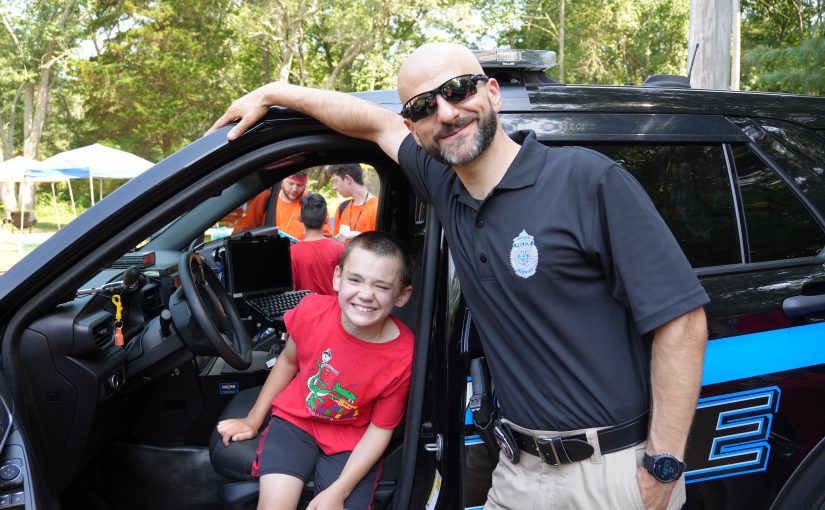
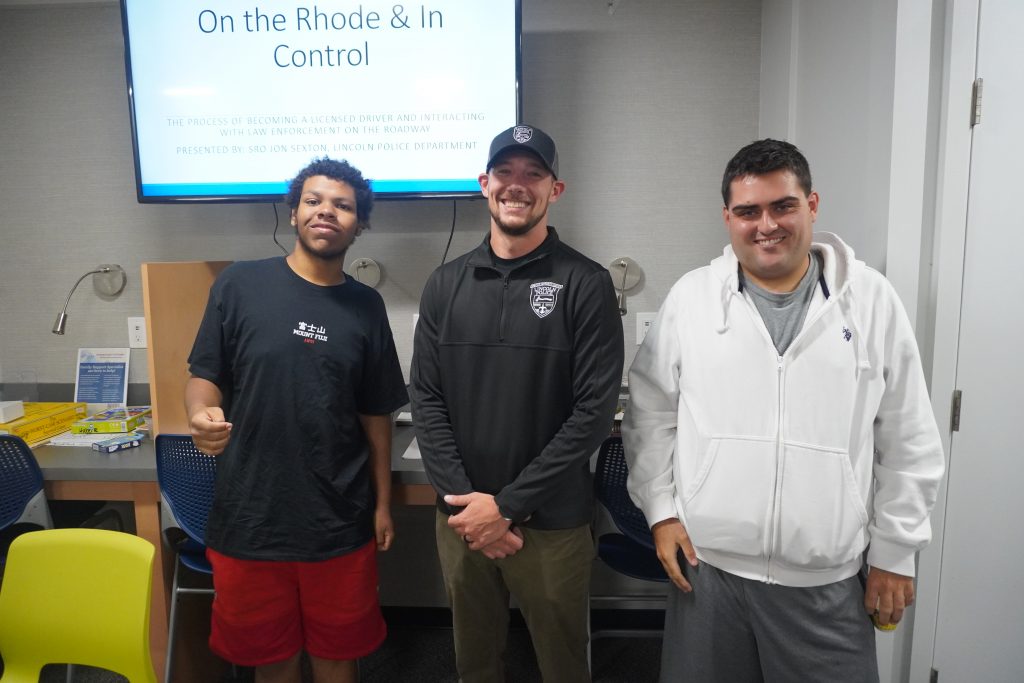
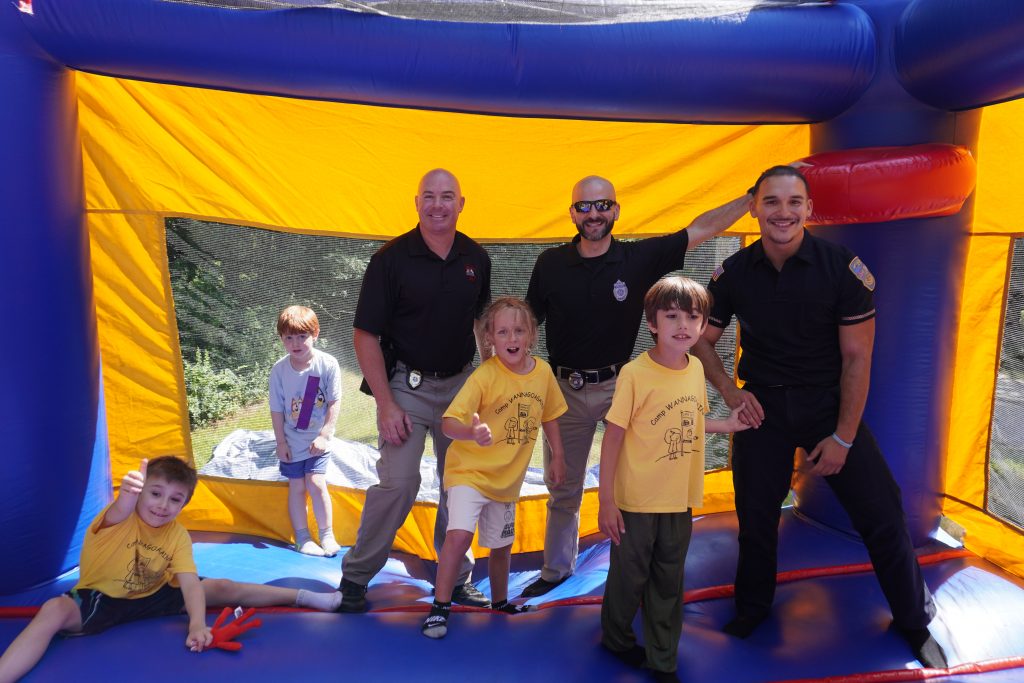
The PSSNC supported TAP to connect with first responders. Early efforts focused on training officers, leadership, and hosting sensory-friendly community safety days. To build relationships and trust, the PSSNC provided meet-and-greet events where families could interact with first responders in a safe and fun environment. Other community events hosted by TAP and the PSSNC included bowling with adults with autism, sensory-friendly Trunk or Treat Halloween, and a fall festival for families with young children. Officers attended a summer camp for individuals ages 5 through 40, providing opportunities to connect with community members and families in a nonthreatening environment.
“Understanding autism is no longer optional—it is a core competency of modern policing.”
It quickly became clear that sustainable, scalable training was also needed. Together, TAP and the PSSNC hosted an annual leadership training, bringing in Autism and Law Enforcement Education Coalition trainers to strengthen autism-related policing practices. Two flagship initiatives—the Roll Call Training Series and the Safety Video Library on YouTube—have become scalable, accessible resources for agencies across the United States.
Roll Call Training Series
The Roll Call Training Series was developed to address the need for scalable training. Designed in consultation with police trainers, the series consists of short, scenario-based modules that can be used during shift changes. Each video is short, allowing sergeants and lieutenants to incorporate them into daily roll calls without disrupting schedules.
The modules are practical, offering real-world strategies, visual supports, sensory tools, how-to videos, and instructional sheets. They focus on application rather than theory. They cover scenarios such as
- conducting a traffic stop involving a driver with autism,
- de-escalating a crisis,
- engaging with autistic individuals at community events,
- creating a Family Safety Plan, and
- preventing elopement and wandering and how to support the family if a loved one goes missing.
Each module highlights observable behaviors officers may encounter; provides concrete strategies for de-escalation and communication; and reinforces the importance of patience, clarity, and safety. Officers can immediately apply what they learn on the street.
In addition to the roll call videos, officers can access resources to implement the strategies talked about in videos and on TAP’s website.
Safety Video Library
Complementing the Roll Call Training Series, TAP maintains a YouTube Safety Video Library that provides accessible content for officers, families, and community partners. These videos reinforce consistent messaging, extend training beyond the classroom, and can be shared across agencies at no cost.
“When training reflects real-world scenarios, officers can apply strategies on their very next call.”
Topics include the following:
- Recognizing autism during police encounters
- Tips for families on preparing autistic individuals for emergencies
- Guidance for officers on reducing sensory overload during calls
- Community success stories showcasing positive partnerships
The dual approach—short roll call modules for officers and public-facing videos for families—creates alignment between what officers are taught and what families expect. This consistency reduces misunderstandings and builds mutual trust.
Officer Jonathan Sexton is a founding member of the PSSNC and a key partner for all events and videos within the YouTube library. He reports receiving multiple calls over the years when officers are asked to respond to crisis situations in which an individual with special needs is in a heightened state. “The responding officer recognizes the person or thinks the person recognizes them as an officer they saw at an event,” commented Officer Sexton. “The response toward responders turns more positive and more compliant upon seeing a familiar face.”
Lessons Learned from Implementation
Over the years, several key lessons have emerged:
- Accessibility is essential. Officers are more likely to engage with training that is brief, scenario-based, and easily integrated into existing routines. Roll call training proved far more effective than long classroom sessions.
- Practicality resonates. Officers need strategies they can apply in real time—such as using clear, direct language; using visual supports; reducing unnecessary stimulation; and allowing extra time for responses. Theoretical knowledge is valuable but insufficient without actionable tactics.
- Community partnerships strengthen outcomes. Training that includes voices from the autism community—parents, self-advocates, and service providers—fosters empathy and realism. Agencies that co-host community safety events alongside TAP saw improved relationships and trust.
- Consistency matters. Shared video libraries ensure that agencies across a region are receiving the same information. This reduces confusion and sets clear expectations for both officers and families.
- Trust takes time. Building positive relationships between law enforcement and the autism community requires ongoing engagement. One-time events may raise awareness, but consistent training and regular community interactions create lasting changes.
“I was involved in a call a few years ago where a teenager with special needs was having a rough day while with his grandmother and became increasingly agitated and potentially harmful to himself or her,” said Officer Jonathan Sexton of Lincoln, Rhode Island, Police Department. “Upon my arrival we both recognized each other from a recent bowling event. He was almost immediately able to calm down without the need for physical intervention, and he and I sat and talked for a long time until he was able to regulate, and his mother arrived home.”3
Officer Sexton also reports that, in the time since PSSNC started hosting events with the coalition, his department has seen a change in the reception and trust of first responders that has allowed families and individuals, as well as officers, to feel more comfortable and safer in asking for help and providing it.
Recommendations for Police Leaders
 Based on the aforementioned lessons, TAP offers the following recommendations for police executives seeking to strengthen autism engagement in their agencies:
- Integrate autism awareness into core training cycles. Treat autism knowledge as essential, not optional. Incorporate modules into academy curricula, annual in-service training, and specialized units.
- Use roll call modules regularly. Incorporating a short training video once a month can normalize discussion of neurodiversity and keep strategies fresh in officers’ minds.
- Partner with local autism organizations. Invite community experts to co-host training, facilitate ride-along sessions, or participate in community policing events. This demonstrates goodwill and builds direct relationships.
- Develop internal champions. Identify officers who show interest and designate them as autism liaisons. These officers can act as resources during calls, support ongoing training, and maintain community connections.
- Leverage available resources. Before developing new training, agencies should use free resources such as TAP’s Roll Call Training Series and Safety Video Library. These can be adapted to local needs without duplicating effort.
- Prioritize family engagement. Encourage families of autistic individuals to share information with local departments, such as communication preferences, triggers, or sensory needs. Some agencies have successfully implemented voluntary autism registries to support officers during calls.
- Evaluate and adapt. Gather feedback from officers and families after training and calls. Use these data to refine practices and identify gaps.
Conclusion
Modern policing requires more than traditional enforcement—it demands understanding, empathy, and specialized skills to serve diverse communities. Autism awareness is no longer a niche issue; it is a critical competency for police agencies.
Through initiatives like the Roll Call Training Series Safety Video Library, sensory-friendly events, and leadership training, TAP and PSSNC have demonstrated that scalable, practical tools can transform how officers engage with autistic individuals and their families. These resources are free, accessible, and designed with police input, making them highly adaptable for all agencies.
“When officers respond with empathy and awareness, they not only de-escalate the situation, but also build lasting trust by sending a powerful message: ‘We see you, we respect you, and you’re safe with us.’”4 For police executives, the path forward is clear: integrate autism training into the fabric of department operations, build partnerships with local autism organizations, and empower officers with the tools they need to serve every member of the community with dignity and safety. Safer outcomes, stronger trust, and healthier communities depend on it. d
Notes:
1Centers for Disease Control and Prevention. (2025, May 27). Data and statistics on autism spectrum disorder. U.S. Department of Health & Human Services. https://www.cdc.gov/autism/data-research/index.html
2John Sexton, personal conversation.
3The Autism Project, “First Responders’ Introduction to Autism,” YouTube video, October 21, 2022.
4Joanne Quinn, personal conversation.
Please cite as
Joanne Quinn and Alicia Ead, “Empowering Service to All: Strengthening Law Enforcement Engagement with the Autism Community,” Police Chief Online, January 28, 2026.