

Violent crime reduction efforts often focus on strategies that involve the analytical deployment of personnel and resources, or they involve a hyperfocus on geographical areas experiencing these incidents or the suspects that are responsible for the crimes. But there is an overlooked and often unrecognized value in the ability to affect violent crime through a victim-centered approach to investigations within a police agency. Although this effect is difficult to quantify, the impact of being able to focus directly on victims and their families during the investigation of violent crimes can increase the perception of legitimacy in police organizations and help garner higher levels of cooperation from victims, families, and even witnesses, which can ultimately impact the outcomes of investigations. This approach, along with the use of department-wide trauma-informed and victim-centered practices (which can also extend to victims’ families), can be spearheaded by personnel whose primary focus is providing victim services.
Victim Services Unit
Victim Services Coordinator Mary Nero was the driving force that helped establish and grow the Victim Services Unit for the Greensboro, North Carolina, Police Department. Nero, a former homicide detective for Greensboro, recognized the need for the police to be able to connect with victims and families who have experienced violent crime, a connection that is often limited when a detective is actively pursuing investigative leads in a case or has a constant or heavy caseload. Victims want timely information about what’s happening with their investigation and the criminal justice process, and they may need guidance on resources available to them as they face devastating and uncharted territory in their lives. Detectives are stretched thin as police agencies continue to experience personnel shortages, increasing reports of violent crimes, and more complex investigations from the continuing advances in technology. This often leaves victims or families feeling unheard, disconnected from the investigation, or questioning the effort actually being put into their case. This lack of direct focus on victims and families, whether actual or perceived, can often constrain the amount of cooperation or participation in investigations by victims, families, and even witnesses. Ensuring individuals affected by violent crime feel supported by the investigating agency, especially in communities where there is a level of distrust of the police or the criminal justice system, can be just as important as pursuing leads in moving a case forward.
Making the Connection

The Greensboro Police Department Victim Services Unit becomes involved at the outset of a homicide or other violent crime investigation. The initial and immediate connection to victims or victims’ loved ones is vital as establishing trust from the beginning of an investigation is easier than having to repair any mistrust that can occur when victims and families feel ignored or uninformed. That feeling of disconnect can quickly lead to speculation about what is happening with a case and whether effort is truly being made to progress the investigation. Victim support specialists are there to explain the process to victims and families, make them feel like their case is more than just a case number, direct them toward counseling services, acknowledge their needs, and provide empathy and compassion as they navigate the aftermath of a traumatic event.
Most of the time, the initial connection with the Victim Services Unit is in person and the introduction is made verbally but is always followed up with written information about the Victim Services Unit, how to contact them, and the resources available to the victim or family. In the immediate aftermath of the crime, victims and families are inundated with information while trying to also process the devastation of the event and with the associated profound emotion, little information is absorbed or retained. Following up with families and giving them written documentation they can refer back to is essential to properly provide victim-centered support.
The initial connection with a family or victim at a police station can also be daunting as these spaces are often sterile and meetings may frequently take place within interview rooms more suitably designed for suspect interactions. Meeting in a “soft room” during this introduction is important so as to separate victims or grieving families from the unwelcoming or tepid appearance of police facilities. It is a specially designed interview space intended to create a more comfortable and supportive environment for victims, particularly those who have experienced trauma. The Greensboro Police Department’s soft room is located in the same building as their Criminal Investigations Division, but it’s set away from the noise and coming and going of personnel; it also reduces the potential to cross paths with any potential suspects that have been brought into the station. Soft rooms should be warm and soothing, with consideration given to things as simple as paint color, furnishings (sofas, comfortable chairs), and easy access to tissues, water, and restrooms. Aside from the victim support specialist and the lead detective, no other personnel are allowed in to avoid overwhelming victims and families.
The provision of guidance and resources is also crucial when the initial connection is made. Providing an understanding of what occurs in the first several days of a homicide investigation is important to help families while they are in crisis mode and emotions are high and can easily influence their perceptions of what is occurring in their case. It can be difficult for families to comprehend why they are unable to see their loved one immediately or why it may take several days for the autopsy to occur and why it even has to occur at all. Keeping a family informed of the reasons and necessity of these steps is the beginning of building the foundation of a positive and supportive connection the police department will maintain with them throughout the progression of the case. The Victim Services Unit should be a cornerstone of that foundation, and someone who is consistent and timely in response to families’ needs helps establish trust in the relationship with these families.
Keeping the Connection
The first few weeks after a violent incident are probably the most intensive weeks of an investigation and a time when a victim or family needs the most support. But equally as important is sustaining that support even when most of the initial questions have been answered for victims or families. An ongoing understanding of the process, especially when an investigation has slowed or even stalled, is vital to keeping the positive connection with victims and families and encourages their continued cooperation or participation. Frustrations over a lack of quick answers or outcomes may start to surface when victims and families lack this understanding.
This is the time to help victims and families understand that there are processes related to the investigation that occur outside the police department but are integral to the investigative process, such as external evidence processing, toxicology and final reports from the autopsy, and even some initial court processes. Support at this stage includes explaining the reasons behind and the importance of these processes, why they may move slowly, and how all pieces of an investigation need to come together in order to bring a strong and legally sound case together so that it can move forward properly in the legal system.
In the weeks that follow the occurrence of a violent crime, victims and families may need additional support because the initial presence of friends and family and resources immediately after the event may be waning. The Victim Services Unit uses this time to provide victims and families with packets that include information on counseling resources, victim compensation information, a reference guide for obtaining pertinent documents and information related to death cases, and a personalized letter from the assigned victim support specialist. They also advise victims and families of the continued steps of the investigative process and their statutory rights to obtain information related to the case.
Whether or not a victim’s case has been solved, the Victim Services Unit continues to maintain a relationship with families. One of the stand-out things that Nero ensures her unit does is to remember homicide victims’ families on the first anniversary of their loved one’s death. They do this by sending a card to commemorate the loss of their loved one.
Connecting With the Community
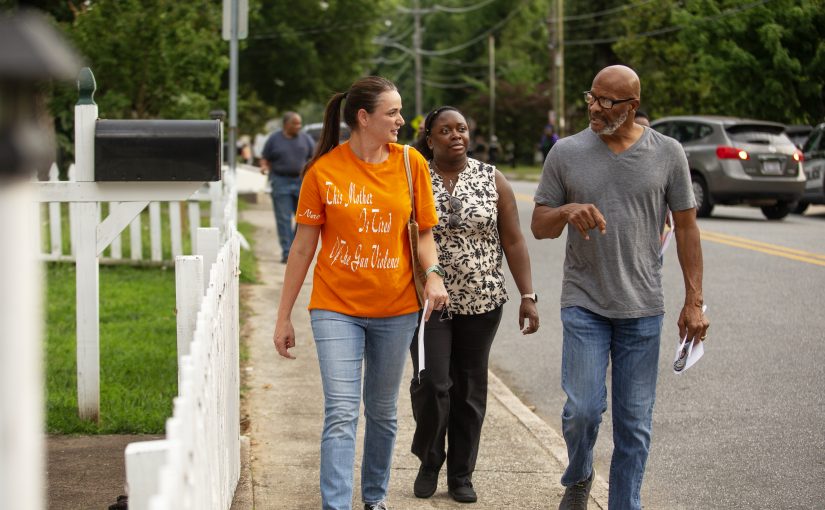
Equally important to the Victim Services Unit’s connection with victims is partnering with and facilitating a connection between victims and families with other members of the community who have experienced similar trauma or loss. The Greensboro Victim Services Unit partners with Mothers Standing Against Gun Violence (MSAGV), a grassroots community group of mothers and families who have lost a child to gun violence or other forms of violence. The group embraces victims’ families and helps them begin to navigate the trauma and loss they are feeling through a firsthand understanding of what it’s like to experience this type of loss. The survivor mothers who are part of this group provide support and raise awareness of a problem that has affected families across the city. MSAGV holds annual remembrance events, which bring together families, police, and city leaders to commemorate the lives of victims, as well as community walks for cases that remain unsolved in hopes to gain more information that may help move a stalled investigation forward. In 2020, a prayer vigil led by MSAGV did just that; only days after shutting down the intersection where a young man was killed and bringing together a strong community and police presence to gather there, sufficient information was received leading to the arrest and ultimate conviction of the suspect responsible for his death. Prior to this vigil, there were no solid leads in the case.
City Help of the Triad, a faith-based organization, and the Mark’s Angel Foundation, established in memory of homicide victim, Mark Freedman, are two other community organizations in Greensboro that provide support and assistance for victims and families affected by gun violence. The Victim Services Unit helps bring these and other community groups with similar purpose together to help victims. Having an in-depth understanding of the type of support each group provides enables the unit to connect victims with the appropriate groups for the specific type of support needed.
Establishing a Victim Services Unit
Law enforcement agencies across the United States are beginning to see the need to establish some form of victim services or victim advocacy within their departments. Some of the first steps in doing so should include creating policy for the program, identifying outside resources that can help support the mission or intent of the program, and seeking funding where needed.
- Policy: As with any unit in a police agency, having a strong policy or standard operating procedure in place is essential for guiding and understanding the purpose of the unit. A program designed to provide victim services should have a policy that includes—
Defining its purpose and role: It’s important to establish the role and responsibilities of a Victim Services Unit and determine what their function will be, such as providing assistance to victims and families through criminal justice support, crisis intervention, safety planning, referral to community agencies, and counseling referrals.
Describing the program’s structure: This should highlight where the Victim Services Unit exists or is assigned within the agency (specific division, bureau, etc.), how victim support specialists become involved in reported violent crime cases, and how their services allow detectives more time to focus on case resolution.
Reporting requirements: This policy element is essential to ensuring that victim support specialists understand their reporting requirements and confidentiality levels as law enforcement–based victim services as they pertain to safety and disclosures that could potentially be considered exculpatory under Brady v. Maryland. The Brady rule requires prosecutors to disclose all material evidence that is favorable to the defense, which would include information provided by victims and witnesses to advocates or victim support specialists employed by a criminal justice agency.1
Policies should also include the requirement that detectives make the connection between victims or families and the Victim Services Unit. It should also ensure that detectives understand that assigning a victim support specialist to their case doesn’t absolve them of their responsibility to also remain responsive to victims and families.
- Resources: Identifying resources outside the agency that provide services that support the needs of victims and families during the initial crisis of the event and through the days and even years that follow is essential to the effectiveness of victim services programs. Resources are often found at the state and local level and should include counseling, financial support such as victim compensation programs, community groups that support victims of violent crime, and additional support services within the court system once a case reaches that stage.
- Funding: Locating funding for victim services beyond an agency’s budget can aid in the establishment or expansion of a Victim Services Unit. There are many state and local resources, nonprofit organizations, and grants that support the mission of these programs. The Greensboro Police Department was able to expand its Victim Services Unit and fund the renovation and furnishing of its new soft room through a Law Enforcement-Based Victim Services grant awarded by the Office for Victims of Crime in 2023.
Beyond the Victim Services Unit
The Victim Services Unit is a vital part of ensuring an agency is incorporating victim-centered practices into its interactions with victims, but it isn’t the only part. This practice should extend across the agency—so these practices are demonstrated by all employees who come into contact with victims or victims’ families. All it takes is one interaction that is not well received to hinder a relationship with those that have experienced or witnessed violent crime.

The Greensboro Police Department has developed a policy guiding trauma-informed property release practices to help minimize the distress that victims or families may feel when evidence or property that was gathered during their investigation is released to them. This includes considering how and where the property is released, such as allowing the community member to set up an appointment for a time that is convenient to them and using the soft room as a release location. Evidence or property items are placed in neutral packaging, without evidence tags, biohazard stickers, or graphic descriptive wording on the release sheet. Victims or families are allowed to have others present for support, and the lead detective may also request the presence of a victim support specialist. An explanation is given before the release of items so they understand what they are receiving especially if there is blood on an item or the item is damaged, has degraded, or has been altered by evidence processing. Victims and families decide what items are important or sentimental to them and what they would like to take of the items available for release; anything they decline is returned to the evidence section.
Agencies should also consider incorporating at least basic trauma-informed interviewing training courses for all detectives and a more in-depth training for detectives assigned to investigative squads that handle violent crime cases. Consideration should be given to providing instruction in an agency’s police academy or during field training on the effects of trauma on victims and how to prevent re-victimization during interactions with victims.
The Greensboro Police Department is also a recent recipient of the Abby Honold Program Grant, which has a focus on providing trauma-informed and victim-centered training to law enforcement and evaluating the effectiveness of this training.2 The initial goal of the Greensboro Police Department is to provide training to all personnel assigned to their Patrol Bureau, and then to grow the program, eventually providing it throughout the department and building a sustainable curriculum to ensure all new officers receive trauma-informed and victim-centered training.
Making and keeping a connection with victims and families should be a central consideration of violent crime investigations in every law enforcement agency. To be most effective, agencies should have personnel whose primary responsibility is focusing on the victims of violent crime during what is unquestionably one of the darkest times in their lives. Being available to focus on the victims and families and not having to balance that time with other responsibilities such as conducting investigations is vital to establishing that connection. Answering questions, explaining processes, and providing support and access to resources in a timely and victim-centered manner help begin to create a level of trust with a law enforcement agency that is just as essential to the success of investigations as conducting the actual investigations. Since starting the Victim Services Unit, Nero has seen how greater connections with victims and families have resulted in a better understanding of the criminal justice process and a greater sense of trust in that process. That trust encourages cooperation and participation by those affected by violent crime, who, in turn, implore the community around them to cooperate and participate in investigations as well. Although it is hard to quantify and measure the level of cooperation in investigations, this connection to the community and its effect on violent crime can be seen in Greensboro by the increase in community members who reach out to the Victim Services Unit with information on cases that otherwise may not have been resolved.
Police leaders should consider the impact that a positive and supportive connection with victims and witnesses can make in investigations. Implementing victim-centered, trauma-informed practices can improve these connections and have the potential to affect violent crime investigations through increased participation and stronger community trust. Whether it’s through applicable training, improved policy, or establishment of a Victim Services Unit, there are many resources and funding opportunities to introduce and grow this philosophy or practice in their agencies.
Notes:
1Brady v. Maryland, 373 U.S. 83 (1963).
2Abby Honold Act, Pub. L. 117-103 (2022).
Please cite as
Leslie Brown, “A Victim-Centered Approach to Violent Crime Reduction,” Police Chief Online, February 24, 2026.