

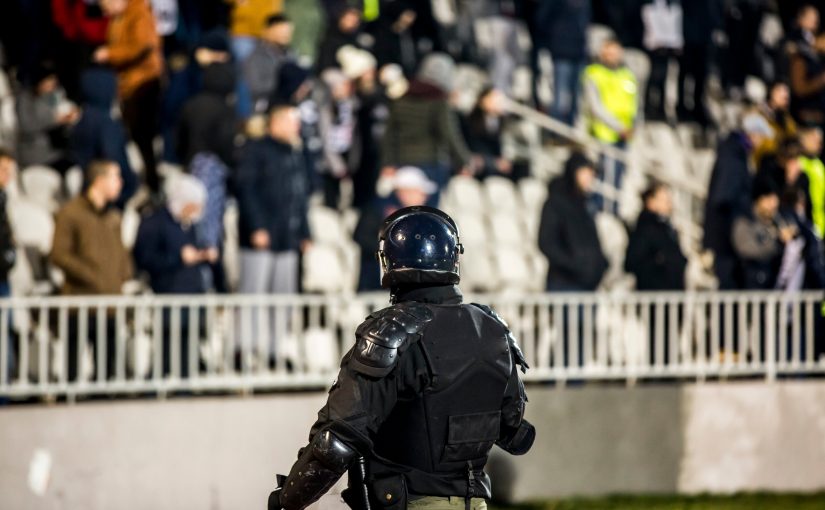
The highly anticipated FIFA World Cup 2026 has begun! Across North America, it is doing more than filling stadiums—it is stretching policing into spaces it does not traditionally dominate. Spanning three countries, 16 cities, and millions of traveling supporters, this tournament is the most expansive and complex public safety operation ever attached to a sporting event.
Yet the defining challenge for senior law enforcement commanders is not sitting behind hardened perimeters or inside credentialed zones. Stadiums, for all their scale, are the most controlled environments in the entire operation. The real test is unfolding beyond them—across city streets, transport networks, and most critically, inside the pubs, bars, and informal gathering spaces where “football” (yes the rest of the world calls it football) culture truly lives.
This is where traditional U.S. models begin to falter.
For many U.S. agencies, major event planning still gravitates toward the venue: secure the stadium, manage ingress and egress, and hold a reserve for disorder. That approach is logical, but it’s insufficient. Football, particularly at the World Cup level, is not confined to the 90 minutes on the pitch.
For traveling supporters from Europe and South America, it is a full-day, deeply social ritual shaped by identity, emotion, and copious amounts of alcohol. It is rarely a family event. The match begins hours before kickoff and continues long after the final whistle. It is experienced collectively and loudly, often in dense, unmanaged environments. In that context, one operational truth becomes unavoidable: the bar is not separate from the match—it is part of it.
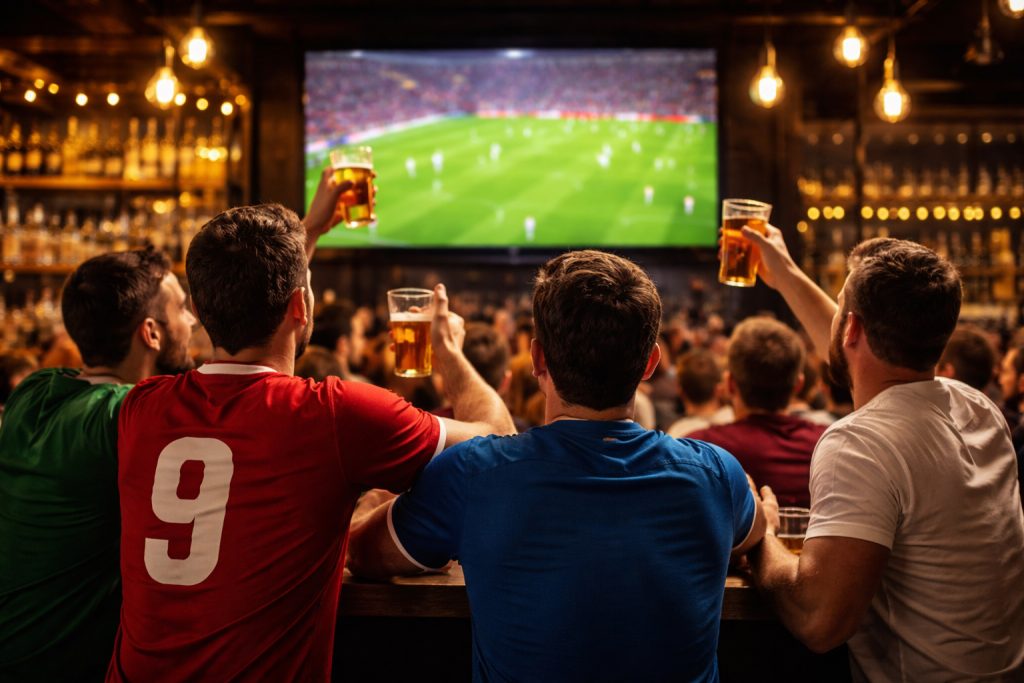
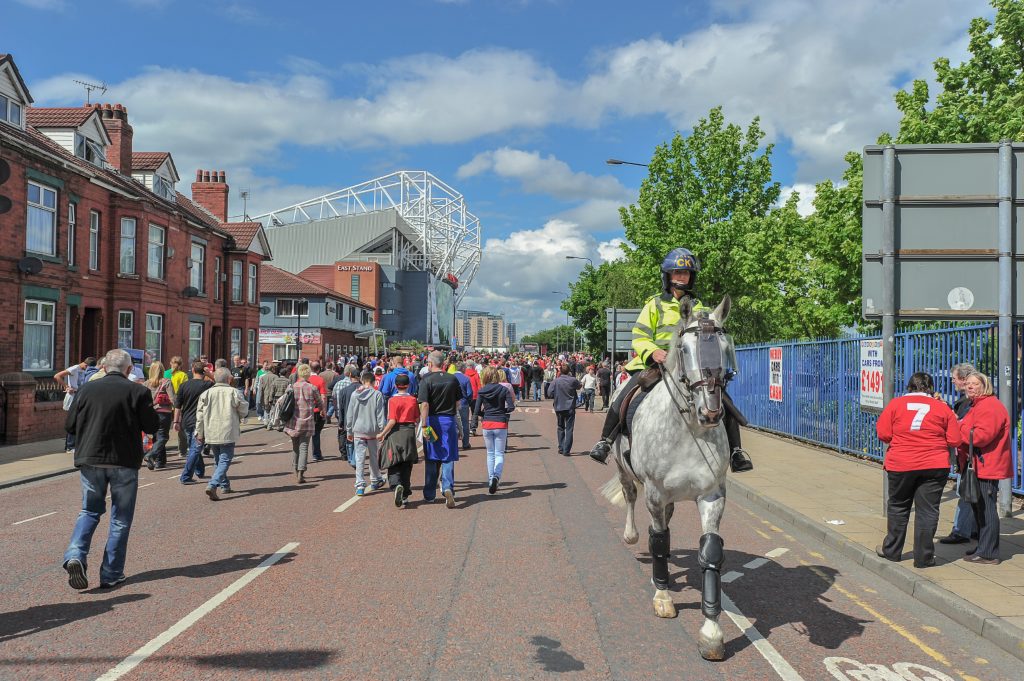 Across host cities such as Los Angeles, California; New York City, New York; Mexico City, Mexico; and Toronto, Ontario, nightlife districts are transforming into unofficial extensions of the tournament—filling early, overflowing quickly, and evolving in real time as supporters move, celebrate, and react. Unlike stadiums, these environments are not designed for surge capacity. They lack structured entry controls, operate with limited oversight, and often exceed safe occupancy during major events. What they do possess though, in abundance, is density, emotion, and unpredictability.
It is in these “fan zones without fences” that multiple risks begin to converge. Alcohol lowers inhibitions and sharpens emotional responses. Rivalries—sometimes historic, sometimes newly ignited—surface in close quarters. A single goal, a controversial decision, or even a rumor spreading via social media can shift the atmosphere in seconds. What starts as celebration can become serious confrontation, and what begins inside a venue can spill rapidly onto surrounding streets and into transport systems.
These dynamics are not new. Police agencies across Europe and South America have spent decades learning, often the hard way, that football disorder rarely begins at peak intensity. It builds—subtly at first, then rapidly. The most effective responses have not relied on overwhelming enforcement, but on intelligence, early intervention, visible presence, and informed engagement. Officers not heavily protected, on foot, embedded within the environment, reading the mood and interacting with supporters, have consistently proven more effective than reactive heavily armed deployments arriving after the tipping point.
There is a simple but often overlooked principle that sits at the heart of this approach: “You cannot command a soccer match until you have walked with the crowd.”
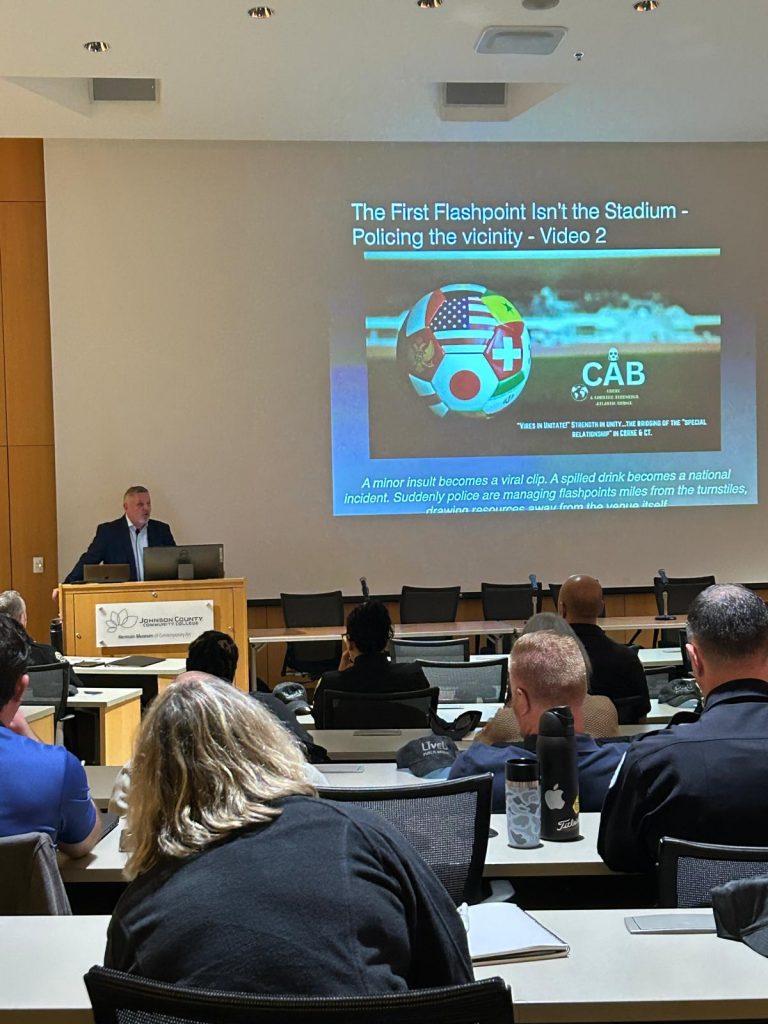 That means more than observation from a drone or reliance on CCTV and intelligence feeds. It requires senior leaders and operational commanders to experience, firsthand, how supporters move through a city—how they gather, where they drink, how rival groups intersect, and how mood shifts over time. Walking with fans before and after matches, through transport hubs and into nightlife districts, provides an unfiltered understanding of density, behavior, and intent that no briefing can fully replicate. It is in these moments that commanders grasp the rhythm of the crowd—and with it, the ability to anticipate rather than react.
The lesson is straightforward, but not always comfortable: policing football culture requires an appreciation and understanding of it.
For North American cities, this presents both a challenge and an opportunity. In places like Miami, Florida; Houston, Texas; and Dallas, Texas, the pressures are compounded by heat, extended nightlife economies, and prolonged celebration cycles that stretch operational demand well beyond match time. In dense urban environments such as New York City, the complexity is amplified by transport hubs and the sheer speed of movement between locations. Meanwhile, cities like Toronto must navigate diaspora dynamics, where global rivalries intersect with local communities.
Each city carries its own profile. What unites them is the need to think differently about where risk resides. Amid this complexity, one assumption must be challenged early: that major football tournaments inevitably produce high arrest volumes. The evidence suggests the opposite.
Across recent World Cups and large-scale U.S. events, arrest rates have remained exceptionally low relative to attendance. Even where disorder has occurred, it has been episodic and situational, driven by identifiable triggers such as alcohol concentration, protests, ticket fraud, or high-tension matches—not by crowd size itself.
This distinction matters. When commanders plan for mass disorder as the default, the consequences can be counterproductive. Over-policing—particularly in culturally unfamiliar environments—can increase confrontation, place unnecessary strain on detention systems, and expose agencies to civil liability and reputation damage. In a globally broadcast event to several billion people, legitimacy is not a secondary concern; it is central to success.
The strategic aim, therefore, is not to maximize enforcement, but to minimize the need for it. Effective policing in this context is measured not by arrest numbers, but by the ability to prevent escalation, maintain lawful order, and preserve public confidence while retaining the capability to act decisively when required.
In practical terms, this means understanding where arrests are most likely to occur—and why. Experience from U.S. host city conditions suggests that arrest spikes are rarely random. They tend to emerge where specific factors align: high-density fan zones combined with prolonged alcohol service, protest activity intersecting with match day crowds, or high-profile matches carrying underlying tension. Just as often, however, arrests are the byproduct of something more mundane—and more preventable. They come from friction.
Poorly managed queues. Confusing ingress routes. Inconsistent screening standards. Unclear authority between agencies. Gaps in communication. These are not simply operational inconveniences; they are catalysts for confrontation. In many cases, the pathway to arrest begins not with criminal intent, but with frustration.
 This is where leadership discipline becomes decisive. Consistency across venues and agencies is not administrative—it is operational control. Clear, predictable processes reduce uncertainty, and reduced uncertainty lowers the likelihood of conflict. Equally, maintaining neutrality—particularly in environments where political expression and protest activity are present—is essential. Any perception of inconsistency or bias can escalate tensions rapidly and carry significant legal consequences.
Ultimately, arrests during the World Cup will be low in volume but high in visibility. Each one will be scrutinized, recorded, and often shared globally within minutes. The question for commanders is not how to respond to arrests—but how to avoid unnecessary ones.
The nighttime economy, so often treated as peripheral in traditional planning, becomes central during a major tournament like the World Cup. Bars and pubs are not simply licensed premises; they are high-density, emotionally charged gathering points that function as extensions of the event itself. Ignoring them creates a gap that no amount of stadium security can compensate for. However, recognizing them and using local neighborhood officers opens the door to a more effective, intelligence-led approach built on partnership with venue operators, real-time awareness of crowd movement, and the deliberate placement of officers within the environment rather than outside it. This is where leadership becomes decisive.
The challenge is not simply to deploy more resources, but to deploy them differently. It requires a shift away from static, venue-centric thinking toward a more fluid model one that anticipates movement, adapts to changing conditions, and prioritizes engagement alongside enforcement. It demands confidence to operate beyond traditional comfort zones and a willingness to treat international football culture as a critical component of public safety. Because culture, in this context, is not a soft factor. It is a driver of behavior.
The broader threat picture—disorder, crowd density, opportunistic crime, protest activity, drone intrusion, and even the low-probability but high-impact risks of terrorism—does not disappear in these environments. On the contrary, it compresses. Multiple pressures can exist within the same street, the same venue, even the same moment. The role of command is to recognize that convergence early and respond with speed, clarity, and coordination.
Ultimately, the success of policing during FIFA World Cup 2026 will not be judged solely by what happens inside stadiums. It will be defined by how effectively cities manage the spaces beyond the venue perimeter—the places where supporters gather, celebrate, and sometimes clash.
The global lesson, reinforced time and again, is as blunt as it is accurate: If you do not police the pubs, you are not policing the event. For senior police leaders, the mandate is clear. Understand the culture. Walk the ground. Anticipate the movement. Control the environment beyond the perimeter. Because when the world arrives in 2026, policing will not just support the tournament; it will shape how it is remembered. d
Please cite as
Kevin Cresswell, “Policing the Game Beyond the Perimeter: The 2026 FIFA World Cup,” Police Chief Online, June 11, 2026.