

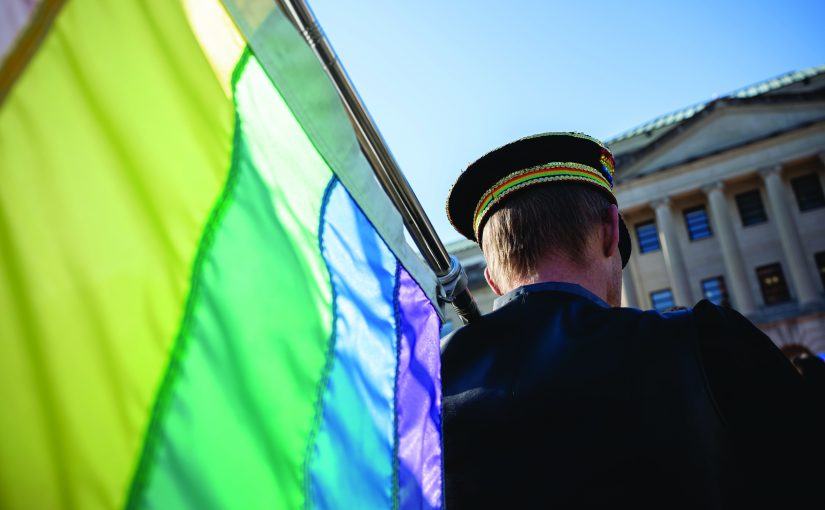
The underreporting of hate crimes is a public safety issue that directly affects police agencies’ ability to respond and intervene to violence within their communities. The HIRISE+ (Hate Incident Reporting Initiative to Strengthen Engagement in Communities) study highlighted improved officer training as one of the most efficient and agency-controlled levers to strengthen the accuracy of hate crime identification.
The LGBTQ+ population in the United States experiences high rates of violence and victimization, including hate crime victimization. Data from the Department of Justice revealed that 22.5 percent of all reported hate crimes in 2023 were related to sexual orientation and sexual identity and/or gender identity; however, LGBTQ+ individuals make up only 9.3 percent of the U.S. population—a difference that highlights how hate crimes disproportionately affect LGBTQ+ individuals.1 Further, the National Crime Victimization Survey, a Centers for Disease Control and Prevention surveillance system that collects individuals’ own recollections of victimization, reports that the rates of violence experienced by LGBTQ+ people are two to six times greater than those of non-LGBTQ+ people, highlighting the significant burden of violent victimization in this population.2
Despite these experiences, LGBTQ+ people are reluctant to contact the police for help. The National Crime Victimization Survey points to a gap in reporting violence to police between LGBTQ+ victims of violence (38.5 percent reporting) and non-LGBTQ+ victims (45.1 percent reporting).3 Some research suggests that LGBTQ+ individuals may avoid the police altogether after victimization, which may inhibit accurate reporting of potential hate crimes and mean that the true percentage of LGBTQ+ individuals who experience bias-motivated incidents is higher than FBI statistics indicate.4
There are historical roots in the LGBTQ+ community for this reluctance to engage with police. Throughout the 20th and into the 21st century, LGBTQ+ people and community spaces were frequent targets of police scrutiny; most notably, the 1969 raid on the Stonewall Inn, an LGBTQ+ bar in New York City, which resulted in a revolt among the patrons. Documented raids continued to occur as recently as 2009.5 Yet, in recent years, many police agencies have worked to engage and repair relationships with LGBTQ+ communities. Two notable examples of institutional change are the creation and proliferation of LGBTQ+ police liaison positions and the implementation of LGBTQ+ sensitivity training. Notwithstanding these shifts in institutional practices, hate crimes appear to continue to be underreported, raising questions about how agency leadership can enact processes to work to close this gap.
An Initiative to Understand Hate Crime Underreporting
The HIRISE+ study was a three-year research initiative designed to understand why underreporting of potential hate crimes continues from both victim and police perspectives. The project was supported by a partnership between NORC at the University of Chicago, the Police Executive Research Forum, and LGBTQ+ liaison units within four major metropolitan areas (Milwaukee, Wisconsin; Atlanta, Georgia; San Diego, California; and Dallas, Texas) across the United States. Over three years, the study team collected mixed methods data across these four cities to explore how reporting operates, why victims do or do not report, and why police do or do not categorize some bias-motivated crimes as hate crimes. The team subsequently developed evidence-based procedural recommendations to improve hate crime reporting among LGBTQ+ victims.
A commitment of the HIRISE+ project was to co-create all procedural recommendations from the study alongside police professionals. In the third year, project leadership organized the HIRISE+ Law Enforcement Agency Forum (LEAF) on October 2, 2025—a two-hour virtual meeting to gather the research team and police partners to review high-level study findings and discuss their implications for improving hate crime reporting among LGBTQ+ populations. The LEAF included two hosts and thirteen attendees. Attendees consisted of members of the NORC research team (six), external research partners (two), and police personnel (five). The discussion was organized around key themes that emerged from three of the study data collections: a gray literature review of current publicly available guidance for police responses to sexual orientation or gender identity bias incidents, key informant interviews with police officers and community service providers who support LGBTQ+ victims of violence, and interviews with LGBTQ+ victims.
Officer Training as a Critical Solution
The importance of officer training was a key takeaway discussed within the LEAF, specifically in relation to hate crime response and LGBTQ+ community competence. Over the course of the LEAF, the hosts shared study findings for each type of training and then facilitated a discussion with attendees about recommendations for police agencies based on these findings.
Hate Crime Training Recommendations
On the topic of hate crime response training, the LEAF host shared study findings that training on responding to hate crimes was often embedded in broader policing curricula and rarely delivered as stand-alone training. Training began early in the academy, building awareness of hate crimes, but often stopped there. The content of these trainings focused on correctly identifying when a hate crime had occurred, responding to the victims appropriately (e.g., using trauma-informed policing techniques), and collecting accurate data for classification. The how, where, and frequency of these trainings varied considerably across jurisdictions, and they were often neither mandated nor standardized. The data suggested that community partnerships with victim advocacy organizations and/or cultural groups improved the effectiveness of these trainings by increasing officers’ cultural competency.
Attendees at the LEAF meeting affirmed these conclusions and developed three primary recommendations for improving police training on hate crimes. First, attendees expressed that these trainings needed clearer guidance on recognizing bias indicators. Officers discussed challenges with distinguishing between general interpersonal conflict and true bias-motivated incidents when perpetrators did not use explicit slurs or symbols that indicated anti-LGBTQ+ sentiment (or bias toward other targeted groups). Clear criteria for classifying incidents as motivated by bias would aid accurate reporting. Second, attendees expressed a need for additional training on the specifics of initial evidence collection. Prosecutorial decision-making is predicated on the documentation of motive and context of a bias incident, and officers expressed a need for more practical instruction on what to ask victims and witnesses, what to look for at the scene, and what to document. Finally, there was a recommendation for additional training on how best to facilitate the patrol-to-investigator handoff. A lack of clarity around internal communication pipelines raised concerns about whether inconsistent protocols for handing off cases may be resulting in misclassification of hate crimes. Officers recommended clearer workflows and criteria for how to ensure incidents were elevated as potential hate crimes.
LGBTQ+ Community Competency Training Recommendations
The LEAF hosts also shared HIRISE+ findings related to police training on serving LGBTQ+ communities. Study data suggested that these training courses were increasingly common; however, the content and delivery methods varied significantly across agencies. Where these trainings existed, there was an emphasis on communication and respect, and the data again pointed to the acknowledgment that their quality increased significantly when conducted in partnership with LGBTQ+ community organizations or leaders. Topical training gaps did appear to exist still, especially differences across identity groups within the LGBTQ+ community; and there was an identified need by law enforcement for more realistic, scenario-based training to help officers practice responding to the unique needs of LGBTQ+ victims.
Again, LEAF attendees affirmed these findings and developed two key recommendations for how to improve training on working with LGBTQ+ communities: standardized training for LGBTQ+ liaisons and collaborating with LGBTQ+ communities in agency-wide training design and delivery. Broadly, LGBTQ+ liaisons described receiving limited training and a shared experience of learning their roles on the job. LEAF attendees discussed the need for a formal curriculum for liaisons to standardize the role and support continuity planning in the event of employee turnover. At the agency level, they recognized that LGBTQ+ victims experience unique barriers to reporting and that officers must be able to signal safety and understanding to facilitate the accurate and effective reporting of hate crimes. Working collaboratively with community leaders to develop and deliver training on LGBTQ+ communities was a mechanism discussed to ensure trainings are culturally specific and accurate and to introduce officers to new perspectives they may not otherwise encounter.
Additional Training Considerations to Mitigate the Trust Gap
Beyond the LEAF recommendations, the interviews conducted with LGBTQ+ victims of violence in the HIRISE+ study pointed to the potential utility of training on trauma-informed policing practices to increase the likelihood of victim reporting. In interviews, many LGBTQ+ victims described worry about being disbelieved or blamed for their victimization and concern for having their LGBTQ+ status outed to the public. As a result of these worries, many reported avoiding or being reluctant to engage with the police.
While historical mistrust may be a piece of the puzzle, these beliefs and behaviors are also in line with the lived experience of trauma and minority stress. Minority stress is a framework to describe how many minority groups, including the LGBTQ+ community, experience routine discrimination and harassment that shapes their understanding of themselves, their environments, and subsequently affects their behaviors.6 In the context of hate crime reporting and interactions, minority stress may be shaping LGBTQ+ victims’ expectations of rejection by police. Regular negative reactions to their LGBTQ+ identity may prime victims to believe that when they encounter the police, they will not be believed or supported; to be apologetic to officers even when they are the victim; or to avoid the police altogether.
Training in trauma-informed policing may enable officers to engage with LGBTQ+ victims more effectively and navigate the realities of minority stress. Trauma-informed police training provides officers with knowledge about what trauma is, how it affects victims, and how to effectively respond to those experiencing trauma with techniques that support safety and reduce the risk of re-traumatization.7 In the case of responding to LGBTQ+ victims of violence, there may be a need for training that equips officers with the skills to recognize behavioral indicators of trauma and minority stress and empathetically communicate with victims in a trauma state. These skills would enable better rapport with LGBTQ+ victims and more accurate interviews, which can assist with evidence documentation and accurate classification of bias incidents as hate crimes.
Interviews with survivors also indicated that there may be value in cross-organizational training for police personnel and civilian service providers (e.g., staff at victim services organizations, LGBTQ+ community-based organizations, health care organizations) in shared reporting pathways. Many victims reported that, rather than reporting an incident to the police, they instead sought support from local social service agencies. Key informant interviews indicated that in locations where strong relationships existed between social service and police agencies, social service agency staff could facilitate introductions to trusted law enforcement partners. Development of and training on shared reporting pathways across police and social service agencies could increase accurate identification and classification of hate crimes against LGBTQ+ victims.
| Table 1. Recommendations for Law Enforcement Training to Support Reporting of Hate Crimes among LGBTQ+ Victims |
|
Potential Improvements for Hate Crime Response Trainings • Clearer Training on Recognizing Bias Indicators • Training on Thorough Initial Evidence Collection • Training on Patrol → Investigator Handoffs Potential Improvements for LGBTQ+ Community Competency Trainings • Standardized Training for LGBTQ+ Liaison Roles • Collaborative Involvement with LGBTQ+ Communities in Training Design and Delivery Cross-Cutting Recommendations from LGBTQ+ Victim Interviews • Training on Trauma-Informed Policing Approaches • Training Officers and Civilian Partners in Shared Reporting Pathways |
Conclusion
As made clear throughout the HIRISE+ project and during the LEAF discussion, officer training is a cornerstone of any long-term solution to addressing hate crime underreporting among LGBTQ+ communities. Agencies already working hard to improve rates of hate‑crime reporting described training that often starts strong in the academy but fades over time, varies widely across units, or rests on the shoulders of a single liaison or a committed supervisor. These realities make the longevity of these trainings precarious in the face of environmental changes, such as when people rotate out or retire or leadership changes direction. Institutionalized trainings on hate crime response, working with LGBTQ+ communities, and trauma-informed policing can be reliable measures for the long-term work of repairing community mistrust and can best prepare officers for responding effectively to potential hate crimes when they occur in the field. These recommendations come from the voices of officers, liaisons, community partners, and victims in the HIRISE+ study and provide actionable next steps for addressing hate crime reporting among LGBTQ+ victims. d
Notes:
1Jeffrey M, Jones, “LGBTQ+ Identification in U.S. Rises to 9.3%,” Gallup, February 20, 2025.
2Jennifer L. Truman, Rachel E. Morgan, and Emilie J. Coen, “Characteristics and Consequences of Violent Victimization in Sexual and Gender Minority Communities: An Analysis of the 2017–2021 National Crime Victimization Survey.” LGBT Health 11, no. 7 (2024): 552–562.
3Truman, Morgan, and Coen, “Characteristics and Consequences of Violent Victimization in Sexual and Gender Minority Communities.”
4Jordan C. Grasso, Valerie Jenness, and Stefan Vogler, “Understanding the Context for Police Avoidance: The Impact of Sexual Identity, Police Legitimacy and Legal Cynicism on Willingness to Report Hate Crime,” Current Issues in Criminal Justice 35, no. 2 (2023): 269–289.
5James McKinley, “A Raid at a Club in Texas Leaves a Man in the Hospital and Gay Advocates Angry,” New York Times, July 5, 2009.
6David M. Frost and Ilan H. Meyer, “Minority Stress Theory: Application, Critique, and Continued Relevance,” Current Opinion in Psychology 51 (2023): 101579.
7Georgiana Cameron et al., “Trauma-Informed Policing: A Scoping Review,” Psychology, Crime & Law (2026): 1–35.
Please cite as
Michelle Johns and Guadalupe Velasquez, “Closing the LGBTQ+ Hate Crime Gap: Training Recommendations from the HIRISE+ Law Enforcement Agency Forum,” Police Chief Online, July 15, 2026.