
Detecting the Unseen Threat
Planning and Prevention in the Gray Zone of Cyberbio Response
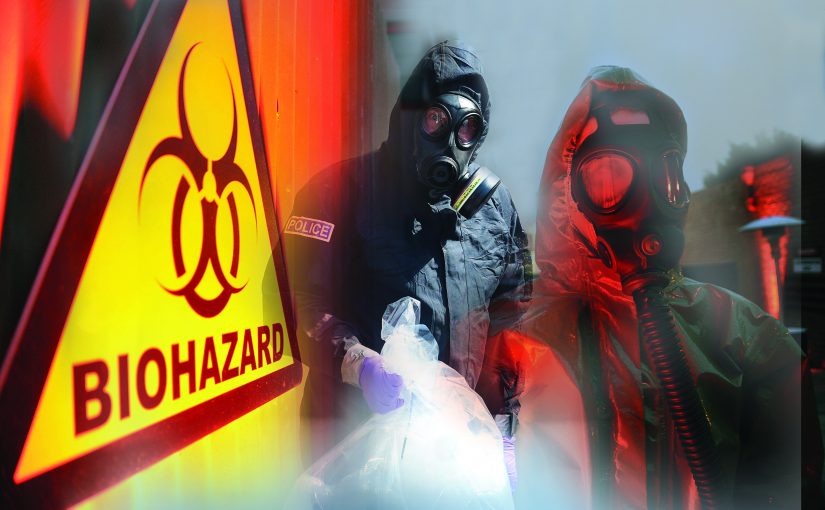
Police executives are navigating a security environment where the earliest indicators of hostile activity may not look like crime at all. They may look like a cluster of unexplained illnesses, a lab-grade freezer in a rental property, a medical device anomaly, or an “IT issue” inside a hospital. In cyberbiosecurity—the intersection of life sciences and digital systems—harm can be delivered through access and the “weapon” can be data integrity, software, or a compromised supply chain.1
That reality pushes local law enforcement into an uncomfortable but necessary role: the gray-warfare detector. This is not because patrol officers are searching for war, but because modern coercion increasingly hides inside ordinary life. When biology becomes the consequence of digital access, the first call is still local.
Case Study: The Las Vegas “Garage Biolab” as a Preview of the Next Decade
In late January 2026, the Las Vegas Metropolitan Police Department (LVMPD) and the Federal Bureau of Investigation (FBI) executed a search warrant at a residence after receiving information that a biological laboratory might be inside the home. LVMPD’s SWAT team served the warrant early in the morning, and investigators reported evidence of possible biological material, including refrigerators containing vials with unknown liquids.2
LVMPD leadership emphasized that the incident appeared isolated and that there was no threat to the public, while multiple agencies, including advanced hazardous materials (HAZMAT) handling resources that most agencies do not have, worked methodically to recover and mitigate potential hazards.3 Investigators also checked a nearby residence as part of the operation; reporting indicated the FBI searched a second house and found no threat, underscoring how quickly a single tip can widen into a neighborhood-scale response.4 It is widely understood that when kinetic terror attacks occur in two or more scenes, public safety resources are swiftly overwhelmed. Think of, for instance, the November 2015 attacks in Paris, the 2013 Boston Marathon bombing, or the 2017 attacks in Spain that started on Las Ramblas. With biological risks, just the personal protective equipment required for first responders is an added layer of challenge that will become more frequent, let alone the possibility of an entire region needing quarantine for an unknown bioterror exposure.
In this incident in Las Vegas, subsequent reporting based on an arrest report described a former cleaning employee who said she entered the garage months earlier and observed equipment consistent with laboratory use, including refrigerators/freezers, glass beakers with liquid, and what she believed were a biological safety cabinet and a centrifuge. The same report described the cleaner and a handyman becoming “deathly ill” after entering the garage and described hydrochloric acid stored in a manner the report said could imperil people in or near the garage. These concerns were amplified by the allegation that the house was used as a short-term rental with multiple occupants.5
In order to access the rest of the article, sign in with your IACP or Subscriber credentials.