

Public safety agencies, especially police forces, face increasingly complex operational demands. Officers are expected to respond rapidly across larger geographic areas, manage incidents that evolve quickly, coordinate with multiple agencies, and maintain public confidence, all while operating within tight budgetary and resource constraints.
Meeting these expectations requires more than additional personnel. It requires better information, greater operational flexibility, and the ability to make informed decisions in real time.
This is where airborne law enforcement has become an essential capability. Whether supporting routine patrols, tracking suspects, locating vulnerable missing persons, or coordinating large-scale emergency responses, helicopters provide law enforcement agencies with an operational perspective that cannot be replicated from the ground.
From the Chicago, Illinois, Police Department to the Arizona Department of Public Safety, platforms like the Bell 505, Bell 407GXi, Bell 429, and Bell 412 are supporting police and public safety units across the world who recognize that aviation is an integral part of delivering safer, more effective public safety.
Bolstering Resources to Provide State-of-the-Art Law Enforcement
Police helicopters provide far more than an aerial view; they create a common perspective for everyone involved in an incident.
As situations unfold, air crews can relay live intelligence to commanders and officers on the ground, help coordinate resources, identify developing risks, and adapt tactics as circumstances change. Instead of relying solely on various reports from individual units or members of the public, decision-makers gain a comprehensive understanding of the environment, allowing operations to be managed with greater efficiency.
This broader perspective is particularly valuable in complex urban environments, where buildings, vegetation, and other obstacles can limit visibility from the ground. Research shows that an airborne observer may be able to see up to 30 times more than an officer on foot, providing valuable situational awareness that improves operational planning for faster, more informed decision-making.1
Providing Faster and More Effective Emergency Responses
One of the greatest advantages of a helicopter is its ability to support multiple mission types during a single operational shift.
An aircraft may begin the day conducting proactive patrols before transitioning to a missing person search, providing overwatch during a tactical operation, assisting with vehicle pursuit, and later supporting emergency management during severe weather or a major public event. This versatility allows agencies to maximize the value of a single aviation asset across a diverse range of public safety responsibilities.
When emergencies occur, helicopters also eliminate many of the delays encountered by ground vehicles. Flying directly to an incident while providing continuous observation enables crews to share immediate assessments that help to determine the response before additional units arrive.
Typical missions well-suited for helicopters include the following:
• Suspect searches and vehicle pursuits
• Search and rescue operations
• SWAT and tactical team support
• Crowd monitoring and major event security
• Disaster response and emergency management
• Border security and rural patrol
• Fire reconnaissance and multiagency coordination
Many aviation units also assist beyond their own jurisdiction through mutual aid agreements, providing critical airborne capabilities to neighboring agencies whenever required.
Safer Outcomes for Officers and the Public
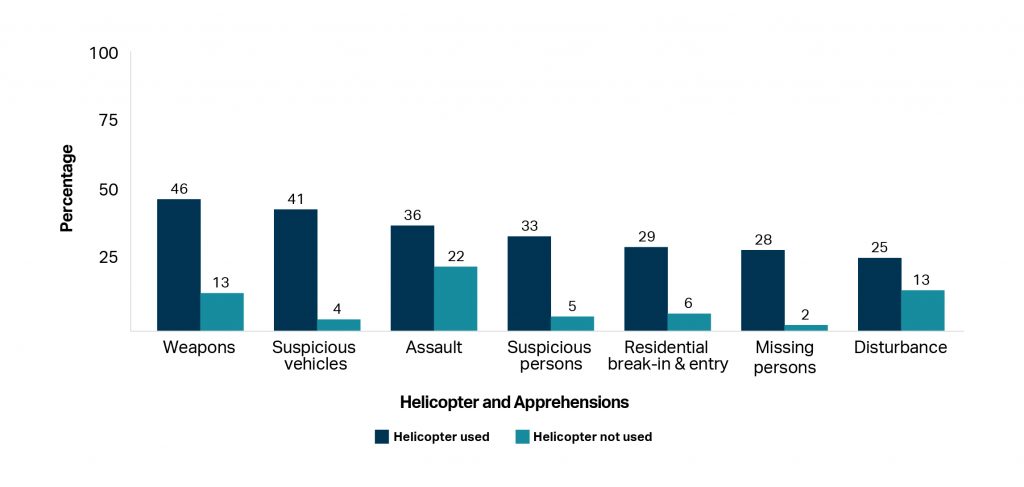 Modern policing increasingly aims to resolve incidents safely while minimizing risk to everyone involved. Police helicopters play an important role in achieving that objective.
Continuous aerial observation often allows commanders to slow the pace of an operation rather than escalate it. Instead of maintaining close ground contact during vehicle pursuits or suspect searches, officers can reduce direct engagement while air crews observe movements from above, directing resources only when intervention can be actioned safely.
This approach reduces unnecessary risk for officers, suspects and the public while improving the likelihood of a successful intervention or arrest.
Advanced electro-optical and infrared imaging systems further strengthen this capability by enabling crews to locate individuals in darkness, dense vegetation, or other challenging environments. These technologies can be crucial when searching for an armed suspect, a missing person, or someone requiring medical assistance and assisting in decision-making at every stage.
Technology That Extends Mission Capability
Police helicopters have evolved into highly connected airborne coordination platforms. Mission systems can include stabilized optical and infrared cameras, high-powered searchlights, moving-map displays, encrypted communications, live video downlink, mission management software, automatic dependent surveillance–broadcast (ADS-B), and night vision goggle compatibility. Used together or separately, these tools enable aircraft to collect, analyze, and share intelligence in real time with officers, dispatchers, and command centers.
Successful aviation programs know that technology is most effective when it is integrated into everyday operations. Rather than functioning as standalone equipment, systems should enhance collaboration between air and ground units, enabling faster decision-making throughout the incident lifecycle.
Aircraft configuration also varies according to operational requirements. Urban operators may prioritize surveillance capability and endurance, while regional agencies may require greater range or equipment tailored to search and rescue, wildfire support, or disaster response. Selecting the right mission equipment is therefore just as important as selecting the aircraft itself.
Aviation Is Not Limited to the Largest Agencies
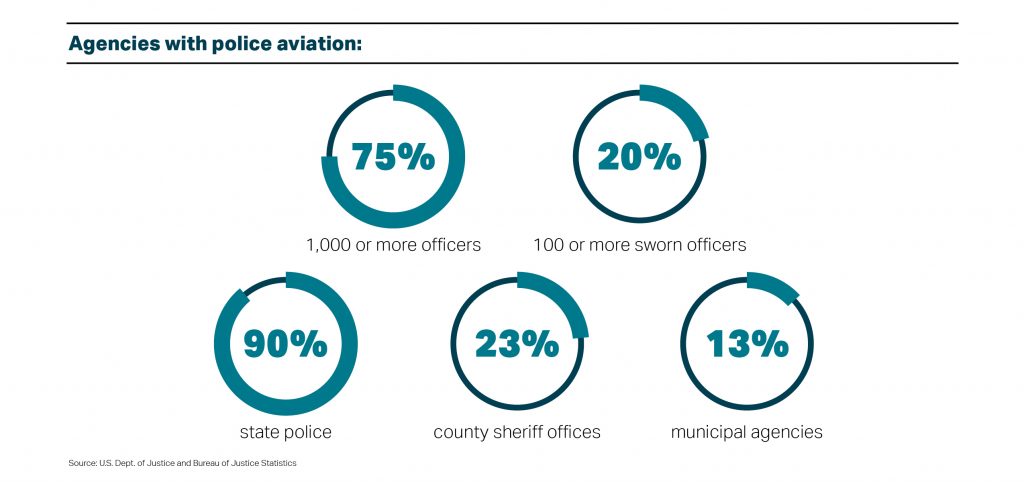
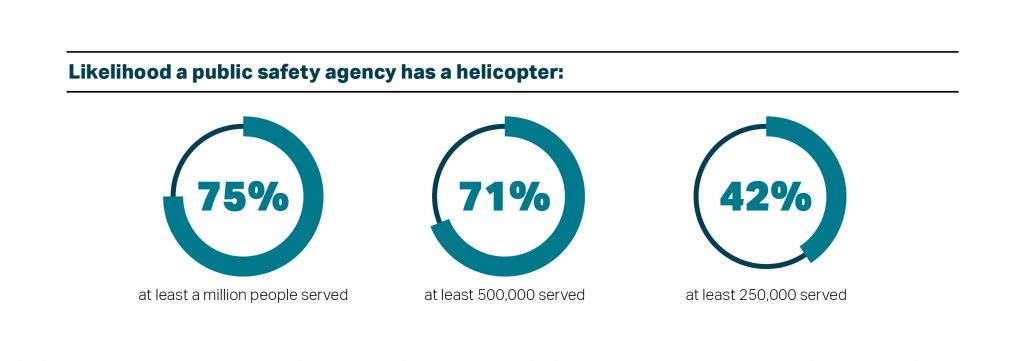 Police aviation is no longer the domain of a limited number of major metropolitan departments.
Advances in aircraft technology, lower operating costs, and more flexible purchase options have made aviation increasingly accessible to regional, county, and municipal agencies. Around the world, public safety organizations are establishing new aviation units or expanding existing capabilities.
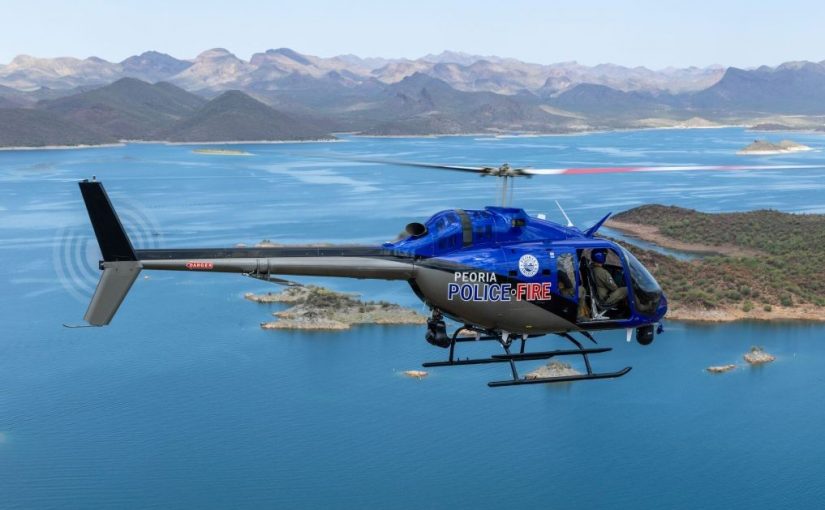
Recent examples of aviation start-ups include agencies in Peoria, Arizona, and Chino, California. Meanwhile, long-standing aviation users continue to modernize their fleets and improve operational capability across a growing range of missions.
The Importance of Choosing the Right Partner
In collaboration with their supplier, agencies must define operational objectives, select appropriate mission equipment, establish maintenance and training programs, develop standard operating procedures, and ensure long-term viability. Each decision influences the effectiveness of the unit throughout its service life. This is where experience becomes incredibly valuable.
Looking Ahead
The expectations placed on law enforcement agencies will continue to grow as communities demand faster responses, better coordination, and safer outcomes during increasingly complex incidents.
Police helicopters have become an essential part of meeting those expectations by improving operational awareness, enhancing collaboration between responding agencies, and giving commanders the information needed to make better decisions when time matters most.
For agencies considering how best to strengthen their public safety capabilities, aviation is increasingly viewed not as a specialist resource, but as a strategic investment that enhances every aspect of modern policing.
| Join Bell at IACP 2026 in Orlando, Florida, on October 24–27, and learn more about our public safety mission solutions. |
| With more than seven decades of supporting public safety operators worldwide, Bell brings expertise that extends well beyond aircraft manufacturing. By working closely with customers throughout the planning, configuration, training and operational support process, Bell helps agencies develop aviation capabilities that meet their immediate and long-term operational requirements. Combined with a family of proven public safety platforms including the Bell 505, Bell 407, Bell 429 and SUBARU Bell 412EPX operators can select solutions that match their mission profile while benefiting from long-term support throughout their operational life. |
Note:
1Bell, “How Police Helicopters Revolutionize Public Safety,” March 3, 2026.