

Effective traffic enforcement requires more than visibility on the roadway. It requires information.
The kind of information that helps officers assess impairment, document critical observations, and identify the trends and risks shaping roadway safety in their communities. Whether that information comes from roadway data, roadside investigations, or recorded evidence, the objective remains the same: providing officers and decision-makers with the insights needed to reduce dangerous driving behaviors, prevent crashes, and make roads safer for the communities they serve.
As traffic safety challenges continue to evolve, police agencies are placing greater emphasis on informed decision-making. Rather than focusing solely on responding to crashes and traffic violations after they occur, agencies are increasingly working to identify risks, understand trends, and develop targeted strategies that can improve safety before tragedies happen.
Supporting Better Decisions
If informed decision-making begins with gathering accurate information, few situations are more demanding than an impaired-driving investigation. Officers are increasingly encountering drivers whose impairment may involve alcohol, cannabis, prescription medications, or combinations of multiple substances; determining the cause of a driver’s impairment has become significantly more complex than simply administering a breath test.
The growing prevalence of drug-impaired driving has challenged traditional enforcement methods, requiring officers to assess multiple indicators while making critical roadside decisions. In many cases, obtaining objective information from early in the encounter can help guide investigative steps, support probable cause determinations, and improve the overall quality of an investigation.
Dräger Inc.’s traffic enforcement solutions are designed to support that process by providing officers with screening tools that complement their training and observations. One such tool is the DrugCheck 3000, an oral fluid drug screening device designed to provide preliminary information about recent drug use. The compact, single-use test can detect multiple drug classes and delivers results in approximately three to five minutes. Because the system relies on oral fluid collection rather than blood or urine, it offers a noninvasive screening option that can be used during traffic stops, post-crash investigations, school safety initiatives, and probation-related activities.
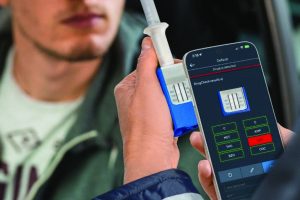
The ability to conduct a quick field screening can be particularly valuable when officers are attempting to determine whether additional testing or evaluation is warranted. While the DrugCheck 3000 is not intended to replace laboratory confirmation, it can provide information that influences the direction of an investigation and helps officers decide whether further action is necessary.
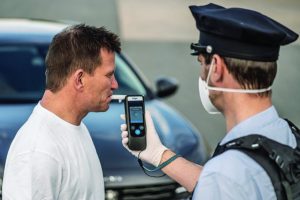
Alcohol enforcement remains an equally important component of traffic safety, and Dräger’s Alcotest 7000 is designed to support both rapid screening and more detailed breath alcohol testing. The device allows officers to quickly determine whether alcohol is present through direct sampling via interchangeable options. If alcohol is detected, officers can switch from a funnel to a mouthpiece for a quantifiable reading. Designed for frequent field use, the Alcotest 7000 can operate in a wide range of environmental conditions and includes data-management capabilities that support evidence collection and documentation.
Together, the DrugCheck 3000 and Alcotest 7000 provide officers with additional information during some of traffic enforcement’s most challenging encounters. In an environment where impairment is not always limited to alcohol alone, tools that support informed decision-making can help agencies conduct more thorough investigations while promoting safer communities.
Capturing What the Officer Sees
Identifying potential impairment is only one part of the investigative process. Officers must also document what they observe in a way that is accurate, defensible, and understandable to prosecutors, judges, and juries. That has long been a challenge in impaired-driving investigations, where some of the most important observations occur during field evaluations and can be difficult to convey through written reports alone.
Addressing that challenge was a major factor behind the development of the DAX Evidence Recorder. The handheld device created by DAXcam was designed to help officers capture objective visual evidence during impaired-driving investigations, creating a record of observations that historically rely heavily on written narratives and courtroom testimony.1
The DAX Evidence Recorder is commonly used during drug recognition expert evaluations, Advanced Roadside Impaired Driving Enforcement assessments, and field sobriety testing. The device records both audio and video, allowing officers to document their interactions with a subject while preserving important observations made during the examination process. One of the recorder’s key benefits is its ability to show exactly what an officer observed in the field. In cases involving eye examinations and other impairment indicators, the recorded footage can help demonstrate whether testing procedures were conducted according to established training standards and protocols. Rather than relying exclusively on a written description, investigators can preserve visual evidence that may later support testimony and provide additional context during court proceedings.
Importantly, the system is not intended to determine whether a subject is impaired. Instead, it serves as an evidence-gathering tool that documents what trained officers observe during an investigation. The resulting recordings can then be reviewed by prosecutors, supervisors, and juries, helping them better understand the circumstances surrounding the encounter.
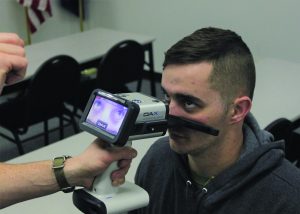
The technology has also proven valuable as a training resource. Agencies can use recorded evaluations to review techniques, reinforce proper procedures, and improve consistency among officers conducting impaired-driving investigations. The device records to an SD card and allows evidence to be stored in the cloud until officers return to the station, helping simplify evidence management while preserving critical investigative information.
By capturing objective evidence and preserving what officers see during field investigations, the DAX Evidence Recorder provides another tool designed to strengthen documentation, training, and courtroom presentation.
Turning Data into Actionable Intelligence
Individual traffic stops and investigations generate valuable information, but police leaders face a broader challenge of understanding what those incidents reveal about traffic safety across an entire jurisdiction. Identifying high-risk locations, recognizing emerging trends, and measuring the effectiveness of enforcement initiatives require agencies to look beyond individual cases and evaluate the larger picture.
For more than two decades, LexisNexis Coplogic Solutions has worked with law enforcement agencies to help modernize and connect traffic safety operations. Its suite of cloud-based solutions supports crash reporting, citation management, report distribution, and citizen reporting while creating a framework that allows agencies to better utilize the information they collect every day.
A key component of that effort is the Unified Performance Dashboard within the LexisNexis Command Center. Developed as an extension of the company’s crash reporting solutions, the dashboard provides agencies with a broader view of traffic safety performance by combining trend analysis, benchmarking, and data visualization capabilities into a single platform.
Rather than relying solely on local crash statistics, agencies can compare their performance against statewide averages, similarly sized departments, and peer jurisdictions across the United States. The dashboard focuses on key public safety indicators, including fatalities and injuries, DUI-related crashes, speed-related incidents, seat belt usage, and pedestrian-involved collisions. By presenting data as percentages rather than simple crash totals, agencies can make more meaningful comparisons regardless of their size.
The platform also allows leaders to examine multiyear trends to better understand whether specific safety issues are improving, worsening, or remaining stable over time. This capability helps command staff evaluate the effectiveness of enforcement initiatives and determine where resources should be focused moving forward.2
As traffic safety continues to evolve, agencies are increasingly recognizing that crash reports are more than historical records. When combined with analytics and benchmarking tools, they become a source of information that can guide enforcement efforts, support policy decisions, and contribute to long-term crash reduction initiatives. By helping agencies identify risks, measure outcomes, and allocate resources more effectively, solutions—such as the Unified Performance Dashboard—are supporting a broader shift toward prevention-focused traffic safety strategies.
Better Information, Better Outcomes
While the tools used in traffic enforcement continue to evolve, the mission of reducing dangerous driving behaviors remains unchanged. “These devices do not replace training or observation, but they can help bridge the gap between uncertainty and action,” said Brain Shaffer, lead project manager of Alcohol & Drug Detection USA at Dräger.3 That principle extends beyond roadside screening to documentation, evidence collection, and data analytics, all of which are designed to support informed decision-making.
Better screening tools help officers assess potential impairment. Enhanced documentation helps preserve critical observations and strengthen investigations. Advanced analytics provide a broader understanding of the factors contributing to crashes. Together, these capabilities support a more comprehensive approach to traffic safety—one that extends beyond enforcement alone and focuses on preventing crashes, reducing injuries, and ultimately saving lives.d
Notes:
1Ronald Waldorf (chief technology officer, DAXcam), phone interview, June 17, 2026.
2Marketing Team (LexisNexis), email interview, June 29, 2026.
3Brian Shaffer, (Lead Product Manager, Alcohol & Drug Detection USA, Drager), email interview, July 30, 2025.
Source ListPlease click on the companies’ names to go to the companies’ websites. |
|
Please cite as
“From Detection to Prevention,” Product Feature, Police Chief 93, no. 8 (August 2026): 56–58.