

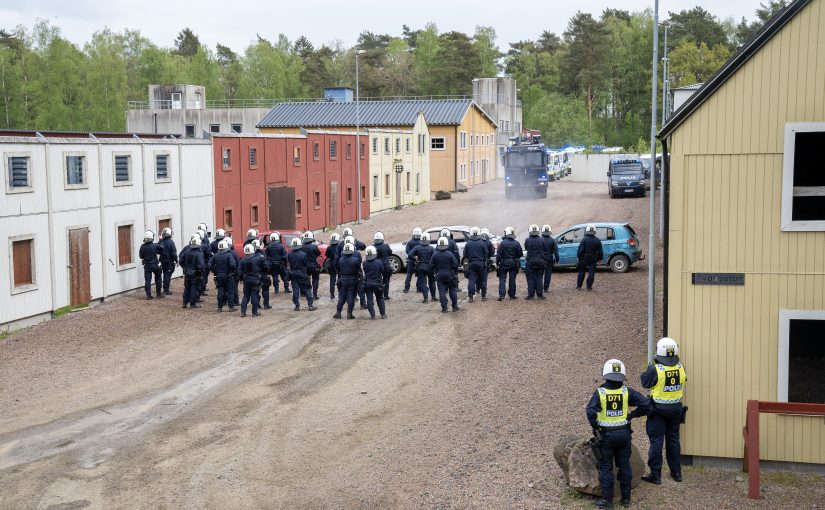
For modern police executives, crowd management has evolved from a matter of logistics into a critical test of institutional legitimacy. In an era defined by global polarization and the viral spread of information, the street has become the primary arena where the social contract between the state and its citizens is either reinforced or fractured.
The Swedish experience offers a powerful case study in this evolution. Twenty-five years ago, the 2001 EU Summit in Gothenburg served as a traumatic catalyst for change. Widespread disorder, which forced officers to use service firearms in self-defense, exposed fundamental flaws in traditional, confrontational public order policing. The subsequent national inquiry led to a paradigm shift: the birth of Special Police Tactics (SPT).
SPT is a research-based doctrine designed to manage the delicate equilibrium between protecting constitutional freedom of speech and ensuring public safety. The fact that this scientific foundation remains relevant and current is confirmed by research at Linnaeus University, among others, which validates the methodology’s efficacy in today’s complex social climate.1 For the international policing community, the Swedish SPT model offers a scalable and proven framework for maintaining order without sacrificing public trust.
From Mob Theory to Interaction Dynamics
To understand SPT, one must first discard outdated theories of crowd behavior. For decades, police tactics globally were influenced by Gustave Le Bon’s theories of “mob mentality,” which argued that individuals in a group lose their reason and become part of a dangerous, contagious mass.2 This flawed assumption led to a confrontational stance: heavy equipment, undifferentiated use of force, and a mindset characterized by control through dominance.
“After a riot, police must return to the area—not in tactical gear, but for dialogue. Explain the “why” behind interventions. Listen to grievances. Trust is built in the quiet moments between the storms.”
Modern research, particularly the Elaborated Social Identity Model (ESIM), tells a different story. ESIM demonstrates that a crowd is a collection of diverse groups, each with its own social identity, norms, and goals. The most critical insight for a police executive is this: Police action is the primary variable in crowd behavior. If the police treat a heterogeneous gathering as a homogeneous threat—for instance, by using tear gas against an entire section due to the actions of a few individuals—they inadvertently create the “mob” they fear.3 Through undifferentiated action, the police provide the “glue” that binds peaceful protesters with violent extremists into a shared identity of resistance. SPT’s strategic goal is to prevent this psychological fusion through precision-guided, interaction-based management.
The Five Pillars of Legitimacy: A Strategic Framework
The Swedish SPT doctrine operationalizes the ESIM model through five core principles. These are not just tactical guidelines; they are strategic necessities for maintaining what research calls procedural justice.
1. Knowledge: Intelligence of Identity
Police must possess deep knowledge of the participating groups—not just their criminal history, but their social identity, internal values, and ‘red lines’ (i.e., the boundaries of acceptable behavior within a group, as well as actions by police or opposing groups that would be perceived as severe provocations).
Strategic Application: Before an operation, commanders must ask: “What does this group perceive as legitimate police action?” Knowledge enables a prediction of which measures de-escalate and which provoke. Evaluations of the 2022 riots showed that as new, loosely organized networks emerge, the police’s intelligence gathering must be as dynamic as the groups.
2. Facilitation: Protecting the Right to Protest
In a democracy, the role of the police is not to “permit” a protest but to actively facilitate the exercise of constitutionally protected rights. By helping organizers achieve their legitimate goals—whether regarding a march route or a symbolic gathering point—the police build “legitimacy capital.” This facilitation is not unconditional; it requires clear boundary setting, where the police signal that the freedom to demonstrate exists within the framework of law and order. Facilitation also means being clear about which behaviors will not be accepted, creating predictability for all parties.
Strategic Application: Facilitation acts as a powerful tool for de-escalation, but it must be balanced with the ability to set boundaries. When police are clear about where the line is drawn for legal violations and disorder, while simultaneously protecting the right to expression, participants’ understanding of the police role increases, as does their willingness for self-policing. This is the essence of the balance between rights and safety: By facilitating the legitimate and resolutely setting boundaries against the illegitimate, the police maintain both order and their democratic legitimacy.
3. Communication: Strategic Use of Dialogue
Dialogue policing is often misunderstood as a “soft” tactic. Within SPT, communication is a hard tactical asset. Specialized dialogue officers function as a sensory organ for command, providing real-time feedback on the mood of the crowd. It is important to emphasize that this communicative approach is not isolated to dialogue officers but encompasses all officers in the deployment—from the front line to command.
Strategic Application: Clear and transparent communication regarding police intentions and boundaries reduces the uncertainty that often leads to panic or aggression. If a street must be cordoned off, people need to know why. Understanding leads to compliance; silence leads to suspicion.
4. Differentiation: Surgical Precision in Action
This is the most technically demanding principle. It requires the ability to intervene against lawbreakers without disturbing the law-abiding majority.
Strategic Application: By using plainclothes arrest teams, precision documentation (drones/body-worn cameras), and targeted interventions, the police can avoid “collective punishment.” Differentiation is the primary defense against accusations of excessive force. It ensures that the police remain legitimate in the eyes of the peaceful majority.
5. Self-Policing: The Ultimate Goal
When the police act with high legitimacy, the crowd often begins to regulate itself. Peaceful participants will isolate or stop agitators because they do not want violence to overshadow their message.
Strategic Application: This is the most effective form of order maintenance. Fostering an environment where self-policing is possible minimizes the need for state-sanctioned force, protecting both personnel and the agency’s reputation.
Case Study: The 2022 Easter Riots and Modern Violence
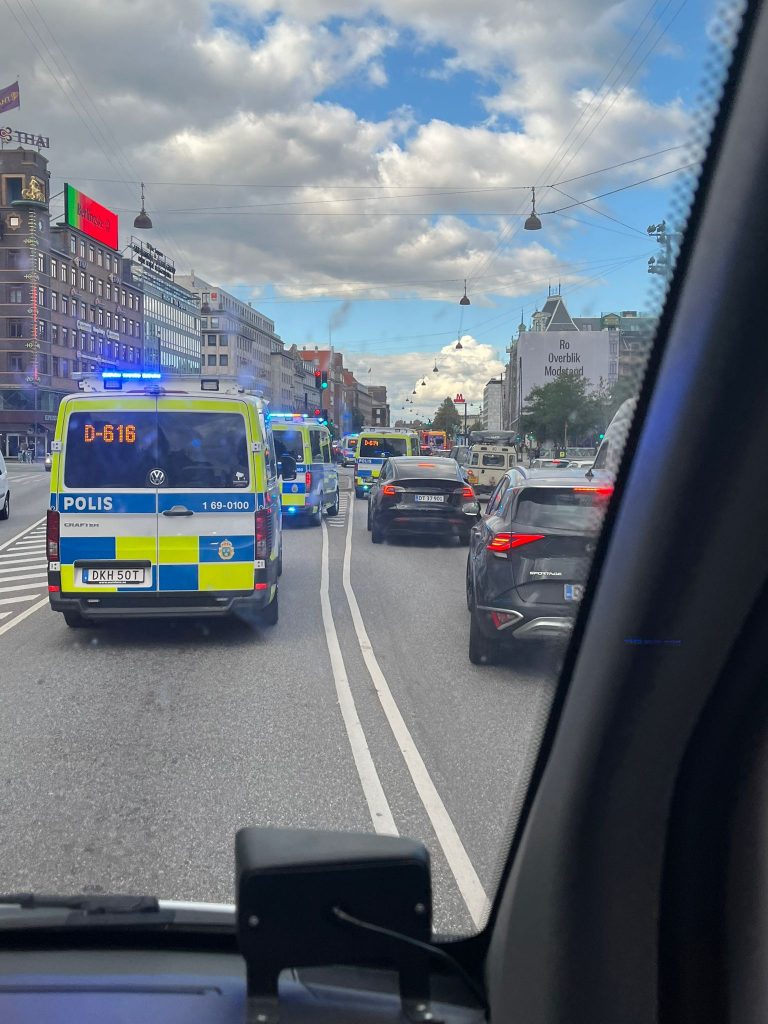 In April 2022, the Swedish police were subjected to a level of violence unprecedented in modern times. The riots, triggered by a provocateur’s Quran-burning tour, constituted an existential and tactical trial for the SPT doctrine. The events exposed the difficulties of maintaining a dialogue-based methodology when the adversary’s primary purpose is direct confrontation with the state. The evaluation of these events provided three critical lessons for police executives:
1. Tactical Scalability: While SPT focuses on de-escalation, it is not a pacifist doctrine. The 2022 riots showed that when the crowd’s primary goal is to attack the police, the transition from dialogue to robust defense must be seamless. A “soft” approach without a “hard” reserve capacity risks personnel safety and institutional collapse.
2. Equipment as Signal: The choice of equipment is strategic communication. Entering a peaceful environment in full riot gear can escalate tensions. However, the 2022 riots proved that when violence reaches a certain threshold, access to protected vehicles and high-grade personal protective equipment is vital to holding the line without resorting to lethal force in self-defense.
3. The Legitimacy Trap: Protecting the right of a provocateur to speak, even when it causes immense social pain, is the ultimate test for a neutral police force. The police were attacked not because they were unfair, but because they were too fair to an unpopular speaker. Managing this trap requires immense political and operational courage.
Nordic Cooperation: Standardizing Cross-Border Support
As public disorder becomes more mobile and globalized, Nordic countries have pioneered the Joint Nordic Concept (2024). This initiative standardizes command levels (Gold, Silver, Bronze) and call signs (e.g., “Delta” for units) across Sweden, Norway, Denmark, Finland, Iceland, and their territories.4
Why It Matters: For any agency, the ability to integrate external reinforcements during a crisis is vital. Standardizing equipment classes (light- vs. heavy-protected vehicles) and radio protocols ensures that when a neighboring agency sends help, they bring not just numbers, but a cohesive, integrated capability.
Future Threats: Horizon 2030 and New Arenas
 Strategic analyses for the 2024–2030 period identify new areas where SPT will be tested:
• Prison Riots: With growing prison populations and overcrowding, the risk of riots within correctional facilities is assessed as high. Applying SPT principles—facilitating legitimate grievances while handling violence surgically—will be crucial in these closed environments. This also places great demands on first responders in incident-driven operations who are often the first on the scene before a full-scale SPT resource can be formed. There is a clear need for a general competence and capability boost for patrol officers so that basic conflict-reducing approaches and an understanding of interaction dynamics can be applied in the acute stage.
• Radicalization of Sports Cultures: The “Ultras” movement in football (soccer) is becoming increasingly anti-state. These groups use the stadium as a laboratory for urban disorder. Police must work to differentiate supporters from “hooligans” to prevent entire fan groups from being radicalized against the police.
• Territorial Conflicts in Vulnerable Areas: In areas where the police are viewed as intruders, every interaction is a potential flashpoint. Here, the knowledge and legitimacy pillars of SPT are not just tactical choices—they are the only way to maintain presence without triggering reactive riots.
Leadership and Trust: The Strategic Importance of Follow-Up
The IACP often emphasizes the importance of trust-building actions following an incident. Within the SPT framework, the operation does not end when the crowd disperses. On the contrary, it is the responsibility of all participating roles—from strategic command to individual operators—to contribute to the strategic development of methods and concepts. Systematic and ongoing improvement is a prerequisite for the doctrine to remain relevant and encourage trust.
• Transparency and Evidence: Use drone footage and body-worn cameras not just for prosecution, but for public education. Showing the restraint officers exercised under pressure can neutralize misinformation and viral clips that lack context.
• Procedural Justice in Practice: After a riot, police must return to the area—not in tactical gear, but for dialogue. Explain the “why” behind interventions. Listen to grievances. Trust is built in the quiet moments between the storms.
• Internal Culture: An executive must ensure personnel feel supported but are also held to the SPT standard. A debriefing that focuses on “Did we maintain our legitimacy?” is as important as “Did we clear the street?” This requires the organization to view every deployment as a learning opportunity.
For executives looking to implement or refine these strategies, the Swedish Police Authority offers four recommendations:
1. Redefine Success: Success is not just an empty street; it is an empty street where the public still trusts the police. Measure performance based on public perception and the avoidance of undifferentiated force.
2. Integrate Human Rights into Tactical Training: Human rights should not be a separate lecture; they should be the “rules of engagement” in every tactical exercise.
3. Invest in “Sensors,” Not Just “Shields”: A robust dialogue police unit is often more valuable than an extra platoon of riot police. They provide the ground truth that prevents catastrophic decision-making.
4. Institutional Resilience: Commanders at the Gold and Silver levels must be trained to resist political pressure for quick, hard fixes. Short-term order achieved through illegitimate force always leads to long-term disorder.
Conclusion: The Democratic Mandate
SPT is not a soft approach to policing; it is a sophisticated, evidence-based method for managing the most volatile moments in society. Recognizing that the police are part of the crowd’s dynamic—not just an observer of it—provides the power to influence outcomes toward peace.
The mandate for police executives is to protect the democracy that grants them their authority. This is best accomplished by proving, in every interaction, that the police are not a force standing above the people, but a professional service standing with them to ensure that freedom and safety can coexist. History has shown that force alone cannot maintain order in a free society. SPT provides the tools to lead with legitimacy. d
Notes:
1Lorinder, Erik. SPT 10 Years: 2004–2014. Swedish Police Authority.
2Swedish Police Authority. Basics: Training Material Special Police Tactics (2010).
3Swedish Police Authority. Improved Ability to Prevent and Manage Violent Riots. Ref. A279.989/2022.
4Joint Nordic Concept. Methodological Support for Handling Public Gatherings (2024).
Please cite as
Anders Larsson et al., “Protecting Democracy, Preserving Order: Special Police Tactics and the Strategic Balance of Civil Rights and Public Safety,” Police Chief Online, August 12, 2026.