


When I was hired as chief of police at Tulane University, one of the first concerns officers shared with me was that they were not viewed as “real” police officers. It was a sentiment rooted in frustration and one that I was cognizant of. While I acknowledged that perception, I was equally clear in my response: Our responsibility was not to debate the label but to embody the profession. We had to act, perform, and lead as real police officers—every day, in every situation.
That conversation stayed with me, and it continues to appear across the profession.
During a recent Zoom call with roughly two dozen campus police chiefs, that same theme resurfaced. What stood out was not the frustration expressed but the consistency of the message. These were experienced chiefs overseeing complex operations (i.e., crime reduction, emergency management, intelligence-led policing, and large-scale event security), yet many described the same perception gap. They are tasked with the full scope of modern policing but are too often viewed through an outdated lens. Despite leading fully sworn law enforcement agencies—often with officers and responsibilities that rival those of small to midsize municipal departments—campus police are still frequently viewed by their municipal and state counterparts as lesser than.
 Having led in both environments, as a deputy chief in a large urban municipal police department and as a university police chief, I have seen this divide from both sides. I have worked in environments shaped by street violence, political pressure, and relentless operational demands, and I have led officers on a campus confronting active threats, protests, hate crimes, and critical incidents under intense public scrutiny. From that perspective, one conclusion is unavoidable: Campus policing has fundamentally changed over the last 20 years.
In recent years, there has been important discussions across the profession about how campus policing has evolved to meet increasingly complex challenges. That evolution is real and well documented. What has received far less attention, however, is whether the broader law enforcement profession has evolved alongside it. The responsibilities, threats, and expectations placed on campus police today are indistinguishable from those faced by municipal law enforcement, yet perceptions of campus policing have not kept pace with that reality.
The Campus Threat Environment Has Fundamentally Changed
For those who still view college campuses as insulated or low-risk environments, recent events tell a very different story. Institutions of higher education have increasingly become sites of targeted violence, including fatal shootings and credible plots disrupted before lives were lost. These incidents reflect the same drivers seen in municipal jurisdictions, such as grievance, extremism, notoriety-seeking, and untreated behavioral crises, playing out in open, highly symbolic spaces.
Modern campuses are intentionally accessible. They are dense population centers that host tens of thousands of students, employees, visitors, and patients each day. They include hospitals, research facilities, athletic venues, residential neighborhoods, and public gathering spaces. In practical terms, they resemble small cities—often without the physical barriers, infrastructure, or staffing levels that municipal police rely upon.
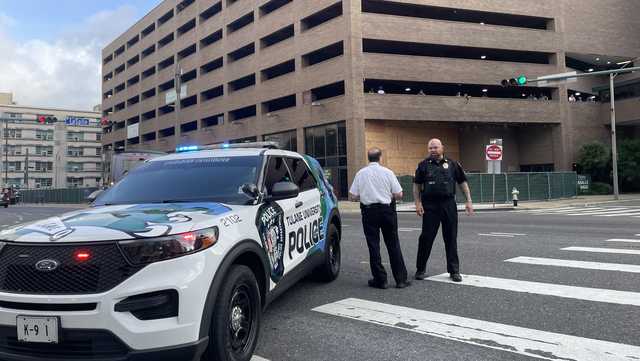 Unlike many municipal environments, campuses are designed to be open, accessible, and welcoming, which creates inherent security challenges that cannot be mitigated through traditional perimeter-based approaches. When violence occurs on a campus, it unfolds in environments that magnify risk. Incidents develop in seconds—not minutes—within densely populated classrooms, residence halls, and public venues where the margin for error is exceptionally small. The expectation placed on campus police in these moments is absolute. They must stop the threat, protect life, and restore order under intense public and media scrutiny.
Equally important are the incidents that never occur.
In one instance, a series of concerning communications—subtle at first, but escalating in tone—triggered a coordinated response involving campus police, behavioral threat assessment professionals, and external law enforcement partners. The situation was resolved before violence occurred. There were no headlines and no national attention, but the threat was real, and the outcome was the result of deliberate, professional police work.
The profession has seen the consequences when violence reaches a campus, and it has also seen countless instances where proactive policing prevented it. Both realities underscore the same point: Campus policing today operates in a threat environment that is complex, dynamic, and indistinguishable from the challenges faced in any community.
Prevention and Intelligence as Core Police Work
Equally important, but far less visible, is the work campus police do to prevent violence before it occurs. Increasingly, this work mirrors the intelligence-led policing strategies used by municipal departments.
Campus police departments now play a central role in threat assessment and behavioral intervention, identifying individuals who pose credible risks long before an incident escalates. This includes monitoring publicly available information, evaluating concerning communications, coordinating with mental health professionals, and responding rapidly to credible threats.
The absence of a tragedy does not mean the absence of a threat—it often means policing worked. Disrupted plots and timely interventions rarely generate sustained attention, yet they represent some of the most consequential law enforcement efforts taking place on campuses today. This proactive posture requires sworn authority, investigative skill, and sound judgment. It is not security work; it is modern policing focused on prevention rather than reaction.
Public Order, Training, and Authority in Practice
Campus police have also become central figures in managing large-scale protests, demonstrations, and encampments, all of which are events that demand constitutional policing, de-escalation, and crowd-management skills identical to those required in any major city. These incidents unfold under political pressure, national media attention, and intense scrutiny, often with fewer resources and less operational flexibility than municipal agencies enjoy. The responsibility remains the same: protect free expression while preventing violence and maintaining order.
Despite this scope of responsibility, the perception of campus police as “lesser” law enforcement persists. Most modern campus police officers attend the same state-certified academies as municipal officers and operate under the same legal standards governing arrest authority and use of force. What distinguishes campus policing is not diminished authority but specialized context, such as densely populated environments, complex governance structures, and heightened reputational risk that demand exceptional professionalism and restraint.
The Cost of Fragmentation in Practice
The consequences of this gap are not theoretical—they are operational.
When campus police are not fully integrated into regional law enforcement networks, critical information can be delayed or missed entirely. A behavioral threat identified on campus may not be connected to broader intelligence held by external agencies. Likewise, off-campus incidents involving students or individuals with ties to the university may not be communicated in a way that informs campus safety planning.
 During critical incidents, these gaps can become even more pronounced. Differences in communication protocols, unfamiliarity with campus geography, and a lack of pre-established coordination can slow response and create unnecessary complexity in environments where clarity and speed are essential. In high-consequence events, even small delays in information sharing or coordination can have significant impacts on outcomes.
Interoperability is not built in the moment; it is built through deliberate planning, shared training, and consistent engagement. When campus police are fully integrated into regional systems, response becomes more seamless, intelligence flows more freely, and agencies operate with a shared understanding of roles and capabilities. The absence of that integration introduces friction at the exact moment when cohesion is most needed. The cost is measured in delayed decisions, incomplete information, and reduced effectiveness when it matters most. Recognizing that reality requires the profession to move beyond acknowledgment and toward full integration.
From Recognition to Integration
The evolution of campus policing over the last two decades is no longer open to debate. Campus police are confronting violent crime, disrupting targeted threats, managing high-visibility public order events, and conducting complex investigations with the same authority, training, and expectations as their municipal counterparts. The risks are real, and the margin for error is small.
What has not evolved at the same pace is how the profession integrates campus police into the broader public safety framework. This is no longer simply a matter of perception but an operational gap.
When campus police are viewed as peripheral or secondary, they are too often excluded from regional planning, delayed in intelligence sharing, or overlooked as partners in coordinated response. These gaps have tangible consequences. They affect how quickly threats are identified, how effectively information is shared, and how seamlessly agencies respond when incidents cross jurisdictional boundaries. In a threat environment where seconds matter, fragmentation is a liability.
Closing this gap requires more than acknowledgment—it requires action.
For municipal and state law enforcement leaders, integration must be intentional and operationalized. This means ensuring campus police are fully included in
• regional intelligence- and information-sharing networks,
• fusion center briefings and threat assessments,
• joint training exercises and scenario-based planning, and
• mutual aid agreements and coordinated response protocols.
At the same time, campus police leaders have a responsibility to actively drive this integration forward. That begins with engagement. Campus chiefs should be consistently present at regional law enforcement meetings, intelligence briefings, and interagency planning efforts—not as observers but as contributors. Relationships built before a crisis are what determine effectiveness during one.
It also requires operational alignment. Campus police departments must ensure their policies, training, and response protocols align with regional standards and practices. Participation in joint exercises, adoption of shared incident management frameworks, and coordination of communications protocols strengthen interoperability and reinforce credibility.
Equally important is visibility. Campus police must communicate the scope and impact of their work, particularly in areas such as threat assessment, intelligence-led policing, and critical incident response. Too often, the most consequential work goes unseen. Leaders have a responsibility to ensure their agencies are understood not only within their campus communities but across the broader policing profession. That visibility should extend beyond the campus. Campus chiefs should actively engage their municipal and state counterparts in conversations about roles, capabilities, and shared responsibilities. In many cases, the gap in perception is not rooted in resistance but in lack of exposure. Creating opportunities for dialogue, sharing operational perspectives, and even using resources such as this article to help facilitate those conversations can bridge that gap and strengthen partnerships.
Campus police should not have to prove their legitimacy through crisis response to earn a seat at the table, but they should be unwavering in claiming that seat through leadership, professionalism, and engagement.
The question for law enforcement leaders is no longer whether campus policing is “real” policing.
The question is whether we are prepared to fully integrate those who are already doing the work. If a critical incident were to occur on a campus in your jurisdiction tomorrow, would your campus police department be fully integrated into your planning, intelligence, and response or operating on the margins? d
Please cite as
Kirk Bouyelas, “Campus Policing Is Real Policing,” Police Chief Online, August 26, 2026.