
On September 11, 2001, U.S. policing changed in ways that continue to shape the profession today. Twenty-five years later, the most enduring legacy of 9/11 is not found in equipment, training programs, or expanded authorities. It is found in the expectation that police leaders must anticipate threats, share information, and operate collectively across jurisdictional boundaries in ways that were once uncommon.
Before 2001, U.S. intelligence and threat analysis largely resided within federal agencies or specialized units. In the years that followed, fusion centers, joint task forces, and information‑sharing networks expanded the role of local and state agencies in identifying and preventing threats. This shift embedded intelligence-led policing into the daily responsibilities of police leaders across the United States and fundamentally altered how agencies prepare for and respond to complex incidents.
Over time, one lesson became clear: collecting information is not the same as achieving situational awareness. Agencies now possess unprecedented access to data, yet the persistent challenge remains turning that information into a timely, actionable understanding across organizational lines. The leadership task is no longer acquiring information, but ensuring it is shared, interpreted, and acted upon effectively, often under compressed timelines and across multiple jurisdictions.
A New Understanding of Interoperability
For many years, interoperability was viewed primarily as a technical problem. Significant investment went into ensuring radios could communicate across agencies. While these efforts were necessary, experience has shown that the limiting factor in complex incidents is often not technology, but coordination. When multiple agencies converge rapidly, success depends on clearly established command relationships, communication pathways, and shared understanding long before the first units arrive.
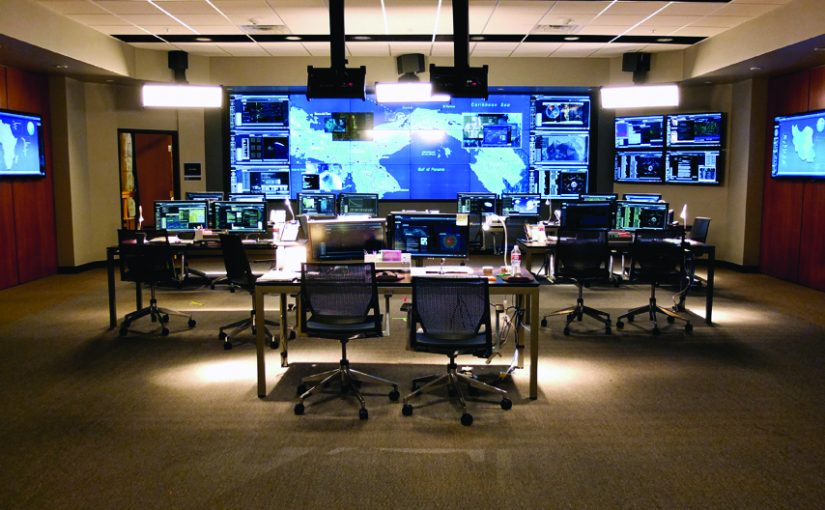
True interoperability today is a leadership function. It requires governance, policy alignment, and systems that allow agencies to communicate securely and confidently in real time. This applies not only to terrorism-related threats, but to other crises as well. Recent mass casualty incidents, large-scale emergency responses, and complex active threat situations have reinforced the principle that effective coordination depends on shared situational awareness, unified command understanding, and reliable communication across agencies. These capabilities cannot be improvised during a crisis; they must be established in advance.
Modern collaboration has evolved beyond traditional radio systems alone. Secure communication and coordination platforms now supplement existing infrastructure by enabling real-time information sharing across agencies within controlled, purpose-built environments. In Texas, interoperability has long been treated as a strategic priority, supported through statewide planning and sustained multijurisdictional cooperation.
The operational use of real-time collaboration and geospatial platforms such as Bridge4PS and the Team Awareness Kit in Texas illustrates how agencies can combine secure communication with real-time geospatial awareness. These tools enable cross-agency coordination without relying on informal or unsecured channels. They do not replace leadership or command authority, but they demonstrate how interoperability principles can be operationalized when coordination, accountability, and governance are prioritized.
Another lasting impact of the post-9/11 era is equipment standardization. Federal grant programs enabled agencies to acquire capabilities that improved officer safety and operational effectiveness. While public discussion sometimes focuses on appearance, the operational value lies in compatibility. When agencies respond together, standardized equipment and medical capabilities allow responders to integrate more effectively. The leadership challenge has shifted from acquisition to sustainment—ensuring training, policy, and oversight evolve alongside these capabilities.
The Next 25 Years
As policing looks toward the next 25 years, emerging technologies such as advanced analytics and automation will further test how agencies share information while safeguarding public trust. The structures built after 9/11 must continue to evolve, balancing security needs with transparency, accountability, and civil liberties.
The legacy of 9/11 is ultimately one of adaptation. It taught the profession that public safety depends on collective capability rather than isolated effort. Interoperability—organizational, operational, and technological— remains one of the most consequential lessons from that period. For today’s police leaders, success will not be measured by how much information an agency controls, but by how effectively it can coordinate, share, and lead in partnership with others while maintaining the trust of the communities it serves. d
Please cite as
C. Augustus Nunez, “The Interoperability Imperative: The Impact of 9/11 on Information Sharing,” Police Chief Online, September 9, 2026.