

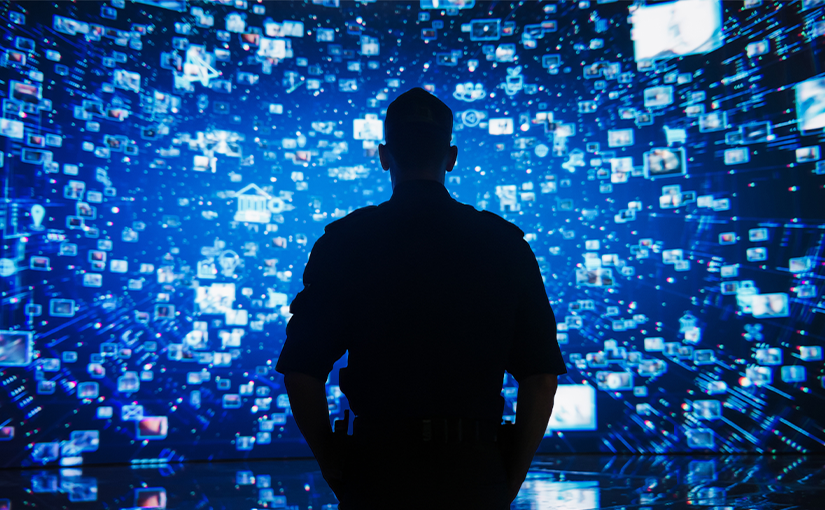
Digital evidence is no longer something investigators hope to find. It’s now part of nearly every major case police agencies encounter, from homicides and officer-involved shootings to narcotics, missing persons, child exploitation, organized crime, and fraud. For police chiefs, sheriffs, command staff, and other public safety leaders, that shift is more than a technology issue. It’s a leadership issue.
The phones, computers, vehicles, cameras, and cloud platforms people use every day have changed how victims are targeted, how suspects communicate, and how investigators uncover the truth. A single photo, location point, message thread, video clip, cloud backup, or vehicle infotainment record can move a case from speculation to direction. In many investigations, that one artifact can be the difference between a stalled case and a clear path forward.
Digital Evidence Has Moved From Helpful to Essential
Two decades ago, as digital evidence began to emerge as a case element, it was often treated as a “nice-to-have.” If investigators could get to a phone or computer and find something useful, great. But it wasn’t always viewed as central to the case.
Today, digital forensics is not just supporting the investigation. In many cases, it is the investigation.
Victims, suspects, and witnesses often leave behind digital trails through mobile devices, social media accounts, surveillance cameras, cloud services, vehicles, apps, financial platforms, and location-based services. If an agency doesn’t have a way to identify, collect, process, review, or explain that evidence, it’s already working at a disadvantage.
The challenge is that volume of evidence continues to grow while staffing, budgets, and time remain limited. Police leaders are being asked to make decisions about digital forensics, investigations, training, lab funding, prosecutor collaboration, and emerging technology at the same time they’re managing patrol operations, community expectations, recruitment concerns, retentions, and public accountability.
That’s why digital evidence can no longer sit off to the side as a specialized technical function that only a few people understand. It needs to be part of the agency’s investigative strategy from the onset.
The Reality Police Leaders Are Facing
Modern investigations don’t wait for agencies to catch up. A homicide scene may involve multiple phones, cameras, cloud data, call records, and vehicle systems. A missing person case may need fast access to location and communication data. A child exploitation case may involve devices, cloud accounts, encrypted apps, and online personas.
None of this is rare anymore. The real question is whether the agency is prepared to act on digital evidence quickly and effectively. That preparation requires more than buying a tool or sending one person to class. It requires a sustained, agency-wide capability built around people, processes, technology, and ongoing readiness.
Police leadership needs to know where digital evidence enters the agency, who is responsible for it, how it’s prioritized, how investigators and prosecutors review it, how backlogs are managed, and how the agency explains its findings in reports, warrants, briefings, and court.
The Power of “That One Artifact”
One small digital artifact can change the entire direction of a case. Sometimes it’s a timestamp. Sometimes it’s a location point. Sometimes it’s a deleted message, a search term, a photo, a login record, a Bluetooth entry, or a communication that places the right person in the right place at the right time. But when that artifact answers the question investigators have been stuck on, it can break the case wide open.
Consider a homicide where detectives have witnesses giving partial accounts, video from several locations, and a suspect denying involvement. One location artifact from a phone, one vehicle connection, or one camera clip that confirms movement before and after the crime can change everything. It can help investigators build the timeline, challenge a false statement, identify additional evidence, and move from “we think” to “we can show.”
Police leaders don’t need to become forensic examiners, but they do need to understand the impact of missing that artifact. If the agency can’t get to the evidence, doesn’t know it exists, lacks the people to process it, or has no clear way to share it with investigators or prosecutors, then critical information may sit untouched while the case slows down. That delay is not just an investigative problem; it can become a public trust problem.
When serious crimes are solved faster, confidence grows. The community sees an agency with leadership that understands urgency, backs the people doing the work, and has the capability to respond. The police department cares and it shows. That doesn’t mean every case is simple, and it doesn’t mean digital evidence replaces good police work. It means modern evidence strengthens good police work and helps leadership show the community that the agency is capable, prepared, and committed to uncovering the truth.
It’d be difficult to name a modern investigation that doesn’t involve at least one of the following evidence sources. Most serious cases involve several. Whether the case is local, state, or federal, the digital footprint is now part of the investigative reality:
• Physical devices: Mobile phones, laptops, tablets, desktops, drones, removable media, and other devices that may hold communications, files, photos, app data, location history, and user activity.
• Video: Body-worn cameras, dash cameras, doorbell cameras, business surveillance, city cameras, highway cameras, school cameras, and private security systems.
• Call detail records: Call logs, text records, timing advance data, tower connections, and other carrier data that can help build timelines and show communication patterns.
• Cloud content: Social media data, email, backups, online storage, app data, account activity, and location information that may not exist only on a device.
• Open-source intelligence: Public social media activity, online posts, public records, geospatial information, and other lawful open-source information that can provide leads and context.
• Vehicle infotainment and connected vehicle data: Call logs, contacts, messages, navigation history, device connections, locations, and vehicle system information.
Each source brings opportunity, but it also brings responsibility. Agencies need policy, training, annual funding, prosecutorial partnerships, and workflows that help personnel know what to look for, how to preserve it, when to escalate it, how to keep it moving through the case, and how to fund it.
Build the Program Before the Crisis
The worst time to figure out a digital evidence process is during the middle of a homicide, mass casualty event, or officer-involved shooting. By then, the clock is already running. Evidence may be deleted or overwritten, devices may lock or reboot, surveillance video may expire, and investigators may be waiting on information that could shape the entire case. The goal should not be to wait for another agency to move the case forward. It should be to build enough internal capability that your agency can act on the evidence quickly.
Police leaders can help by asking practical questions before the crisis hits:
• Who is responsible for digital evidence at the scene, in the lab, and during the investigation?
• How are urgent cases prioritized?
• Can investigators quickly review what examiners find?
• Can prosecutors access and understand the evidence they need?
• How does the agency handle evidence from outside sources such as cameras, cloud providers, and vehicles?
• What is the current backlog, and what is driving it?
• What training do patrol, detectives, supervisors, and command staff need?
• What happens after hours or during weekends when a major case breaks?
These questions don’t require every leader to know every technical detail. They require leadership to understand risk, capacity, and investigative impact.
Collaboration Must Be Built into the Workflow
Digital evidence doesn’t help anyone if it stays trapped in a lab, buried in a report, or separated from the people who need to act on it. Investigators, forensic examiners, and prosecutors all need to be working from the same understanding of the evidence.
That means developing workflows that reduce manual delays and confusion—investigators know what’s pending, examiners understand investigative priorities, and prosecutors have the context to make charging decisions and prepare for hearings.
The best digital evidence programs are defined by the people, processes, and tools that keep evidence moving from collection to review, from review to investigative action, and from investigation to prosecution.
When that workflow is clear, everyone involved understands their role, the case moves faster, and leadership has better visibility into what’s working, what’s delayed, and where support is needed.
Prepare for What’s Next
The digital evidence landscape isn’t slowing down, and the complexity of digital evidence continues to increase. Agencies are already dealing with encrypted devices, larger data sets, multiple cloud platforms, connected vehicles, artificial intelligence, disappearing messages, cryptocurrency, and more digital data than most teams can reasonably view by hand.
AI-generated content is a good example of why leadership needs to stay engaged. Images, audio, video, and online identities can now be manipulated in ways that affect investigations, public trust, and courtroom strategy—making it critical to verify digital evidence before relying on it in court.
The same is true for cloud data, connected vehicles, and drones. The evidence may not be sitting on the device alone. It may be stored in an account, synced to a service, captured in a vehicle or drone, backed up to the cloud, or spread across multiple platforms.
Agencies that build awareness and a digital evidence program now will be better positioned when those issues appear in critical cases.
What Police Leaders Can Do Now
Building a modern digital evidence program means taking deliberate steps that match the agency’s size, case load, and community needs.
1. Assess the current state. Understand the agency’s case load, evidence types, backlog, staffing, training, tools, storage, and prosecutorial needs.
2. Prioritize based on investigative impact. Focus first on the cases where delay creates the greatest risk: violent crime, child exploitation, missing persons, officer-involved incidents, and threats to public safety.
3. Train beyond the lab. Patrol officers, detectives, supervisors, crime analysts, and prosecutors all need a working understanding of digital evidence and preservation.
4. Create clear escalation paths. Personnel should know who to call, what to preserve, what not to touch, and how to request support when digital evidence appears.
5. Strengthen collaboration with prosecutors. Digital evidence is only valuable if it can be understood, explained, and used effectively in court.
6. Plan for after-hours operations. Major cases do not wait until Monday morning. Agencies need a realistic plan for urgent requests outside normal business hours.
7. Invest with purpose. Tools, training, storage, and staffing should be tied to real investigative needs, not just technology trends.
Final Thought
The agencies that succeed in this space aren’t always the biggest agencies or the ones with the most resources. They are the agencies that recognize digital evidence as a core part of modern policing and build around this reality.
For police leadership, the message is simple: Digital evidence is not a future problem, it’s today’s investigative reality. Leading in this age means building the people, processes, partnerships, and technology needed to keep cases moving, holding offenders accountable, and strengthening trust in the work the agency does every day.
|
Chad Gish Chad Gish, senior principal forensic specialist at Magnet Forensics, is a former police detective with more than 20 years of experience investigating homicides, mass casualty events, and crimes against children. He is a recognized expert in digital forensics, playing a key role in high-profile cases and the development of forensic labs and crime centers. |
|
About Magnet Forensics Founded in 2010, Magnet Forensics is a developer of digital investigation solutions that acquire, analyze, report on, and manage evidence from digital sources, including mobile devices, computers, IoT devices, vehicles, drones, and cloud services. Magnet Forensics products are used by more than 6,000 public and private sector customers in over 100 countries and help investigators fight crime, protect assets, and guard national security. Learn more at www.magnetforensics.com. |