
U.S. correctional facilities, wrestling with 1.8 million incarcerated individuals and critical staff shortages, are urgently seeking solutions to maintain safety and security despite dwindling resources. The challenges of balancing security imperatives with operational demands and ever-present resource constraints are immense. Information from The American Correctional Association highlights the severity of this challenge—nearly 50 percent of corrections agencies experience annual staff turnover of up to 30 percent, with a significant portion of new hires departing within their first year and a substantial number leaving within five years.1
In this demanding and complex environment, technology has emerged as a vital solution—no longer a peripheral enhancement, but a fundamental pillar supporting core correctional functions. It acts as a powerful force multiplier for fortifying security, optimizing operations, and fostering rehabilitation to reduce recidivism.
Targeting Contraband at Its Origin
A foundational requirement for introducing connectivity within a facility is ensuring its security. As a best practice, facilities should utilize devices that incorporate privacy, compliance, and other security features. Specifically, functionalities such as traceability, real-time detection, always-on tracking, and secure biometric verification allow correctional staff to deploy tablets and computers while also maintaining safe environments.
The digital cloud is an important part of connectivity. Correctional facilities should seek equipment that services incarcerated individuals while using a direct link to a cloud platform via a secure cellular network. This approach offers a faster, safer, and less hardware-intensive solution for installation, maintenance, and funding. Flexible technologies address the cost and time constraints that often hinder a correctional facility’s ability to offer connection, while simultaneously easing administrative burdens and empowering staff to concentrate on their primary responsibilities: safety, order, and fostering positive outcomes.
Fortifying Officer Safety and Streamlining Operations
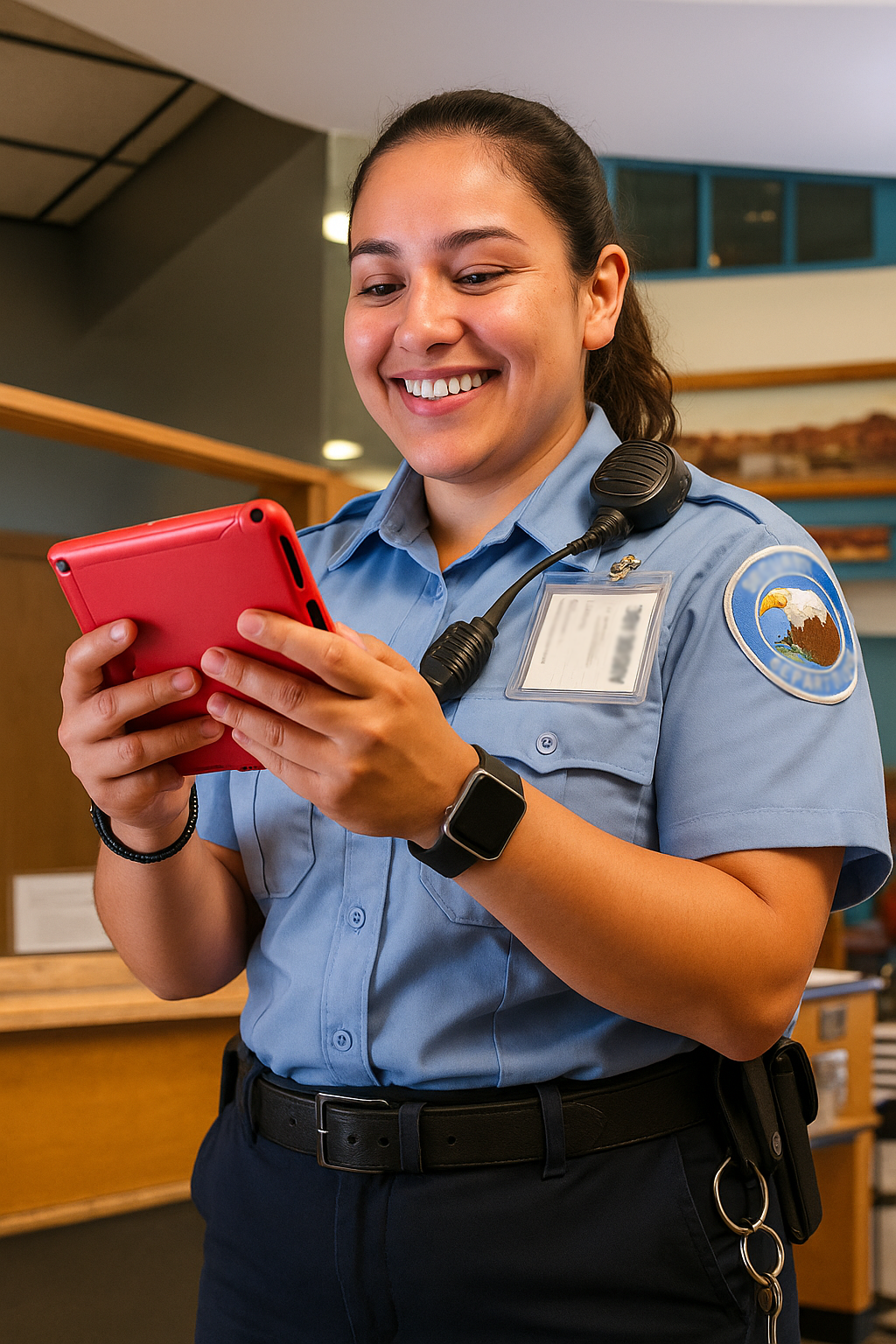
Secure technology extends beyond inmate communication management; it is a critical layer of protection for officers and a driver of operational efficiency. Modernizing administration, automating workflows, and centralizing communication and forms are key benefits. Purpose-built tools, such as the rugged and lightweight tablets, place real-time alerts, housing information, schedules, and vital updates directly in officers’ hands, significantly enhancing situational awareness and streamlining daily tasks. This significantly enhances situational awareness, allowing officers to anticipate potential issues, verify identities quickly, and respond more proactively and safely.
Furthermore, the implementation of digital rounds, checks, and logging reduces cumbersome paperwork and improves data accuracy, making crucial security data instantly accessible.2 These improvements in operational efficiency mean officers can dedicate less time to manual administrative processes and more time to actively supervising common areas and engaging with the population, which is fundamental to maintaining a secure and orderly facility.3
Some facilities are seeing measurable results from technology applications. Niagara County Correctional Facility experienced a remarkable 22 percent decrease in infractions and a notable improvement in staff safety following the adoption of Securus tablets. Officers reported a decrease in tension and an increased sense of control—benefits that extend beyond immediate safety concerns to positively influence the rehabilitative environment.4
Technology: A Catalyst for Stability and Rehabilitation
Beyond facility operations, technology can also alleviate the economic strain incarceration creates for communities. Providing access via secure tablets to approved content, educational programs, job training resources, and communication channels can significantly reduce the tension and conflict often born from boredom and frustration. Secure tablets give incarcerated individuals access to educational, vocational training programs, and industry certifications that help prepare them for successful post-release employment. The research is clear: correctional education is a powerful tool for reducing recidivism, and technology platforms make high-quality academic and vocational training more accessible.5
Moreover, maintaining positive family and community ties is strongly correlated with successful community reentry and reduced reoffending.6 Secure electronic messaging and video visitation, facilitated by tablets, allow incarcerated individuals to sustain these crucial relationships. Complementary tablet applications, such as R3UP, which empowers incarcerated individuals to engage in pre-release career planning, and Job1Stop, which directly connects released individuals with second-chance employers, are scalable solutions. These tools help bridge the employment gap for justice-impacted individuals, paving sustainable pathways toward economic mobility and stability.
Building a Safer Future Through Intelligent Integration
Implementing technology effectively requires careful planning, robust staff training, and strong security protocols. Technology, connectivity, and secure devices are essential components of modern correctional management, providing pathways to mitigate risks, enhance monitoring, improve operational efficiency, and support rehabilitative goals that ultimately lead to safer communities.
|
Kevin Elder A results-driven and visionary C-suite business & technology executive, Kevin Elder brings over two decades of distinguished experience in shaping technology-enabled business transformations. His deep passion for architecting solutions extends to regulated industries, where his strategic insights ensure Securus Technologies partners with customers to navigate category change. Elder’s exceptional leadership consistently delivers transformative results and fosters innovation and growth. |
|
About Securus Technologies Securus Technologies, an Aventiv company and the industry leader, equips over 1,800 corrections agencies with 80-plus high-grade technology solutions to enhance public safety and optimize facility operations. Their offerings include secure communication, advanced monitoring, and the only corrections-grade Wi-Fi enabled tablets featuring tamper alarms, GPS, fingerprint authentication, secure LTE, and a private Google Play Store. Securus’ products and services modernize administration, automate workflows, and centralize communication for staff, while creating vital e- and video connections for incarcerated individuals with family, friends, and resources like education and workforce development, ultimately strengthening community safety and economic stability. For more information, please visit https://www.aventiv.com/securus-technologies or join us on social media on LinkedIn, YouTube, and Facebook. |
Notes:
1Elizabeth Gondles, Michael Miskell, and Misganaw Beyene, “Staff Recruitment and Retention in Corrections,” Corrections Today (January/February 2023): 36–47.
2Dynamic Imaging, The Harris County Sheriff’s Office Goes Digital With CorreTrak.
3Simon Bonk and John Gannon, “The Potential of AI to Enhance Mental Health in Correctional Facilities: Benefits for Staff and Incarcerated Individuals,” eMHIC Global, October 31, 2024.
4Aventiv Technologies, “Niagara County Correctional Facility Partners with Securus Technologies to Revolutionize Facility with Secure Tablets,” press release, June 26, 2024.
5RAND, “Education and Vocational Training in Prisons Reduces Recidivism, Improves Job Outlook,” news release, August 22, 2013.
6Leah Wang, “Research Roundup: The Positive Impacts of Family Contact for Incarcerated People and Their Families,” Prison Policy Initiative Blog, December 21, 2021.
Please cite as:
Kevin Elder, “Addressing the Crisis: Technology Balancing Safety and Rehabilitation in Under-Resourced Corrections,” Police Chief Online, May 16, 2025.