
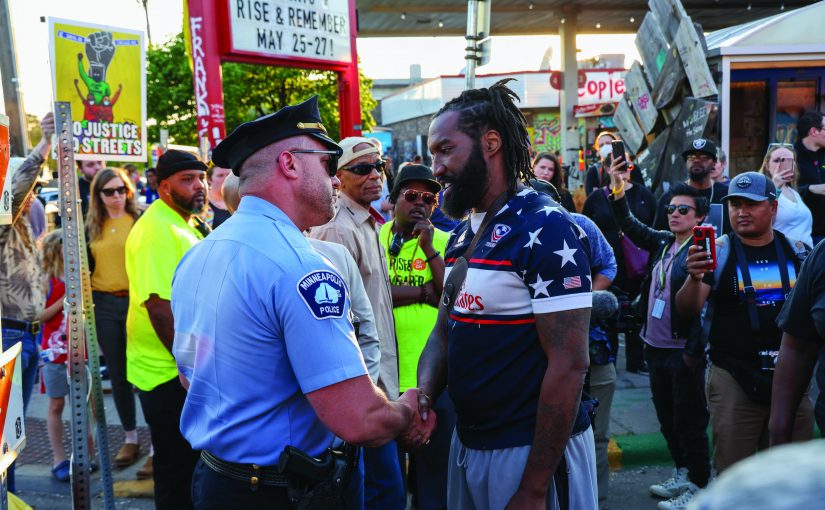
On May 28, 2020, the Minneapolis, Minnesota, Police Department’s Third Precinct station was overrun and set ablaze.
Two years later, I became the Minneapolis police chief and visited the abandoned precinct. The dry-erase board still listed the incident number for the last group of officers who were inside guarding it before they were given the order to evacuate. The glass at the front desk remained bullet ridden. Scorched walls and a lingering scent of smoke emphasized the haunting stillness. For officers, it was more than just a workplace or a building—it was a second home. Their forced evacuation was traumatic, surreal, and deeply personal. It became a defining moment for them—and for policing.
The death of George Floyd under the knee of a Minneapolis officer ignited global outrage. The largest civil rights demonstrations in the United States since the 1960s followed. Calls to “defund the police” echoed in legislatures and communities nationwide, and in Minneapolis, a veto-proof majority of the city council vowed to abolish the Minneapolis Police Department (MPD) and replace it with something else. What exactly that something else should be was never clearly defined.
In order to access the rest of the article sign in with your IACP or Subscriber credentials.