
Ten years ago, an article appeared in the September 2015 issue of IACP’s Police Chief magazine that would introduce a new word into the U.S. police and justice lexicon: deflection. Eventually, the word also would make its way into the public health world of drug treatment and recovery, as well as move into global usage. In the article, “Want to Reduce Drugs in Your Community? You Might Want to Deflect Instead of Arrest,” author Jac Charlier described a model of crime reduction and crime prevention in which police would “deflect” people who use drugs to substance use treatment rather than arresting and charging them, thereby addressing the root of the problem—that person’s drug use—and, in turn, reducing drug-related offenses in the community. Further, in the case of opioids, police also were seeking to prevent overdoses.
“This scenario is ripe for innovation,” wrote Charlier, adding that deflection lays the groundwork for “comprehensive solutions that work in a variety of jurisdictions.”1
A decade later, the benefits suggested in the 2015 article have borne out, and the practice of deflection indeed has exploded into the emergence of a global field and movement. Reflecting on the impact of deflection over the past decade, many additional lessons and benefits have become evident as well.
What’s In a Name?
At first appearance, the need for a word to describe what was a small and disparate set of police departments working with local drug treatment agencies to address overdoses might have seemed unnecessary. With only a handful of departments across the United States known to be doing what would become called deflection, and with departments each developing their own processes ad hoc, the need for a new word was anything but obvious. Now, 10 years on, the word itself, while still new to some, has stuck. That is in part because of the simplicity and logic of the term: while diversion moves people away from the justice system after they have already entered it, deflection happens earlier, before they even enter it, moving them into community-based services instead. In other words, diversion is post-filing, and deflection is always pre-filing, whether or not an arrest occurs.
At the time the deflection term was coined, it was becoming clear that (1) something new and different was happening between police and drug treatment that had not been seen formally before; (2) when looked at closely, even in those early days, it appeared that what other parts of the justice system (prosecutors, jails, courts, prisons, probation, and parole) had been doing for many years (working closely with drug treatment) had now arrived for police; and (3) this was more than a move upstream to the police now doing diversion; rather, this was something very different because it relied not on the justice system solving the problem, but first and foremost on community, treatment, and recovery as co-problem-solving partners with the police.
“When one thinks about when and where they can have the greatest impact with the fewest resources, including costs, it is always best and better to act first at prevention and then early intervention”
Another aspect of deflection that easily could be overlooked yet deserves to be acknowledged for the tremendous innovation that it represents is this: deflection emerged not from the treatment or recovery movement, but from—almost exclusively at first—police, sheriffs, and other law enforcement agencies. The birth of deflection was in large part, but not exclusively, a response to the overdose crisis, and the maxim that “we can’t arrest our way out of this” is due to the courage, willingness, and creativity of police, sheriffs, law enforcement, and prosecutors to seek alternative solutions.
While one-off versions of deflection have existed here and there since the 1990s, deflection now is practiced across departments, in multicounty approaches, and even at the level of state police. Deflection exists in training, practice, policy, legislation, research, and funding and continues to expand into new areas. It is here to stay and (together with its older sibling diversion, which also works at the intersection of public safety and public health) forms an entirely new way of understanding a practice-based, community-first-approach to reducing drug use and drug use–related crime, while promoting recovery and well-being.
Another way to think about the emergence of deflection is that whereas before, prevention and diversion of drug-related offenses happened through models such as treatment courts, there now exist new opportunities to reduce drug use and drug-related behaviors earlier than previously practicable by thinking of prevention–deflection–diversion, each offering opportunities to act.
Today, 9 U.S. federal agencies; 41 states; and innumerable counties, cities, foundations, researchers, universities, police training units, and—most importantly—police practitioners, recognize deflection. From those original few sites (and with federal, state, and local funding streams for deflection) it is now estimated that more than1,600 deflection initiatives exist, not including any of the sites outside the United States.
Deflection on an International Scale
Deflection has evolved in concert with parallel international advances in related drug- and crime-reduction policies grounded in public safety and public health working together. For instance, the United Nations Office on Drugs and Crime (UNODC), in the past several years, has hosted Commission on Narcotic Drugs (CND) side events focused specifically on deflection. Outside of the United States, deflection initiatives have emerged in the United Kingdom, Ireland, Kenya, Mexico, South Africa, Italy, Tanzania, and other countries as communities seek efficient and cost-effective means to reduce substance use and its consequences.2 Just as has occurred in the United States, these initiatives are growing organically and according to local needs and resources. As one example, deflection practice in the UK incorporates a vast menu of options, from children’s referrals from schools, to veterans, mental health co-response, and women-only pathways. Each program is coordinated through the local authority’s community safety partnership, and each local authority is very different from another.
10 Lessons Learned from 10 Years of Deflection
With these roots, 10 major lessons have emerged as deflection has become formalized and has grown across the United States and globally:
- Police–treatment partnerships are effective. The first and most important lesson is that police and drug treatment can work together, side by side, with a shared mission and vision, to make a positive difference for the community. This idea, prior to deflection, was not routinely seen nor practiced. Policing and drug treatment historically have had misgivings about working together, starting with not considering how it might benefit them both to work together. Thanks to deflection, this has now changed. Through locally driven efforts unique to each community, where police departments have flexibility and control over processes, along with treatment partners who offer clinical and outreach expertise, deflection offers mutually rewarding solutions whereby both the justice system and public health system benefit from shared goals through a collaborative working relationship. In practical terms, police officers on the street now have a new “partner” working alongside them to figure out how to handle situations for which police were neither trained nor equipped, and the treatment and recovery communities now have earlier-than-before access to people with problem drug use who were not yet, in all but overdose cases, at the point of crisis. Of course, for the deflection participant, they benefit from a supportive “warm handoff” to treatment and services as a way to stop continued drug use.
- Police–recovery partnerships are growing. The second lesson, which stems from the first, is that police and people in recovery from addiction could work well together. If the first lesson was a hill to overcome, then this lesson was the mountain. Indeed, the credit of deflection actually working on the ground, day in and day out, goes to the line officers and people in recovery who have learned to work together by understanding and respecting why the other does what they do. Deflection creates a situation where they need each other. This is because while the police previously may have had the contact with the person using drugs, deflection offered a way to build trust that mattered. Through what is known in the field as “relentless engagement,” the partnerships seek to ensure the person knows that both the officer and treatment/services/recovery supports are there to assist them.
- The community is on board. The third lesson is that communities can accept deflection, especially and importantly when key community partners are consulted and included from the outset. Binary notions such as “tough on drugs” versus “let people use drugs” are politicized statements that do not reflect the reality on the ground of what the public wants—a response that leads to a solution that actually works for their family members, neighbors, businesses, and the community alike, and then allows their local police to focus more on serious and violent crimes, including, not coincidently, drug trafficking. Limited resources require efficient use of those resources.
- Deflection is effective. The fourth lesson underscores all the others: deflection works. From early evaluations to research to now second and even third site evaluations, it is clear that this entirely new field and movement, which sits between drug prevention and justice diversion (post-filing and entry into the justice system), was indeed called for and needed. As anticipated when it came into being a decade ago, deflection evaluations have shown it can reduce drug use and reduce drug use–related behaviors and crime, while also promoting recovery, well-being, and community safety.3
- Deflection’s community focus is rooted in the history of policing. Deflection fits naturally within the history and role of policing. Sir Robert Peel, who established the first organized police force in London, England, in 1829, and August Vollmer, who became known as the “father of modern policing” in the United States a century later, each contended that a foundational principle of policing is to prevent crime before it occurs and that this happens in partnership with the community. They both proposed that, by addressing underlying reasons for criminal behavior, policing practices can mitigate the harm caused by crime and reduce its occurrence. Indeed, Vollmer practically described deflection exactly when he suggested at a 1919 IACP meeting that police collaborate with social service agencies as a crime prevention strategy.4
- Police want to help people recover from drug use. The sixth lesson is that the police want to learn more about drug use, misuse, and addiction; about drug treatment and how it works; and most importantly, how they can be part of helping people to recover from addiction. Every day, police see people who use drugs. They see them getting worse, not better, and they see the harmful impact of drug use on families and the community at large. Through deflection, police get to see people reduce and then stop and recover from drug use. This is critical to a profession that otherwise often sees only bad and negative things. Police can see in deflection the role they play in reducing the scourge of addiction and how helpful they and their profession can be. They are not asked to provide treatment nor do the case management, but they kick off the entire process. It is said within the field that while police may be only the first step of many to recovery from drugs, without law enforcement, deflection would never get started. (Deflection is now practiced by EMS and fire departments, as well as by others, including second responders, but police deflection still makes up the majority of sites.)
- Local, community-based designs, decisions, and control are vital. Deflection is a framework, not a program. This is often heard in the field with the idea being that while some critical elements that make deflection work, and work better, are known, it is and always will exist only within the context of the local community in which it operates. Deflection is a multisystems approach to addressing a complex, often chronic problem: addiction. That means the local community has a say in how it is designed and looks; police have a say in how it operates; and treatment and recovery providers have a say into how it will focus their limited resources. The complexity of deflection, understood within the design of a specific community, is what gives meaning to the statement, “If you’ve seen one deflection initiative, you’ve truly seen only one deflection initiative.”
- Deflection is good public policy. The combined voice of police, drug treatment, and community together makes for good, community-grounded public policy, and as a result, is much more powerful when speaking to drug policy, funding, and practice than any of them would be alone. This lesson comes from the work of each of the deflection sites themselves, which figures out how to make it work on the ground and from that, find their shared voice to do more and do better to share deflection insights with neighboring communities.
- Barriers to treatment persist. The ninth lesson is that deflection has required greater adjustments for treatment than it has for the police. For police, any initial hesitancy about deflection usually relates to the practical side of how this will work. For treatment, recovery, and health partners, working alongside the police is often a new endeavor altogether. Interestingly, treatment partners will state they know this can be done but do not know how. Deflection creates a bridge between public safety and public health and the resulting connection provides guidance; instruction; training; and most important, one-on-one relationships between officers, people who treat those who use drugs, and people in recovery.
- The efficiency of deflection: Why wait for an arrest? The tenth lesson comes directly from the motto of the deflection field: “Why wait for an arrest?” Deflection offers an opportunity to get people to treatment before they reach the point of entering the justice system, and often before addiction has set in at full force. Deflection creates pathways, six to be exact, to connect people to treatment, housing, recovery, and services.5)
This matters because when one thinks about when and where they can have the greatest impact with the fewest resources, including costs, it is always best and better to act first at prevention and then early intervention. This is, of course, where deflection operates. In cases of overdose, its focus is preventing the next potential overdose. Deflection is an early, upstream strategy. This means that deflection is efficient in addressing issues before they become crises or happen again.
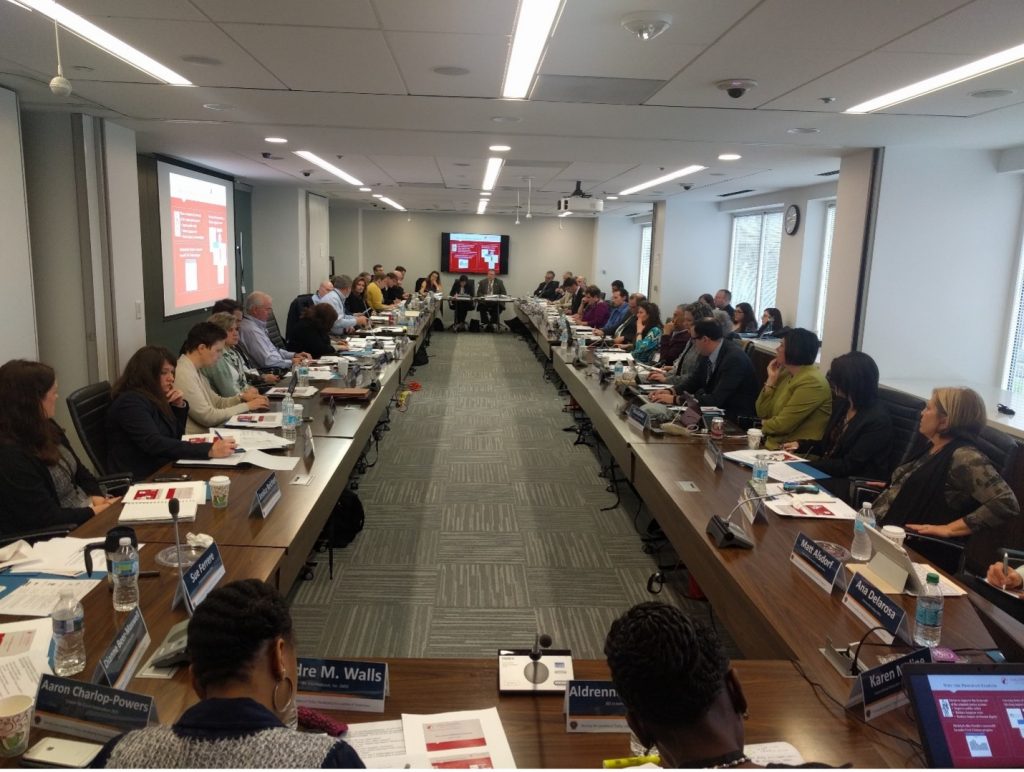
Photo courtesy TASC’s Center for Health and Justice.
As the decade since the introduction of the term deflection closes out and stakeholders reflect on these 10 lessons learned, the future of this field and movement is nothing but positive. It is growing nationally and globally; it is now common; it has funding and legislative support; researchers and policymakers are doing more of it; the demands to show more and better outcomes by the public are underway; and there is much more to come. Most important, the idea attached to the word deflection—this foundational change in how police and drug treatment work together, in and with the community—is no longer unusual, something not understood. Rather, the communities practicing it show that deflection can be done, and the field indeed is doing it!
Finally, as deflection celebrates its 10th anniversary with a celebration at the Police, Treatment, and Community Collaborative (PTACC) 2025 International Deflection and Pre-Arrest Diversion Summit in New Orleans, Louisiana, from December 2–4, deflection sites will share their own lessons learned. Police professionals are invited to join PTACC in New Orleans. After that, it’s time to get ready for the next 10 years. Many possibilities exist of where this work will go, but this field and movement, once unheard of, will be more, do more, and achieve more. Indeed, police, treatment, and communities alike are counting on deflection to do just that! d
Notes:
1Jac Charlier, “Want to Reduce Drugs in Your Community? You Might Want to Deflect Instead of Arrest,” Police Chief 82, no. 9 (2015): 30–31.
2Guy Farina, Jac Charlier, and Hope Fiori, “Preventing Substance Use–Related Crime through Deflection,” Journal of Multidisciplinary Studies in Human Rights and Science (forthcoming).
3Farina, Charlier, and Fiori, “Preventing Substance Use–Related Crime through Deflection.”
4George T. Patterson and Philip G. Swan, “Police Social Work and Social Service Collaboration Strategies One Hundred Years After Vollmer: A Systematic Review,” Policing: An International Journal 42, no. 5 (September 2019): 863–886.
5)Bureau of Justice Assistance (BJA), Comprehensive Opioid, Stimulant, and Substance Use Program, The Six Pathways: Frameworks for Implementing Deflection to Treatment, Services, and Recovery (BJA, 2023).
Please cite as
Jac Charlier and Jason Kew, “Deflection Turns 10: Lessons from a Decade of Police, Drug Treatment, and Community Partnerships,” Police Chief Online, July 23, 2025.