

The crisis of Missing and Murdered Indigenous Persons (MMIP) is one of the most urgent and complex public safety challenges facing police agencies in the United States. Indigenous communities—particularly American Indian and Alaska Native women and girls—face disproportionately high rates of violence, often compounded by systemic barriers to justice. According to the Centers for Disease Control and Prevention, homicide is the sixth leading cause of death for Native women under the age of 44, and, alarmingly, about 44 percent of Indigenous women report having been raped in their lifetime, and 58 percent have experienced intimate partner violence.1 A 2016 study by the National Institute of Justice found that more than 84 percent of Native women have experienced violence in their lifetime, and over half have endured sexual violence.2 Despite these alarming figures, many MMIP cases remain unsolved or under-investigated due to jurisdiction complexities, underreporting, and gaps in data collection.
For police executives, understanding the scope and complexity of the MMIP crisis is essential to improving outcomes. These cases often involve overlapping jurisdictions, limited investigative resources, and the need for culturally sensitive engagement with Indigenous communities.
The unique jurisdictional, social, and systemic challenges inherent in these cases often result in delayed responses and hindered investigations. To address these challenges, police leaders must prioritize incident command, foster collaboration across jurisdictions, and integrate both community engagement and data-driven investigative techniques. These proven practices, paired with real-world examples, offer a foundation for police leaders to strengthen their approach and contribute meaningfully to justice and healing.
The Importance of Immediate Action
Timely response is critical in MMIP cases. Montana Division of Criminal Investigation investigative agent Justin Kambic—a former sheriff’s deputy and MMIP coordinator—explains, the first officer on the scene should establish command immediately, much like law enforcement and firefighters do when responding to emergencies. This proactive approach ensures clarity in leadership and prevents jurisdictional ambiguity from delaying search and investigative efforts.
For instance, in the case of Selena Not Afraid, a 16-year-old who disappeared after being stranded at a rest stop in Montana, the absence of clear command and systematic search protocols significantly delayed the recovery effort. Her body was found nearly three weeks later within a mile of her last known location. (See Case Study 1.) This case underscores the importance of early establishment of incident command and the deployment of trained search resources.
Case Study 1
Missing Persons Investigation—Selena Not Afraid
When 16-year-old Selena Not Afraid vanished after an alcohol-fueled party in Billings, Montana, her disappearance became a tragic example of the challenges surrounding tribal missing person investigations. After the party, Selena joined five others for a ride back to the Crow Agency Reservation. The trip halted at a rest stop near Hardin due to car trouble. Selena wandered into the frigid Montana night, but when she didn’t return, the group—with the exception of one person—left. By the time family members were alerted and returned to the rest stop, Selena was gone.
Big Horn County, home to the Crow and Northern Cheyenne reservations, spans 5,000 rural square miles but is patrolled by only a handful of deputies. Like many Native American regions, it is under-resourced and jurisdictionally complex. Although Selena disappeared off tribal land, and thus within Big Horn County Sheriff’s jurisdiction, the search response exposed critical shortcomings in professional search techniques, communication, and overall command.
The close-knit tribal community quickly mobilized, with volunteers searching on foot and horseback. Yellowstone County provided a surplus military helicopter for aerial support. However, rumors that Selena had been kidnapped by a passing trucker and trafficked clouded efforts and diverted resources.
Without a federal nexus, the FBI’s role was limited. State resources, while potentially helpful, couldn’t be deployed without a formal request from local law enforcement. The sheriff’s office, overwhelmed by national media scrutiny and public speculation, struggled to manage the search effort and the flood of unverified tips.
After 20 days, a skilled U.S. Department of Interior search team conducted a systematic grid search near the rest stop. In a short time, they found Selena’s body less than a mile from the site. She had succumbed to hypothermia.
Five years later, the party host was charged with felony criminal endangerment, but the case underscores the urgent need for better coordination, resources, and leadership in missing person investigations—especially in tribal contexts where respect for sovereignty must coexist with swift, effective action. Selena’s story is a heartbreaking reminder of the stakes involved.
Building and Leveraging Collaborative Networks
Jurisdictional complexities frequently arise in MMIP investigations, particularly when cases span tribal, federal, state, and local boundaries. Establishing mutual aid agreements in advance can preempt these challenges. These agreements formalize roles and responsibilities, ensuring seamless cooperation during critical incidents.
Moreover, fostering relationships with tribal police and community leaders is essential. Local agencies often possess the trust and cultural understanding needed to engage effectively with Indigenous communities. Collaborative efforts, such as the Montana Missing Persons Task Force, which includes representatives from all eight federally recognized tribes in Montana, exemplify successful models of inclusive problem-solving. By holding community education meetings and integrating tribal representatives, the task force builds trust and facilitates the flow of critical information.
Integrating Data and Technology
Data-driven techniques can significantly enhance the effectiveness of MMIP investigations. Lost person behavior strategies, as developed by Dr. Robert Koester and supported by the International Search and Rescue Incident Database (ISRID), provide predictive insights into the movements of missing individuals based on behavioral profiles.3 For example, the database categorizes subjects—such as hikers, children, or individuals under the influence of substances—and correlates their behaviors with geographical data to narrow search areas effectively.
Incorporating GPS technology into search operations further improves efficiency. Modern systems allow responders to track search patterns, identify gaps, and ensure comprehensive coverage. This technology not only increases the probability of locating missing persons but also facilitates transparent reporting and after-action evaluations.
Culturally Sensitive Communication and Engagement
Engaging with Indigenous communities requires cultural competence and respect. Investigators should seek to understand and honor tribal customs and traditions. For instance, when Sheriff’s Deputy Justin Kambic helped locate a deceased tribal member, the family and community held a ceremony to provide closure, expressing profound gratitude for law enforcement’s efforts. (See Case Study 2.) Such moments emphasize the importance of respectful engagement and demonstrate the positive impact of culturally informed practices.
Building trust begins before a crisis occurs. Police agencies can establish rapport by participating in community events, providing regular updates about ongoing initiatives, and involving tribal representatives in training and planning efforts. When interviewing witnesses or family members, it is often beneficial to include local police officers who have preexisting relationships within the community.
Enhancing Search and Rescue Capabilities
Search and rescue (SAR) operations play a critical role in MMIP cases. Training police and community volunteers in SAR techniques ensures that resources are deployed effectively and that evidence is preserved.4
In the case of missing individuals near vehicles, ISRID data reveal that subjects are often located within a 0.7-mile radius. This type of insight can guide search efforts, as demonstrated in a case where a missing tribal member was found using geospatial analysis. (See Case Study 2.) Training responders in these strategies enhances their ability to locate missing persons swiftly, even in challenging environments.
Case Study 2
Cross-Cultural Connections
After Cascade County Sheriff’s Deputy Justin Kambic, a search and rescue expert, responded to tribal land from his distant jurisdiction, he became instrumental in locating a missing tribal member who had tragically died of exposure.
Following the recovery, the tribal police chief informed Kambic that the victims’ family wanted to invite him to dinner at the local school. Despite being away from home for days, with pressing investigations waiting and a strong desire to reunite with his own family, the deputy accepted the invitation. When Kambic arrived, he was surprised to find the entire tribal community standing outside the school, waiting to greet him.
A respected tribal elder began a prayer in the Assiniboine language, but her voice broke with emotion, and she could not finish. An elderly gentleman followed, singing a traditional native song for the deceased. The entire community joined in, lifting their voices in a shared expression of loss and reverence. The ceremony symbolized closure—when the man went missing, he could not be spiritually released to his ancestors. Now that he had been found, the proper rituals could be performed to honor him and provide peace for the family.
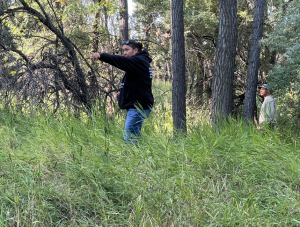 Kambic was deeply moved by the community’s gratitude and the powerful cultural significance of the event. “It gave me goosebumps,” he later recalled. This experience was transformative for him, prompting him to resign from the sheriff’s office and become the full-time Missing and Murdered Indigenous Persons (MMIP) coordinator for the Montana Department of Justice. “That search did it for me,” he said. “It’s why I’m doing what I do.”
Kambic, now a sworn investigative agent for the Montana Department Criminal Investigation, often references this case as an example of how law enforcement and community responses frequently default to assuming foul play, even when the circumstances are unclear. In this instance, speculation had swirled about a drug deal gone wrong or a shallow grave burial. By the end of the investigation, however, it was determined that the 32-year-old tribal member had gotten his truck stuck in the mud and attempted to walk for help. His body was found on the opposite side of a river from the truck, with his vest discovered further downstream. The cause of death was later confirmed as exposure.
When the truck was initially located, local volunteers and law enforcement speculated the man had drowned in the nearby river, which was at stage 4 flood levels during the spring. However, Kambic knew that data from the International Search and Rescue Incident Database (ISRID) and lost-person behavior studies suggested a different outcome. Statistically, missing persons near vehicles are often found within a 0.7-mile radius. Kambic persisted in the search, and, in this case, the man was found 0.68 miles from his truck, just one hour after his vest was located.
Like many missing persons cases, this one was hampered by significant delays in mobilizing the appropriate resources. The man had been missing for five days before Kambic was called in, and it took an additional two days before his body was found. Jurisdictional challenges further complicated the search: the man had left tribal land, with his truck and vest discovered in one county and his body across the river in another.
This case underscores the importance of timely, organized, and well-coordinated search efforts, particularly in rural areas with overlapping jurisdictions and limited resources.
Improving Data Collection and Reporting
Comprehensive and accurate data collection is vital. In Montana, studies revealed gaps in missing person reports, such as the absence of photographs for children. To address this, the state implemented an opt-in program for parents to store school yearbook photos in a repository managed by the Office of Public Instruction. This initiative ensures that the police have immediate access to up-to-date images when a child is reported missing.
Additionally, regular reviews of foster care records by the Montana Department of Justice and the Department of Public Health and Human Services have addressed discrepancies in reporting, ensuring that all cases are accurately documented and resolved when children are located.5
Conclusion
The investigation of MMIP cases requires police executives to adopt a holistic approach that combines swift action, interagency collaboration, technological integration, and cultural sensitivity. By learning from past cases, implementing data-driven strategies, and engaging with Indigenous communities, agencies can improve outcomes and rebuild trust. Leadership, preparation, and a commitment to justice are essential in addressing this complex and urgent issue. d
Notes:
1Centers for Disease Control and Prevention, National Center for Injury Prevention and Control, “Violence Against Native Peoples: A Fact Sheet” (2025).
2U.S. Department of Justice, Office of Justice Programs, National Institute of Justice, Violence Against American Indian and Alaska Native Women and Men: 2010 Findings from the National Intimate Partner and Sexual Violence Survey (2016), 2.
3Robert J. Koester, Lost Person Behavior: A Search and Rescue Guide on Where to Look—For Land, Air and Water (dbS Productions, 2008); dbS Productions, International Search & Rescue Incident Database (ISRID).
4Sarah Scoles, “Exploring ‘Lost Person Behavior’ and the Science of Search and Rescue,” Social Science Space, April 24, 2024.
5Montana Department of Justice, Office of the Child and Family Ombudsman, “Missing Foster Youth: Systemic Brief.”
Please cite as
Bryan Lockerby, “Investigating Missing and Murdered Indigenous Persons: A Guide for Law Enforcement Executives ,” Police Chief Online, June 25, 2025.