

“Every contact we have is an opportunity to build—or break—trust. We must be intentional with every interaction.”
Trust is the cornerstone of effective policing. It influences not only how the police serve their communities in routine interactions but also how they respond and are perceived in moments of crisis. Chiefs and police leaders must understand that every single contact, whether with the public or with the officers under their command, is an opportunity to impact trust. Without trust, there is no relationship building. Without relationship building, there is no foundation for effective collaboration between the police and the community the agency serves.
In the Waukesha, Wisconsin, Police Department, officers are taught to see themselves as thermostats, not thermometers. If they are cold and uncaring, their audience (the community) sees that. If they are hot-headed and arrogant, their audience sees that. But when the police officers and staff are compassionate and empathetic, their audience sees that too and responds in kind. Every time one puts on the uniform and wears the badge, they must be deliberate about the tone they demonstrate and surgical with the language they use.
From Community Policing to Neighborhood Engagement
Language matters. For this reason, Waukesha Chief Dan Thompson avoids using the term community policing. With the caliber of college-educated, technologically skilled officers now populating the profession, it’s time to think beyond simply “policing” a community. At the Waukesha Police Department, the focus is on neighborhood engagement, being actively involved in and with the community, not simply occupying or overseeing it.
This distinction is crucial: the police mission is not solely about surveillance or enforcement but about understanding and addressing the unique needs of neighborhoods. One of Waukesha’s guiding mantras captures this: Mission Driven, Vision Focused, People ALWAYS.
Chiefs, command staff, and supervisors must lead by example, engaging internally with their personnel so they will engage externally with the public. Service to the community and one’s teams must be a proactive commitment, not a reactive response. When an agency finds itself constantly reacting to problems born of eroded community trust, it is far harder to recover—community trust cannot be taken for granted.
Demonstrating Engagement and Transparency
For communities to trust their police department, they must feel that they are heard. That means showing up—not just when it’s convenient or when something has gone wrong but —consistently. Attending neighborhood meetings, listening to community members, and collaborating on solutions to specific issues are powerful demonstrations of care and commitment.
At one such meeting in Waukesha, residents shared how much it meant to see police leadership attending, not for a photo opportunity, but to listen, learn, and respond to the real issues affecting their lives. Seeing officers in schools, recreation centers, and town halls—not just in patrol vehicles—was a meaningful step in building trust.
The police can also leverage technology to enhance transparency. Public-facing dashboards and interactive data tools offer the community a clear view into the agency’s work. These platforms don’t just show numbers; they invite conversation. They enable the public to ask informed questions and engage in dialogue that fosters understanding and, ultimately, trust.
Leading Through Crisis: The Waukesha Christmas Parade Attack
 The importance of trust became painfully clear on November 21, 2021, when Waukesha experienced an unimaginable tragedy. During the city’s Christmas parade, a lone offender drove through the route, killing six people and injuring more than sixty others. In the days that followed, grief, anger, and confusion weighed heavily on the community.
Chief Thompson knew this tragedy could not define the community. At a vigil held shortly after the attack, he reminded the community that “this tragedy would not define us; it would refine us.” Those words became a rallying point for healing, and soon “Waukesha Strong” posters appeared throughout the city as a testament to the community’s collective resilience.
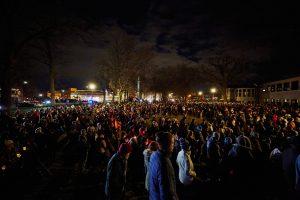 That night, Chief Thompson and police officers stood shoulder to shoulder with grieving families, faith leaders, and neighbors who had come together in the bitter cold to mourn and find strength. Many in the crowd expressed that they could not let the tragedy break them, and that they were counting on their police department to help lead them forward with integrity and compassion.

Two years later, at the parade anniversary, the community, including the police, came together again to dedicate a memorial at Grede Park, a sacred space of reflection, remembrance, and unity. This was not simply about honoring those lost; it was about demonstrating that the city, though tragically hurt, would not be broken.
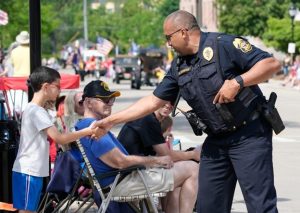 The resilience could be clearly seen on Memorial Day 2022, just six months after the attack, when Waukesha officers marched in the parade. The community’s response was overwhelming: people stood, clapped, and offered heartfelt gestures of support to the officers. It was a powerful and emotional moment, one that affirmed the department’s commitment had been met with trust. As Chief Thompson watched the standing ovation, he silently applauded the community members for their strength, their grace, and their faith in the police department.
This experience reinforced a critical truth: the trust they agency had built with its community before November 21 allowed them to lead with transparency, compassion, and courage through the crisis. When tragedy struck, the police department’s investment in neighborhood engagement and open communication gave them the foundation to help the city heal.
Lessons Learned — Responding vs. Reacting
In times of crisis, how one leads matters just as much as what they do. The Waukesha Parade tragedy reinforced that responding thoughtfully—not simply reacting—is essential to maintaining and rebuilding trust.
Key Lessons:
- Take the “Second Second.” Before speaking or making decisions, pause. A measured response is always more effective than an emotional reaction.
- Own the Situation. Be transparent about what is known and unknown. Taking responsibility, even in chaotic situations, builds credibility.
- Show Vulnerability. Leaders don’t need to be stoic robots. Acknowledging how a crisis impacts them humanizes leadership and creates connection.
- Lead with Care. Prioritize both the wellness of the first responders and the needs of the community. Authentic leadership is service.
- Consistency Builds Trust. Deliver on promises—large or small. Broken promises erode trust faster than anything else.
- Recognize Trust as a Two-Way Street (a Relationship). The community’s show of strength, as evidenced by the standing ovation during the 2022 Memorial Day parade, was proof that when police invest in trust, communities reciprocate in powerful, healing ways.
Responding is intentional, grounded, and driven by purpose.
Reacting is impulsive, emotional, and often counterproductive.
In leadership, especially in policing, an authentic response is the key to sustaining trust.
Consistency, Character, and Accountability
One of the most important principles for leadership is to never make a promise they cannot keep. Likewise, never ask the team to do something the leader would not do. Consistency and integrity in one’s actions build credibility, both internally and externally.
It’s also imperative to recognize that trust is fragile. Once lost, it is tough to regain. However, it can be reestablished through a sincere and consistent demonstration of caring, compassion, and understanding. When police leaders or officers say they are going to do something, they must follow through and do it.
If a chief is chasing a title or self-serving agenda, that intention will be quickly noticed by staff and the public. But when a chief’s purpose is rooted in something greater than themselves, when they are willing to do the hard and uncomfortable work of authentic leadership, trust is gained. Leaders who are willing to do difficult things for the right reasons further enhance public confidence.
Conclusion
Trust is far easier to lose than to earn, but it is also something that is shared. Police leaders frequently discuss the efforts required to build trust within their communities. That work is vital. But what is sometimes overlooked is how profoundly communities can, and do, demonstrate their trust in their police departments and leaders.
After the Christmas parade tragedy, Waukesha’s officers continued to show up for their city with care, transparency, and compassion, and in return, the community showed up for them. The standing ovation at the 2022 Memorial Day parade was a defining moment—that display of trust was not given; it was earned.
This is the essence of effective policing: a relationship, not a transaction. Trust grows when every interaction is intentional, but it flourishes when communities reflect that trust back.
Through proactive engagement, compassionate leadership, transparency, and a deep commitment to those they serve, police leaders and agencies can continue strengthening this bond. And when crises arise, as they inevitably will, it is that two-way trust between police and community that will allow them not just to endure, but to heal, rebuild, and move forward together. d
Please cite as
Daniel Thompson, “Neighborhood Trust Starts With Us: A Police Chief’s Perspective,” Police Chief Online, January 7, 2026.