

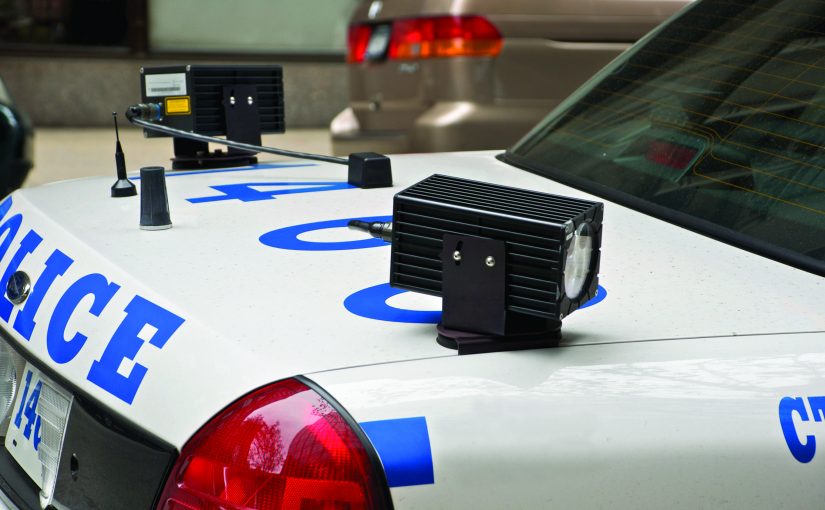
Over the last 40 years, policing in the United States has undergone transformative changes. From the introduction of bullet-resistant vests and dash cams to the integration of mobile data terminals and body-worn cameras, the past few decades have been marked by steady innovation. Amid these advances, however, one technology has stood out for its dramatic and measurable impact on crime reduction and public safety: automated license plate readers (ALPRs), also called automated license plate recognition.
In a relatively short time, ALPRs have evolved from experimental tools to vital parts of modern policing. Their ability to scan thousands of license plates daily and instantly compare them to “hotlists” of vehicles linked to criminal activity has proven extremely useful. But it’s not just about reading plates—it’s about connecting the dots at speeds no human could achieve, giving the police a proactive advantage like never before.
The Evolution and Proliferation of ALPR Technology
ALPR technology was first developed in 1976 by the Police Scientific Development Branch in the United Kingdom as a tool to combat terrorism. The technology demonstrated its operational potential in 1981 when UK police made their first arrest using ALPR (known in the UK as automatic license number recognition), identifying a stolen vehicle and apprehending the suspect.1 This early success laid the foundation for broader adoption across the UK and later worldwide.
Initially, ALPR systems were mounted on patrol vehicles to help officers scan license plates during traffic stops or routine patrols. However, a major breakthrough came with the introduction of fixed ALPR systems—stationary units installed on poles, traffic lights, overpasses, and other infrastructure. These fixed setups operate nonstop without human help, scanning thousands of vehicles daily in any lighting or weather conditions.2
“The journey from patrol cars to poles is more than a clever turn of phrase—it marks a shift in how policing is done, blending technology, real-time intelligence, and precision ALPR systems”
Fixed ALPRs capture essential data such as the license plate number, date and time of detection, and location of the read. This information is immediately checked against real-time databases that include stolen vehicles, wanted persons, AMBER Alerts, missing persons, and other investigative notices. By automating and speeding up this process, fixed ALPRs help the police act quickly when a match is found.3
Although initially costly and limited to larger departments, the expense of ALPR technology has fallen significantly since the mid-2010s. This shift has enabled smaller agencies with limited budgets to deploy fixed ALPRs, changing the landscape of vehicle-based crime detection.4 According to a 2022 survey by the International Association of Chiefs of Police, approximately 40 percent of U.S. agencies now use ALPR systems in some form.5 While this number accounts for all type of ALPRS, the survey noted that fixed ALPRs were among the most common.
The spread of affordable, high-performance ALPR systems has transformed how police departments fight vehicle theft, identify suspects, and handle critical incidents. What started as a counterterrorism tool in the UK has become a central part of modern policing around the world.
Why Fixed ALPRs Are a Game Changer
1. Dramatically Increased Detection Capabilities
The average officer can visually check a limited number of license plates during a shift and can only check one at a time. In contrast, a fixed ALPR camera can scan capture thousands of reads daily.6
This quantum leap in detection capabilities has led to significant success in locating stolen vehicles, recovering missing persons, and tracking down suspects in violent crimes.
2. Solving Serious Crimes Faster
ALPR data have been used in the investigation and resolution of numerous high-profile crimes. In one case in Sacramento, California, fixed ALPRs were instrumental in locating the suspect vehicle involved in a triple homicide. Within hours of the incident, the vehicle’s path was reconstructed using ALPR data, leading to the swift arrest of the perpetrator.
In another case in Georgia, a child abduction suspect was intercepted within minutes of the ALPR detecting the suspect vehicle’s license plate. Without this technology, hours might have passed before the child was found—if they were ever found.7
3. Force Multiplication
With staffing shortages a persistent challenge in policing, ALPRs offer a vital form of force multiplication. By automating vehicle surveillance and data analysis, officers can be redeployed to more complex and community-focused tasks while the ALPR system works tirelessly in the background. After all, ALPRs don’t need to sleep or take breaks, nor are they susceptible to distraction.
Transformative Impact of Fixed ALPRs Across U.S. Cities
Across the United States, police agencies are embracing fixed ALPRs at an accelerating pace. Cities large and small are deploying dozens—sometimes hundreds—of fixed ALPR units with remarkable results in both proactive policing and investigative follow-ups. These systems are proving to be a cost-effective, always-on resource that dramatically increases an agency’s ability to detect, deter, and solve crimes involving vehicles.
“It is clear that ALPRs will not fade into the background—instead, they are likely to become more prevalent, smarter, and more connected”
In Chula Vista, California, a strategically focused rollout of fixed ALPRs in auto theft hotspots led to a significant reduction in vehicle thefts and increased vehicle crimes solved. In just the first nine months of the ALPR program, the agency recovered 105 stolen vehicles and arrested 78 auto thieves; the department also credited ALPR cameras as assisting in 253 invesigation.8 The system not only helped apprehend offenders but also served as a powerful deterrent. By publicizing the presence of the ALPR cameras and showcasing their results, the Chula Vista Police Department increased public trust and dissuaded potential offenders.
DeKalb County, Georgia, experienced similar success. Investigators reported that fixed ALPR systems played a critical role in solving a series of violent crimes, including multiple armed robberies. By tracing the routes of suspect vehicles across a network of ALPR cameras, detectives were able to narrow down the timeline and movement patterns, cross-reference suspect descriptions, and identify vehicles of interest. These leads proved essential in cases where eyewitness information was limited or unreliable.9
These case studies represent just a fraction of the success stories emerging from across the United States. Fixed ALPR systems are being used by policies agencies of varying sizes to identify, locate, and apprehend suspects, often in situations where traditional methods would have come up short. According to estimates from Flock Safety, an ALPR provider in the United States, its technology is responsible for assisting in the resolution of more than 700,000 criminal investigations each year.10 The crimes investigated with the help of ALPR include homicides, kidnappings, hit-and-runs, and missing person cases—many of which may not have been solved without the speed and precision of ALPR data.
Beyond these individual success stories, the broader implication is clear: fixed ALPRs are rapidly becoming an indispensable investigative tool for policing. Their consistent performance, low cost, and integration into real-time crime centers and regional data networks mean they are more than just cameras—they are force multipliers, capable of delivering measurable results while enhancing public safety.
Fixed ALPRs as Engines of Investigative Intelligence
The true power of fixed ALPRs goes far beyond alerting officers to a single stolen vehicle or a wanted suspect. Their most significant role in modern policing is their ability to create a web of investigative intelligence, providing rich, real-time data that can be analyzed to identify patterns, follow vehicle movements, and connect suspects to crimes across different jurisdictions.
By continuously scanning passing vehicles and capturing license plate data with accurate time and location stamps, fixed ALPRs provide the police with an objective record of vehicle activity. When integrated with crime analysis software or real-time crime centers, these data play a key role in creating timelines, recognizing travel patterns, and reconstructing the movements of vehicles involved in criminal activity.
Investigators can determine if a specific vehicle has been seen near multiple crime scenes or during times that match reported offenses. This helps establish whether a vehicle—and by extension, its owner or driver—might be linked to a pattern of criminal activity. It also enables police to rule out innocent people, limiting the investigation’s scope and saving valuable resources.
A particularly valuable feature is alerts than can notify officers when a specific license plate is detected by any fixed ALPR in the network. This alert system becomes especially effective when the same vehicle appears repeatedly near apparently unrelated but geographically connected incidents, such as burglaries, shootings, or robberies. The agency can flag the plate for further monitoring or interdiction, and in many cases, the alert becomes the key link that connects multiple investigations.
Additionally, agencies are increasingly using ALPR data to identify vehicles traveling in tandem—a common tactic in organized criminal activity. If two vehicles consistently appear together in ALPR data near multiple crime scenes, it may suggest coordination between suspects or getaway drivers, enabling police to uncover broader criminal conspiracies.
Over time, the aggregation and analysis of ALPR data across entire jurisdictions—or even between cities and counties—enable the development of predictive insights. Using tools such as heat mapping and geospatial analytics, crime analysts can identify high-activity zones and likely routes for fleeing suspects. Some jurisdictions have begun integrating ALPR intelligence into broader regional crime suppression strategies, sharing data in real time with neighboring agencies to coordinate enforcement responses.
Cost Evolution of ALPR Systems
Mobile ALPR systems were extremely costly for many years, making them available only to well-funded police agencies. These early systems, usually mounted on patrol vehicles, carried a high price, ranging from $18,000 to $25,000 per unit, depending on the vendor and features included.11 In addition to the upfront hardware costs, agencies also faced significant ongoing expenses for software updates, system maintenance, training, and data storage. As a result, mobile ALPR units were mainly used by larger urban departments, state patrols, and federally funded task forces.
“In the long term, ALPR technology might also connect with smart city infrastructure, such as linked traffic lights, license plate-based toll systems, and municipal sensor networks”
This financial obstacle prevented many small to midsize police agencies from accessing the benefits of ALPR technology. Even among larger departments, the high per unit cost often limited deployment, reducing coverage and hindering the technology’s full investigative potential.
The true democratization of ALPR technology began with the development and widespread availability of fixed ALPR systems, especially those offered through modern cloud-based subscription models, removing the need for large upfront investments. Instead, agencies could lease ALPR cameras and services annually, paying a flat subscription fee that included equipment, software, cloud storage, technical support, and real-time alerting features.
Today, a fixed ALPR system usually costs around $2,500 per camera annually.12 This comprehensive pricing has removed many hidden and ongoing expenses that mobile ALPRs used to have, like server infrastructure and on-site IT support. The system stays fully operational around the clock, with 24/7 automatic license plate scanning, image capture, GPS tagging, and instant hotlist comparisons.
Furthermore, since the data are stored in the cloud, departments avoid the logistical and cybersecurity difficulties of managing local servers. The subscription model also guarantees that agencies receive regular system updates, proactive maintenance, and technical support, further lowering operational burdens and increasing uptime.
This substantial decrease in cost and complexity has made ALPR technology accessible to smaller police departments, campus security, and transit agencies. It has also allowed for much wider deployment—not just a few mobile units per agency, but dozens or hundreds of fixed ALPR cameras monitoring key intersections, highways, and neighborhood entry points.
Community Perception and Support
The success of any public safety technology depends not only on its effectiveness but also on community acceptance. Although concerns about privacy and government surveillance remain, technologies such as ALPR and facial recognition are typically better received when the police agency clearly explains the technology’s purpose and benefits.
Public support, however, is not automatic—it must be earned through transparent communication and policy clarity. Police agencies that actively link their ALPR programs to broader community safety goals—such as reducing auto theft, increasing case clearance rates, and recovering endangered persons—tend to face less resistance and gain stronger public support.
For example, departments that regularly share ALPR success stories—whether through social media, public meetings, or annual reports—create a clear narrative that the technology is used responsibly and for public benefit. These stories humanize the technology, shifting the focus from surveillance fears to real-world results, such as a recovered child or a stolen car returned to its owner.
Transparency about data retention policies, audit procedures, and access controls is also crucial for building trust. Agencies that openly share ALPR usage policies and provide ways for the public to inquire or oversee—such as police advisory boards or open records access—are more likely to maintain legitimacy and community cooperation.
Furthermore, successful agencies often collaborate with neighborhood groups, homeowners associations, and local councils when installing fixed ALPR cameras, especially in residential neighborhoods. In some cities, residents have directly funded additional ALPR systems in partnership with the police to enhance neighborhood safety.
Ultimately, the relationship between the police and the community needs to be based on trust. When ALPR technology is used with an emphasis on crime prevention, public communication, and accountability, it is more likely to be seen not as a threat to civil liberties but as a modern tool for protection and service.
What the Future Holds for ALPR Technology
As the police continue to adopt data-driven operations, fixed ALPR systems are set to play an even larger role in the future of public safety and crime prevention. These systems are no longer just capturing vehicle snapshots—they are becoming part of smart, interconnected networks that enable real-time decisions, regional cooperation, and advanced analytics.
In the coming years, fixed ALPRs are expected to be more integrated into real-time crime centers—centralized command hubs where live feeds, ALPR alerts, traffic cameras, gunshot detection systems, surveillance cameras, and predictive analytics come together to give officers and analysts an up-to-the-minute view of criminal activity. These integrations will enable agencies to shift from reactive policing to proactive interdiction, allowing for faster deployment of resources, improved situational awareness, and more accurate intelligence gathering.
Another key development is the growth of regional and national data-sharing networks, enabling ALPR data to move smoothly across jurisdictional boundaries. This interoperability will be essential in fighting mobile offenders involved in crimes like vehicle theft, human trafficking, drug distribution, and organized retail theft. Agencies working together across city, county, and state lines will be able to coordinate investigations in real time instead of relying on delayed or fragmented communication.
Artificial intelligence (AI) and machine learning are also expected to greatly improve ALPR capabilities. While current systems depend on rule-based matching against hotlists, future platforms will utilize AI to identify anomalies in vehicle behavior, such as unusual travel patterns, erratic movements, or frequent visits to high-crime areas. These insights can help prioritize alerts, flag previously unknown vehicles of interest, and even forecast where crimes might happen, enabling departments to adjust patrol strategies accordingly.
‘From tracking stolen vehicles and disrupting violent crime to aiding in missing person recoveries and enhancing regional intelligence networks, ALPRs have transformed the way the police detect, investigate, and ultimately deter crime.”
The mobility of ALPR technology is also advancing. Drones and autonomous vehicles may soon carry mobile ALPR systems, expanding surveillance to places that fixed cameras can’t easily access, like rural roads, alleys, or areas affected by natural disasters. Mobile ALPR-equipped drones could be deployed during active searches, critical incidents, or significant public events, providing a versatile aerial layer to vehicle detection efforts.
Soon, small autonomous drones might be deployed from fixed infrastructure near ALPR units, creating an intelligent, self-activating response system for police. When a fixed ALPR camera detects a vehicle associated with a crime—such as a stolen car, a suspect in an active investigation, or a vehicle connected to an AMBER Alert—the system could immediately trigger the launch of a nearby drone.
These compact drones, stored in weatherproof launch pods mounted on utility poles or traffic signal structures, would be pre-programmed to autonomously track the vehicle’s movements from a safe aerial distance. Equipped with real-time GPS, high-resolution video, and encrypted communications, the drone would relay the vehicle’s location, speed, and travel direction to dispatch or a real-time crime center.
This continuous, real-time aerial surveillance would close the critical gap between detection and officer response, providing nearby patrol units with the time and information needed to safely intercept the vehicle. Unlike fixed cameras that are limited to a single location, drones offer dynamic tracking capabilities, ensuring that a suspect vehicle doesn’t vanish before law enforcement arrives.
Such drone deployments would also decrease the risk of dangerous high-speed pursuits, allowing officers to wait for safer opportunities to make contact while maintaining full situational awareness. In densely populated or high-traffic areas, this could greatly enhance public safety and lessen liability risks for police departments.
One emerging—and controversial—trend is the potential integration of ALPR systems with facial recognition technology. While this capability could theoretically improve suspect identification with greater detail, it also raises serious civil liberties and privacy issues. Groups like the ACLU and Electronic Frontier Foundation have warned against merging these technologies without strong oversight, policy safeguards, and public transparency.13 Consequently, some areas are preemptively banning facial recognition integrations or imposing strict limits on how these tools can be used.
In the long term, ALPR technology might also connect with smart city infrastructure, such as linked traffic lights, license plate-based toll systems, and municipal sensor networks. This will enable cities to use traffic flow data and vehicle behavior analysis not only for public safety but also for urban planning, emergency response, and transportation policies.
It is clear that ALPRs will not fade into the background—instead, they are likely to become more prevalent, smarter, and more connected. With the right balance of technological progress, ethical policy development, and community involvement, ALPRs will continue to be a key part of modern policing, helping agencies solve crimes faster, deter offenders, and ensure public safety in increasingly complex environments.
Conclusion
In an age when policing is driven by data, ALPRs have gone from optional gadgets on patrol cars to indispensable guardians mounted high above the roadways. What began as a niche technology for well-funded departments has evolved into a game-changing tool accessible to agencies of all sizes.
From tracking stolen vehicles and disrupting violent crime to aiding in missing person recoveries and enhancing regional intelligence networks, ALPRs have transformed the way the police detect, investigate, and ultimately deter crime. And as these systems move from dashboards to utility poles—and soon perhaps to drones and AI-integrated command centers—they’re no longer just reading plates. They’re reading patterns, predicting problems, and rewriting the rules of engagement in public safety.
The journey from patrol cars to poles is more than a clever turn of phrase—it marks a shift in how policing is done, blending technology, real-time intelligence, and precision ALPR systems. This technology—once mounted only on patrol vehicles to help officers scan license plates during traffic stops or routine patrols—now with fixed ALPR capable of being mounted on infrastructure, remains firmly positioned as the police’s crime-fighting star: always watching, always working, always impartial, and always one scan ahead of the next lead. d
Notes:
1Next Generation Security Concepts, Inc., “History of License Plate Recognition.”
2Keith Gierlack et al., License Plate Readers for Law Enforcement: Opportunities and Challenges (Rand, 2014).
3Flock Safety, “How Flock Safety Eliminates Neighborhood Crime While Protecting Resident Privacy,” Flock Safety Blog, March 11, 2019.
4Flock Safety, “4 Cases Solved by Flock Safety License Plate Readers,” Flock Safety Blog, November 23, 2022.
5International Association of Chiefs of Police (IACP), License Plate Reader (LPR) Systems: Survey of Police Use of LPR (IACP, 2022).
6Gierlack et al., License Plate Readers for Law Enforcement.
7Flock Safety, “How Vehicle Intelligence Helped Recover a Kidnapped Child,” Flock Safety Blog, July 21, 2025.
8Chula Vista Police Department, “From the Start of our Updated ALPR Program on March 1st, 2024 to the End of the Year (2024), Here’s What Our Automated License Plate Readers Helped CVPD Accomplish,” YouTube video, 0:24, February 12, 2025.
911Alive, “2 Arrested in Connection to Armed Robberies at DeKalb and Gwinnett Grocery Stores” YouTube video, 0:33, June 9, 2025.
10Flock Safety, “How Many Crimes Do Automated License Plate Readers (ALPRs) Solve, Anyway?”
11International Association of Chiefs of Police (IACP), ALPR Model Policy and Guidelines, 2020.
12Campbell, California, Police Department, “Flock Safety LPR.”
13Haley Pedersen, “Communities Across the Country Reject Automated License Plate Readers,” Deep Links (blog), August 21, 2019; National Conference of State Legislatures, “Automated License Plate Readers: State Statutes,” updated February 3, 2022.
Please cite as
Billy Grogan, “From Patrol Cars to Poles: How Automated License Plate Readers Became a Crime-Fighting Star,” Police Chief Online, October 15, 2025.