

A detective sits at his desk, drowning in PDFs, bulletins, and email alerts. Somewhere in that digital chaos is the clue that could crack a case wide open, but it’s buried like the proverbial needle in a haystack.
Across town, another officer is processing a scene, staring at a single shell casing that could link two crimes. And, in a back office, a major crimes investigator scrolls through thousands of prison calls, wondering how many months it will take to find the one conversation that matters.
This is the reality of modern policing. Data are everywhere, time is limited, and agencies are understaffed. For police leaders, these pressures shape every decision about resource allocation, officer safety, and community transparency.
Artificial intelligence (AI) has emerged as a force multiplier, transforming the way agencies operate. New technology allows police to do more with less by accelerating workflows, connecting dots across jurisdictions, and freeing investigators from the crushing weight of growing data.
Turning Data into Actionable Intelligence

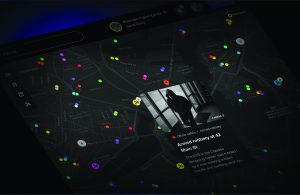
Every agency knows the pain of fragmented intelligence. Bulletins circulate by email, PDF files pile up, and critical clues vanish into inbox clutter. Matthew White, cofounder and CEO of Multitude Insights, saw this firsthand during a ride-along. He watched a detective struggle to stay on top of an overwhelming inbox and mistakenly delete a robbery suspect bulletin that got lost in the noise. Once a connection was made hours later, the suspect was quickly placed in custody. White knew that the detective had the expertise to make the connection sooner, but an antiquated process failed him.1 BLTN (pronounced “bulletin”) was built to ensure critical intelligence never ends up in the trash again.
The AI works much like a detective would, processing natural language and analyzing imagery across bulletins to identify patterns. When the solution finds a match, it generates a specialized alert called a SmartLink. These alerts proactively connect investigators across cities or state lines who may be searching for the same suspect.
The modern intelligence-sharing platform completely replaces the outdated flyer process with a real-time system that can be accessed via a mobile device. The platform’s SmartLink Engine supports multimedia evidence, allowing officers to upload high-resolution photos and videos straight from their smartphone into the application. Users can browse a personalized feed and receive real-time alerts in the field.
“When an officer has the right intel at the right time, they’re safer on every stop,” said White. For agency leaders, that means fewer missed connections, faster case closures, and safer officers. By automating detective work, BLTN gives officers time back to focus on engaging with the community and solving crimes.
Body-worn camera footage, cellphone extractions, and social media subpoenas contribute to an agency’s growing mountain of data. For many agencies, climbing to the top is becoming impossible, which is where Longeye steps in. “We help with this massive evidentiary backlog so that investigators can investigate more of the crime that’s happening … and can get better outcomes and clearer convictions,” said Guillaume Delepine, cofounder and CEO of Longeye.2
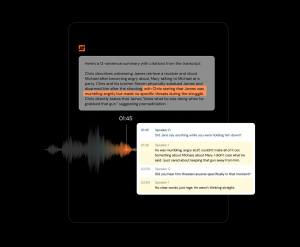
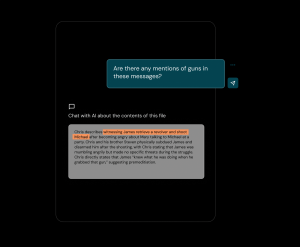
In the company’s AI-powered investigative workspace, detectives can upload case details and massive volumes of evidence, including audio, video, images, or documents. The platform even handles multilingual evidence, translating 100 languages with one click. Developers have seen uploads as large as 12,000 jailhouse calls and records from three Instagram accounts, totaling 900 hours of audio and 50,000 pages of social media records from just one case.
Once the information is ingested, the system ranks evidence by relevance, generates summaries, and links directly to source material. Every AI insight is cited and clickable, keeping officers one step from the original evidence and minimizing risk of errors. When users click a specific sentence in a summary, the platform takes them to the exact transcript or document line that supports it. They can continue the conversation, asking the platform questions or exploring ideas as if brainstorming with a trusted partner.
The results are game changing. In one major city case, an investigator processed 853 hours of jail calls and 50,000 social media pages in only one hour—work that would have taken months without Longeye.

Even as agencies tame the digital avalanche with innovative solutions, physical evidence remains a critical piece of the puzzle. Physical evidence left behind at crime scenes can make or break investigations. Every shell casing tells a story, but for decades, ballistic evidence has been constrained by lab backlogs and slow turnaround times. “When that information arrives days or weeks later, opportunities are missed, suspects move, witnesses disengage, and cases grow colder,” said Brad Davis, chair and CEO of Revelen.3
Advances in AI capabilities have opened the door to capturing and analyzing ballistic evidence at the scene rather than waiting weeks for ballistic results to return from a lab. The ShotOptix Scanner is a compact, field-deployable device that works with a standard smartphone, tablet, or laptop. When investigators place a shell casing into the handheld scanner, the system captures high-resolution images and transmits them to an integrated AI-enabled platform. Machine learning models convert visual toolmark data into structured, searchable representations that can be compared against prior submitted casings. Within minutes, the device delivers firearm correlation results with over 90 percent confidence, along with links to related shootings and geographic context.
The ShotOptix Scanner is designed to operate in various conditions, such as limited connectivity and extreme weather. It can even scale seamlessly for agencies processing a handful of casings—or thousands—per month.
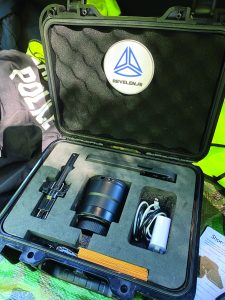
In a recent case involving two shootings that were 70 miles apart, casings were linked within 24 hours with the help of the ShotOptix Scanner. That connection shaped interviews, prioritized suspects, and resolved critical questions without waiting weeks for lab results.
By moving ballistics into the field, investigations can start with a correlation, guiding strategy from the outset. Agencies can process more evidence, share insights across jurisdictions, and disrupt patterns of violence before they escalate.
Conclusion
These tools share a common thread; they’re built for law enforcement by those who understand the profession’s reality. The solutions don’t replace detectives, rather, they restore detective integrity by clearing unnecessary data that delay modern investigations.
With faster case resolution, safer officers, and stronger community trust, the payoff of AI solutions is significant. As Delepine puts it, “We’re heading for a breaking point where the evidence load will overwhelm the system. Agencies that adopt smart AI now will be the ones that keep pace and keep trust.”4d
Notes:
1Matthew White (cofounder and CEO, Multitude Insights), email interview, December 22, 2025).
2Guillaume Delepine (cofounder and CEO, Longeye), phone interview, December 31, 2025.
3Brad Davis (chair and CEO, Revelen), email interview, January 5, 2026.
4Guillaume Delepine, phone interview.
Source ListPlease click on the companies’ names to go to the companies’ websites. |
|
Please cite as:
“Empowering the Modern Investigator,” Product Feature, Police Chief 93, no. 2 (February 2026): 56–58.