

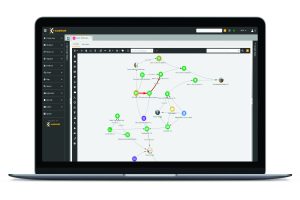
A detective starts their shift not with a stack of paperwork but with a login. Their dashboard lights up with overnight updates: a witness statement from patrol, forensic results flagged for review, and a suspect’s known associates mapped in a clean, visual web. The software has already linked a string of break-ins across three counties to a suspect flagged by pattern recognition.
This automated identification of relevant data and streamlined information sharing is the new reality for police agencies embracing case management software.
The policing profession is facing unprecedented challenges, such as rising caseloads, cross-jurisdictional crime, heightened transparency and accountability expectations, and budget constraints. In this environment, case management software isn’t a luxury, it’s a necessity. The right platform can help departments do more with less, while also improving investigative outcomes and public trust.
Digital Tools of the Trade
Modern policing demands more than intuition. It requires intelligent systems that can connect dots, uncover leads, and streamline operations.
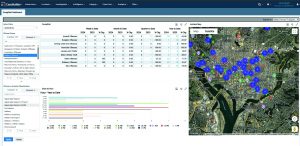
For investigative case management, police agencies have traditionally relied on paper folders, whiteboards, or legacy records management systems that weren’t designed for investigative workflows. These manual approaches lacked analytics, collaboration tools, and workflow engines to help detectives solve cases quickly. As a result, clearance rates suffer, particularly for more complex investigations like robberies or homicides. But as the public relations manager at SoundThinking, Jerome Filip, explained: “Many departments may be unaware of the advantages a modern solution can employ to optimize investigations and increase the efficiency of investigative work.”1
Recognizing this gap, SoundThinking originally developed a case management solution specifically for the New York City Police Department when they sought a more intuitive and efficient way to manage investigations. In 2020, SoundThinking launched a commercially available version for broader public safety adoption. “Now part of the broader SoundThinking platform, CaseBuilder reflects years of feedback from detectives, supervisors, and prosecutors to streamline the investigative process,” said Filip.
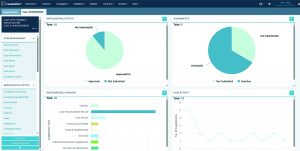
CaseBuilder is a cloud-based system that supports the full life cycle of a case—from intake to prosecution. It is designed to organize investigations, improve case progress, enhance case collaboration, and leverage CrimeTracer’s CJIS (FBI’s Criminal Justice Information Services) records. “Departments are no longer exclusively focused on closing cases,” said Filip. “They’re being asked to demonstrate how cases are prioritized, how resources are allocated, and whether investigative practices stand up to scrutiny.” CaseBuilder supports a wide range of investigation types, including crime gun investigations, fugitive warrants, and lead management for the National Integrated Ballistic Information Network, among many others.
Also born out of frustration with manual processes, Case Closed Software was designed to solve configurability, affordability, and usability issues for law enforcement and task force operations. A large, multi-jurisdictional drug task force in Texas has even turned to Case Closed Software in its fight against drug trafficking. By deploying the software, agents were able to track suspects, vehicles, and controlled buys in real time. The platform’s chain-of-custody tracking and mobile access allowed officers to log evidence from the field and share updates instantly.2
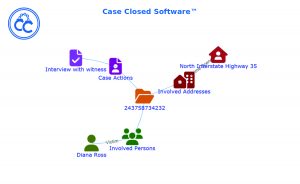
With full CJIS and TX-RAMP compliance, multiagency configuration, and bulletproof audit trails, Case Closed Software supports the entire life cycle of an investigation. The platform delivers a range of specialized capabilities that go beyond standard case management features, including confidential informant management, a criminal gang database, remote case review for prosecutors, and multilingual auto-translation. With the software, officers and analysts can enter case and tip information quickly; upload images, interviews, and reports; spot connections across multiple investigations; and even stay CJIS and 28 CFR (Code of Federal Regulations) Part 23 compliant.
Whether it’s a local detective bureau or a statewide task force, Case Closed Software’s flexible, cloud-based system adapts to each agency’s needs without inflated costs or rigid templates. “We didn’t build Case Closed Software for a single type of crime or a single type of user. It flexes and grows with the mission,” said Chief Executive Officer Douglas Wood.3 The software is a practical solution for agencies looking to modernize without overhauling their entire infrastructure.
For decades, critical information was siloed, and collaboration across jurisdictions, and even units, was slow and inconsistent. Today’s platforms unify data across units, jurisdictions, and disciplines, allowing investigators to see the full picture. “We live in the information age. Therefore, having access to accurate information has helped police managers make more assertive decisions,” explained Inquiry Quest LLC Director Rodrigo Tchalski.4
Inquiry Quest’s Caseboard is a data intelligence platform that was developed to truly understand the modern police environment and offers an intuitive way to manage cases. The software has roots in business management tools that allow supervisors to design workflows, describe tasks, and organize teams at an agency.
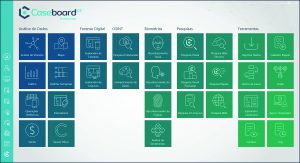
Case management in Caseboard is divided into three parts: (1) workflow creation, (2) operations management, and (3) user tasks. When creating workflows, managers can design all their workflows intuitively using a standardized graphical notation called business process model and notation (or BPMN). This means that, in a single environment, it is possible to organize both the tasks within a workflow and the teams that need to play a role in each task within the workflow. At this point, managers can organize folder structures to store data and define any necessary information. Managers have access to all data generated during investigations and can gain an overview of everything occurring in the agency’s environment, including how much has been accomplished in each operation, what tasks each user has, which tasks are overdue, as well as other metrics. Caseboard provides each user with access to their own work schedule, task list, messages, and alerts.
Features such as link analysis, mapping, graphical analysis, and timeline tools assist investigators in visualizing patterns and identifying leadership structures.
“In a field where critical decisions and public trust are paramount, having the right information at the right time can define mission success and community impact,” said Dorian Deligeorges, chief executive officer for Kaseware.5 The solution operates as an integrated investigative and case management platform designed for flexibility, scalability, and operational efficiency. Kaseware’s strength lies in combining investigative tools with compliance and workflow automation, while offering flexibility to scale based on agency use cases, such as the case of the mysterious drones in Philips County, Colorado. Law enforcement in the area faced a wave of mysterious drone sightings over critical infrastructure. The story has not only impacted locals, but it has garnered national media attention. With limited resources and growing public concern, the sheriff’s office turned to Kaseware to assist in coordinating the investigation. The software’s centralized data-sharing and geospatial tools enabled deputies to log sightings, cross-reference U.S. Federal Aviation Administration data, and collaborate with federal partners in real time.6
The system’s streamlined workflows, automation, and intelligent insights minimize administrative burden, allowing investigators to focus on smarter case work; eliminate inefficiencies; and support proactive, community-centered policing.
Turning Vision into Action
Each of these solutions is just one part of a larger trend. Their features align with and support broader changes seen throughout the policing profession:
- fragmented systems to integrated platforms
- reactive casework to proactive intelligence operations
- manual workloads to automated, efficient processes
- isolated agencies to collaborative, information-sharing partners
These platforms aren’t just software; they’re force multipliers. Whether tackling gang violence, drug trafficking, or emerging threats, the right case management system can turn fragmented data into actionable intelligence. Chiefs who invest in these solutions are equipping their agencies for smarter, faster, and more accountable policing.d
Notes:
1Jerome Filip (public relations manager, SoundThinking), email interview, August 1, 2025.
2Crime Tech Solutions, “Texas HIDTA Drug Task Force Deploys Case Closed Software,” Crime Tech Weekly, December 27, 2021.
3Douglas Wood (chief executive officer, Case Closed Software), email interview, July 29, 2025.
4Rodrigo Tchalski (director, Inquiry Quest LLC), email interview, July 29, 2025.
5Dorian Deligeorges (chief executive officer, Kaseware), email interview, July 28, 2025.
6Korinne Condie, “Phillips County and ‘The Case of The Mysterious Drones,’” Case Study.
Source ListPlease click on the companies’ names to go to the companies’ websites. |
|
Please cite as:
“Harnessing Technology for Meaningful Change,” Product Feature, Police Chief 92, no. 9 (September 2025): 68–70.