

At 7:40 p.m. on a Friday evening, a patrol officer responds to a call from a concerned parent. Their teenage daughter has been communicating online with someone encouraging her to travel to another city to “meet friends.”
The officer reviews the phone and captures a screenshot of the account involved. The profile uses a generic username and a stock image. There is no real name attached. Shortly after the officer leaves the home, the account disappears. The username changes, the messages are deleted, and the digital trail that might have led investigators to the person behind the account seems to vanish.
What remains is a screenshot and a single identifier. For many investigators, this is where the real work begins.
When the Only Lead is a Username
 Situations like this are becoming common. Patrol officers are often the first to encounter digital clues in the field, sometimes long before analysts or specialized investigators have a chance to review them. For police chiefs, that creates a familiar problem. Important intelligence appears on the front lines, but the tools needed to analyze it are usually somewhere else in the organization.
Cases involving trafficking, fraud, or online exploitation rarely begin with a full picture. More often they start with fragments such as a username, an email address, a phone number, or a profile link shared by a victim or witness. Digital identities shift quickly, and people involved in criminal activity often operate across several platforms, changing aliases and abandoning accounts whenever attention turns their way.
Too Much Data, Not Enough Time
At the same time, investigators face another challenge. The problem is not a lack of information, but too much of it. Searching a single identifier across social media platforms, messaging services, websites, and exposed data sets can easily turn into hours of manual work. Meanwhile, analysts responsible for digital investigations are already handling requests from across the department.
Digital evidence now shows up earlier in investigations and in far greater volume than many agencies were built to handle. Patrol officers regularly encounter online clues in the field, yet the tools needed to analyze those clues often sit within specialized investigative units.
That creates a bottleneck. Detectives and patrol officers wait for digital returns while analysts manage an ever-growing backlog. The gap between finding a clue and turning it into a lead continues to grow.
In the case involving the disappearing username, investigators need to know quickly whether the account connects to a broader network recruiting victims online. Waiting several days for a digital intelligence review could mean losing the chance to identify related accounts or prevent further contact with the victim.
Closing the Gap Between the Street and the Analyst
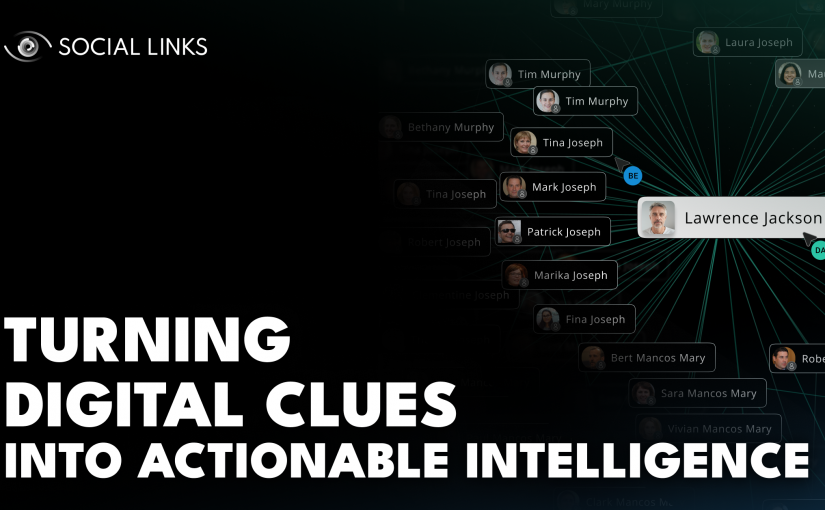
Open-source search platforms, such as Crimewall, allow officers and investigators to run structured open-source intelligence checks on digital identifiers such as usernames, phone numbers, or email addresses. Instead of manually searching multiple platforms, the technology pulls together publicly available signals from open web sources and social platforms and presents them in a single investigative view.
Even if the original profile disappears, a new account can still be registered on another social media platform using the same email address or phone number. A similar username and profile photo may resurface elsewhere, and posts from these accounts may continue to be liked and promoted in the same communities and groups.
That info leads investigators to other accounts. Suddenly the investigation has more than a disappearing account. It has several connected identifiers.
From One Identifier to a Network
This kind of digital footprinting is becoming central to modern investigations. People operating online rarely rely on a single account. Instead, they maintain multiple identities across different platforms, each revealing a small part of the overall picture.
When those identifiers are connected, investigators begin to see the network around a subject. In the previously mentioned trafficking investigation, several of the discovered accounts appear to interact regularly. One advertises travel opportunities while another appears to manage communication with potential recruits. What first looked like a disposable username turns out to be the doorway into a larger operation.
Building Capacity Without Adding staff
For chiefs responsible for investigative operations, the value of this capability is not only speed. It is the additional capacity it creates.
Digital investigations have traditionally depended on trained analysts who know how to navigate multiple online environments and interpret fragmented signals. Those analysts remain essential, but many agencies simply do not have enough of them to keep up with the amount of digital evidence now appearing in everyday cases.
Tools like Crimewall help shift some of that early work closer to the field. Patrol officers and detectives can run structured first-stage OSINT checks themselves rather than sending every digital clue into an analyst queue.
This allows analysts to focus on deeper investigative work such as network analysis, behavioral patterns, and intelligence development, while the first stage of digital inquiry happens where the evidence is discovered. In practice, this expands the investigative capacity of existing teams without requiring additional personnel.
Accountability in Digital Investigations
Governance and accountability are just as important for many agencies. Open-source intelligence work increasingly faces scrutiny in courtrooms and in public conversations about digital surveillance. Chiefs and legal advisors need confidence that investigative tools operate within clear legal boundaries and produce documentation that can stand up to later review.
OSINT search tools use publicly available and legally accessible data sources and reputable platforms maintain detailed audit logs that record investigative queries and data access activity. Supervisors can review those records to see how information was collected and confirm that investigative work followed departmental policy and privacy standards.
If an investigation is later examined in court or questioned in public reporting, the agency can show exactly how digital intelligence was obtained and analyzed. For command staff balancing investigative effectiveness with civil liberties concerns, that level of transparency matters.
Picking Up the Trail
Meanwhile, the trafficking investigation continues. The identifiers uncovered during the initial lookup give detectives a clearer starting point the following morning. Instead of beginning with a disappearing account, investigators now have several linked profiles and a phone number associated with one of them.
Detectives can begin identifying the person behind the accounts and tracing connections to others involved in the activity. What started as a single screenshot becomes the beginning of a network investigation.
Cases like this reflect a broader shift in policing. Digital clues now appear at the earliest stages of many investigations, often in the hands of patrol officers or first responders. Agencies that can quickly turn those fragments into investigative intelligence gain a clear advantage.
For police chiefs dealing with limited staffing, growing volumes of digital evidence, and rising expectations for accountability, digital intelligence is no longer a specialized function. It has become part of everyday policing.
The real question is not whether those signals exist. It is how quickly they can be captured, connected, and shared across the agency before the trail disappears.
|
About Social Links Agencies in more than 80 countries rely on Social Links technologies for digital investigations. To see how SL Crimewall helps investigators turn digital clues into leads, visit sociallinks.io or request a demonstration. |