
In 2022, gun-related incidents were the leading cause of death for children in the United States.1 Since 2020, firearm deaths have surpassed those from car accidents.2 While overall violent crime rates have declined across the United States in recent years, there is an alarming epidemic of gun violence among youth. An accompanying sharp rise in gun assaults against children emphasizes that these deaths are not accidents but deliberate acts of violence targeting some of society’s most vulnerable members, often committed by their peers.3
This issue is not confined to major metropolitan areas like Boston, Massachusetts, or Washington, DC; midsized cities like Charleston, South Carolina, are also grappling with these tragic realities. Yet, amid this darkness, there is hope. Cities are beginning to explore innovative intervention and diversion programs to combat youth gun violence, and the Charleston Police Department (CPD) is among those seeking alternatives.
However, the police cannot tackle this challenge alone. At the heart of these innovative approaches are credible messengers—individuals whose lived experiences resonate with the realities of emotionally vulnerable and systems-involved youth. These messengers possess the potential to reach adolescents many deem “too far gone” and can shift the conversation on the power of human redemption and community support.
Who Is a Credible Messenger?
For those unfamiliar with the term, “credible messenger” was first coined in the 1980s by Eddie Ellis. After serving over two decades in prison for a crime he did not commit, Ellis envisioned a more humane and progressive path for those formerly incarcerated and for at-risk youth. Since then, the definition of credible messengers and transformative mentorship has evolved. In Charleston, community organizers agree that anyone who has (a) direct experience with incarceration, (b) involvement with gangs or street-oriented lifestyles, (c) been impacted by the legal system or foster care, or (d) emerged as an agent of change within their community can be considered a credible messenger provided they are willing to leverage their experiences to mentor youth in similar situations.
To those who identify as credible messengers, this is for you. The Charleston Police Department (CPD) issues this call to action for both credible messengers and police agencies ready for transformation. The unique role you play in the fight against youth violence is undeniable. You are essential, non-negotiable partners in building public safety, trust, and healing among your communities’ most marginalized youth.
You possess insights and relationships that law enforcement cannot replicate. Having grown up in the communities you serve, you carry decades of trust and understanding. Your firsthand knowledge of generational cycles of harm allows you to address the root causes of interpersonal conflicts that, if unaddressed, may escalate into violence.
With your insights and the respect you command within your communities, you have cultural currency that can create spaces for dialogue and vulnerability and advance healing and understanding among youth who often feel alienated from traditional systems of support. When you step into the role of violence interrupters by responding to incidents of violence and preventing retaliation, you become first responders. This is not to suggest that credible messengers should work for police departments, but rather to urge you and law enforcement agencies to see one another as contemporaries, both striving for the same outcome: safe, supportive environments where every young person has an opportunity to thrive.
Nevertheless, building the mutual trust and understanding necessary for effective collaboration requires time and effort. CPD acknowledges that it is time for a new, smarter approach. The future of Charleston’s youth depends on it. If it takes a village to raise a child, it will undoubtedly take a village to save one.
The Speed of Trust
For credible messenger programs to work, police agencies must let go of preconceived notions about the groups of people who can serve as credible messengers—and the same must occur in reverse. A deepened understanding must go both ways. Credible messengers should recognize the growth in agencies willing to explore new, restorative approaches to addressing youth gun violence. With gun violence as the leading cause of death for children, trust and collaboration between the police and credible messengers are vital. Lives are at stake.
If your agencies claim to be community-aware organizations, local residents and youth must be included in the conversation. Otherwise, the core tenets of community-oriented policing become mere actionless promises. Police agencies across jurisdictions must recognize the key insights that credible messengers bring to this line of work. Collaboration can be challenging, as many agencies hesitate to work with credible messengers due to their complex pasts.
However, believing in redemption is essential for true transformation, not just for the credible messengers, but for the youth they serve too. What makes credible messengers particularly useful to law enforcement is their inherent ability to humanize the systems-involved youth, when others will not or have lost the patience necessary to do so. Credible messengers recognize the pain, the misjudgment, the emotions, and the environments that are all contributing to a youth’s decisions—both productive and unproductive—because they were once them.
When all other systems do not know what to do with a youth, credible messengers do. This is what makes them the ideal partner. Law enforcement has an opportunity to trust the experts in the community to provide prevention, intervention, and diversion programs that don’t just discipline youth but help them learn self-love and redemption along the way. In doing so, credible messengers help misled youth become contributing citizens instead of lifelong offenders. Credible messengers are more than mentors. They are healers, and guiding marginalized youth to healing is something law enforcement can never do alone.
For those still hesitant, consider this perspective: where the system sees an “ex-con,” communities see a beacon of hope. Continuing to marginalize those who have returned to society perpetuates a cycle of distrust between law enforcement and the communities most vulnerable to violence. Credible messengers will be part of the lives of at-risk youth regardless, whether as community members, coaches, or mentors. Empowering those who understand the community and have the capacity to genuinely care for these youth is crucial for offering the transformative mentorship needed to help them envision a better future.
Both parties must strive to see eye-to-eye without compromising their respective standards for professionalism and accountability. It takes courage to come to the table, embrace new ideas, and begin the process of building trust. This trust must be established on a personal level for partnerships to be authentic. Acknowledging past harm on both sides can pave the way for healing. Credible messengers need support, and the police need understanding.

If relationships are built at the speed of trust, acknowledgment and appreciation can accelerate the process. Credible messengers often feel undervalued and underappreciated for the dangerous work they undertake. If a police agency wants to build trust more rapidly, it should start by recognizing the significant contributions of credible messengers to public safety, often with limited resources. Genuine respect for their work, followed by advocacy for resources—funding, supplies, capacity building, and facilities—will encourage lasting partnerships that impact youth in unimaginable ways.
Putting Partnership into Practice
The CPD envisions multiple ways for credible messengers to contribute to its cause through transformative mentorship, violence interruption, youth programming, and storytelling. The South Carolina Department of Juvenile Justice has referred hundreds of youths to credible messenger organizations as part of their parole. In CPD’s experience, credible messengers are the only ones that system-involved youth connect with and listen to. There are also credible messengers that some neighboring agencies rely on to deescalate situations in real time and interrupt retaliations to violence.

As credible messengers continue to build their technical skills and capacity, they develop more effective programming that can reach more youth. Credible messengers afford CPD the opportunity to approach local challenges with a nuanced perspective, creating culturally competent metrics for success that reflect the real issues both partners seek to address. By viewing their interests as two sides of the same coin the police and the messengers are building meaningful collaboration.
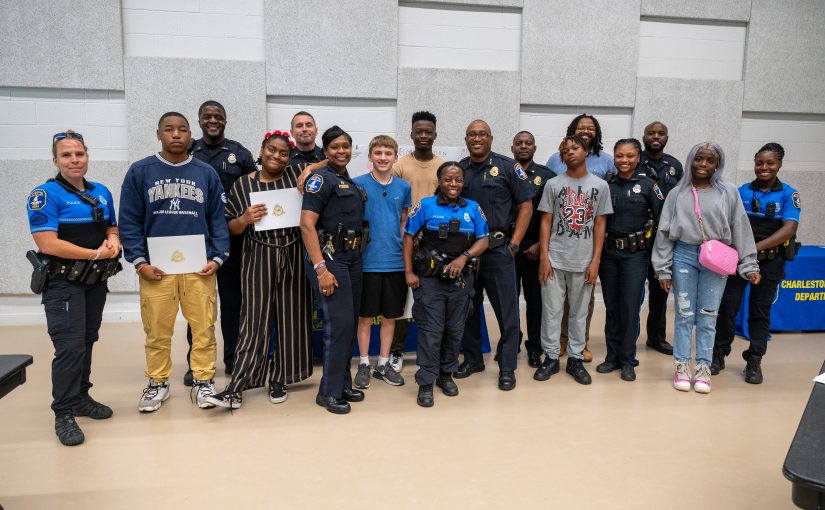
Recognizing that the police department’s criteria for background checks—which, many times, qualifies or disqualifies a credible messenger from formal public safety employment—may differ from those of other partners, CPD is learning to embrace a more inclusive approach. In practice, CPD has established gathering centers designed for this important work. These centers serve as hubs for the police department’s community outreach team. CPD’s victim advocates provide direct services at these centers, while officers host cookouts, resource distributions, holiday events, and free time for youth to hang out after school in a safe space. CPD has also launched the Your City, Your Summer campaign, developed and led by the agency’s developer of youth outreach programs, which includes a youth citizen’s academy aimed at empowering young people to take ownership of their outcomes. This initiative educates them about conflict resolution and policing practices while encouraging them to express their truths and engage in constructive dialogue, even with opposing views.
These efforts are intentionally crafted to support youth while honoring the role of credible messengers. In other words, CPD’s outputs and outcomes must lend trustworthiness to the credible messengers so partnerships remain authentic and forward-thinking. As a police agency, CPD recognizes its responsibility to support these leaders in driving a widespread movement. By pooling resources that far exceed what individual credible messengers might access—not due to their merit, but because of bureaucratic red tape and funding—the partnership can create a stronger, united front in the fight against youth violence. Together, the police and its partners aim to build a safer, more empowered community where the voices of young people and credible messengers resonate in the pursuit of lasting change. Once again, it takes a village to save youths—a dynamic, authentically built, and endlessly compassionate village. d
Notes:
1Silvia Villarreal et al., Gun Violence in the United States 2022: Examining the Burden Among Children and Teens (Johns Hopkins Center for Gun Violence Solutions, 2024).
2Villarreal et al., Gun Violence in the United States 2022.
3Villarreal et al., Gun Violence in the United States 2022.
Please cite as
Jerome Smalls & Anthony Gibson, “The Vital Role of Credible Messengers,” Police Chief Online, January 8, 2025.