


It’s 2013 in the city of Louisville, Kentucky. A rookie cop gears up for the start of his shift. He’s working nights and loves it. Summer is the busy time of year. Really, the whole year is busy. Louisville has crime like every other city, and there is always work to be done.
Roll call is rowdy, and everyone is loud and sarcastic. The comradery is strong on his platoon, and he loves his teammates. They tease and joke and get on each other about everything. He makes a few runs and then meets up with his beat partner— his best bud on the department. They talk about everything from girls they’ve dated to other beat partners doing dumb things, to frustrating commanding officers, to who won the game the other night. They finish outstanding reports and figure out what the night will look like and what they want to get into. A call comes in, and their plans shift. It’s a vehicle accident with nothing significant about it. On their way there, the call gets updated to an injury accident with one party irate and acting aggressively toward the other. They step it up and get there quickly.
On scene, they realize the injury is actually a death, and the victim is a baby. The irate, aggressive party is the mother, and she is threatening to kill the other driver. Through clenched teeth and tears, she is screaming obscenities, and both officers attempt to bring her volume down and get the parties separated. One officer breaks away and checks on the baby. No pulse. No breath. Severe head injury. Blood isn’t rushing out because his little heart isn’t beating. The officer feels fear, panic, and sadness. He pushes it aside and does his job. He renders aid, giving chest compressions and updating the radio. His partner has gotten the mother calmed down and she seems to think the first officer is saving her baby boy.
EMS arrives and continues aid while telling the first officer the baby is dead, but they don’t want to inform the mother on scene. The officer watches them drive away with the body of the tiny baby, and the reality of death lingers in his mind. He pushes it away and drives the mother to the hospital while his partner remains on scene and begins the report. On the drive, the mother tells stories of how hard it was for her and her husband to get pregnant. They spent four years trying and then God blessed them with a sweet baby boy. He is the joy of their day.
The officer knows the baby is dead, and he distracts himself with driving, trying to ignore what he feels and the grief that is beginning to settle in. He drops her off at the ER doors and then remembers he will need her information and the baby’s information for the report and the investigation. He tries to catch her before she walks in, but she doesn’t hear him holler for her. She sees EMS no longer rendering aid to her baby, and she explodes in anger and confusion. The officer has to step in and suddenly her feelings are directed toward him. The cussing and derogatory words don’t hurt him but the tears and the pain in her does. He ends up radioing for another car because she begins to damage hospital property, and her husband has shown up.
The whole night is rough as the weight of life and death weighs on the officer and his partners. He gets home and notices there is still blood on his pants from the baby. He angrily takes his uniform and shoves it in the washer. He pours a glass of bourbon and tells himself that it’s just to help him sleep. Three glasses later, he finally passes out, still feeling like he failed at the one thing he was supposed to do.
The next day roll call is quiet. The heaviness is still there, but finally someone cracks a dark joke about death and laughter crowds out feelings. He goes on a few calls before intending to meet up with his beat partner and then changes his mind. He doesn’t want to be around his buddy and risk being honest about how he isn’t ok today. The pattern continues, and the calls keep coming. Nobody checks on him, not because they don’t care, but because they don’t notice and—if they did, they wouldn’t know what to say. Even his command doesn’t ask how anyone is doing. Suck it up and move on is how they were taught, so those commanders continue that cycle, and no support is offered.
Fast forward 10 years to 2023. He’s still at the police department but got promoted to sergeant and has commanded a platoon for three years. He married another officer, and they have two precious little kids. His days at home look vastly different, but he enjoys his family. The platoon is close, and he’s got a good team that he gets to help out and support as their commanding officer.
Years of traumatic calls with critical incidents sprinkled in and no good way of coping had him looking OK on the outside but rotting on the inside.
Along with his life changing, the department has shifted too. A Wellness Unit was created in the wake of 2020. He thought the department was checking a box until he realized people actually cared and wanted officers healthier all around. Turned out, he had a lot he needed to process and talk about. Years of traumatic calls with critical incidents sprinkled in and no good way of coping had him looking OK on the outside but rotting on the inside. He called out Peer Support after his platoon responded to a baby death call. The call was similar to the one he always remembers when he’s trying to fall asleep next to his wife with their littlest asleep down the hall. That call has remained with him even after all these years. So many have piled on top of it, but he can never seem to fully bury it. Most nights he brushes it off and will drink after his wife and kids are asleep. All those thoughts float in his mind after responding to this call. His co-sergeant actually brought up Peer Support afterward, and that conversation made him consider that maybe other officers struggle too.
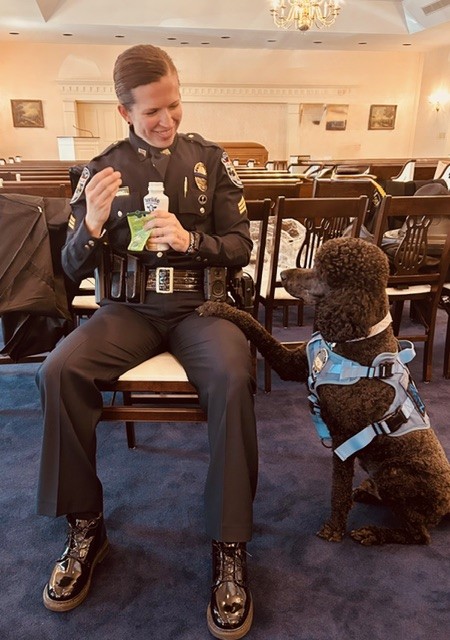
Sure enough, Peer Support showed up for roll call the next day and encouraged conversation, and the platoon opened up a little. It wasn’t a lot, but it was a start. And he got to see that everyone handles things differently, but the struggle is still there. His co-sergeant actually spoke up about a call from over 15 years ago that his colleague still feels like it should have been responded to differently. Resources were offered at the end of the roll call, including free sessions with a mental health professional. His co-sergeant leaned over and told him, “I am going to make an appointment, I can’t keep holding on to this.”
He wondered if there was a better way to handle things, a better way to cope well with the job and home life stress and everything in between. With support and encouragement around him, he made an appointment. He also realized he didn’t want to repeat the lack of support he got as an officer. A couple of his guys seemed pretty shook up by the incident. He went on a couple calls with the officers and asked to meet up afterward. They ended up talking about a different run the officers had made that had stuck with them and played into why the most recent one bothered them so much. The sergeant built trust during that conversation, and he shared his related emotions as well. Then he remembered what one of the Peer Support members had said during their roll call. The best form of peer support is the officer to a person’s right and left, their platoonmates. He smiled knowing it was true and recognized how important it is to be authentic and available for his team. The department has come a long way in 10 years, and he is part of the change that is heading in the right direction.
Small Steps Toward Change
What’s significant about this story? It’s nothing out of the ordinary. Every officer has responded to those horrific calls they wish they didn’t see when they close their eyes at night. Every officer has beat partners and platoonmates who brush off their feelings and laugh about death. None of that is significant. But when wellness gets introduced to the picture, the situation shifts slightly. Sometimes it’s not a big step; it’s smaller, more subtle, tiny steps in a different direction. But it’s a start.
A department may not have access to free mental health professionals or even a Peer Support Team. Every department has officers though, and that is the best form of peer support. It’s the people to one’s right and left who encounter the same trauma and same challenges alongside each other. They get it. The subtle shift toward taking mental health seriously and coping in healthier ways starts with the people in one’s corner. Taking the next step toward change becomes a regular practice like getting ready for work and dry firing a handgun before loading it and holstering it. Officers need to make that time to talk to someone. Meet up after calls. Check on their buddies.
Wellness does need support from the top down, and command has to believe in it. But it also starts from the bottom up and survives only when the middle (sergeants, lieutenants, captains, etc.) pushes up and down. It’s officers asking their commanding officer for help. It’s sergeants seeing a need and filling it with the best resource available. It’s lieutenants sitting shoulder to shoulder and listening to how something needs to change in order for officers to be better versions of themselves. It’s majors initiating change and advocating for their teams. It’s chiefs and their executive staff giving the time and attention to the greatest resource the city has: its officers.
Officers should be able to give themselves to this job, this profession, this calling, and come out better than when they started.
Wellness isn’t easy but it is worth it. Officers should be able to give themselves to this job, this profession, this calling, and come out better than when they started. The saying “the only way out is through” is applicable here. Police personnel are going through this incredible act of service, and they must remain diligent to come out the other side stronger and better than when they started. The way they cope matters. The way they talk to each other matters. The way they treat their families matters. The way they take care of themselves matters. It matters because each officer matters.
Change starts with one small step in the right direction, consistently, with intention and determination. Police officers have helped and saved so many, but they are also responsible for themselves.
The next time you reach for that bottle, think about sending that text, consider buying that thing you can’t afford, visit that site, flirt with someone who isn’t yours, shove down those sad feelings, clench your fist in anger, isolate, shut down when someone asks how you’re doing, or reach for that 1,500-calorie snack, ask yourself, is this making me better? If it’s not, do something different. Fight for something better.
One day, every officer retires or resigns and moves into the next phase of their life. How they cope now will influence whether they approach the next phase of life with a smile on their face and sweet stories to tell, full of gratitude because they’re a resilient officer who took steps to make themselves better than when they started.
Wellness isn’t easy, but it’s worth it.
Please cite as
Natalie Hughes, “After the Call: Wellness Isn’t Easy, But It’s Worth It,” Police Chief Online, May 20, 2027.