

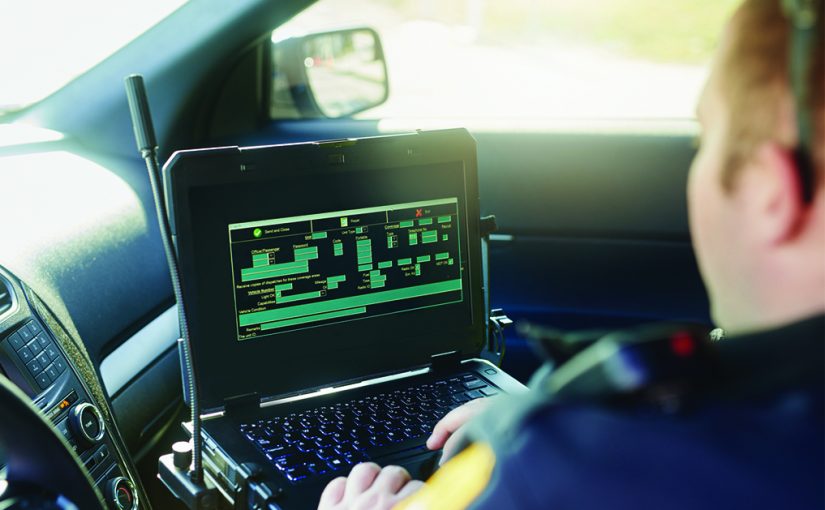
For police leaders, the network is no longer background infrastructure. It’s the digital foundation for dispatch, records management, body-worn cameras, video surveillance, mobile access, evidence workflows, court connectivity, and communications across headquarters, precincts, correctional facilities, and remote sites. When that foundation falters, officers lose time, evidence can be delayed, and critical services may be interrupted.
The challenge is departments are connecting more devices and generating more data than ever. Cameras, sensors, access-control systems, smartphones, vehicle systems, and Internet of Things (IoT) devices all depend on reliable connectivity. While each connection can improve situational awareness and service delivery, it also expands the attack surface.
Instead of simply adding bandwidth, police agencies need to create an operationally resilient network that can identify every user and device, enforce policy consistently, detect abnormal behavior, and help a lean IT team resolve problems before they affect the mission.
From Connectivity to Mission Continuity
One approach to achieving this network is to manage the environment as an integrated operating model rather than a collection of individual access points, switches, and routers. This change can simplify operations, enforce policy consistently, sustain critical services, and support compliance requirements.
For example, in a dispatch center, voice, computer-aided dispatch, mapping, databases, and real-time video may share the same infrastructure. During a major incident, traffic can rise sharply just as the tolerance for delay falls to zero.
A resilient architecture prioritizes critical applications, provides redundant paths, and gives administrators a unified view of service health. And secure SD-WAN can extend those capabilities to satellite offices, temporary command posts, courts, and correctional facilities without requiring a separate operational model for every site.
The same principle applies to officer experience. A slow authentication process, unreliable wireless connection, or failed body camera upload may look like a technical issue, but it consumes patrol time and can delay evidence availability.
AI-native network operations continuously analyze telemetry across users, devices, applications, and infrastructure. Instead of waiting for a complaint and then manually searching for a cause, IT teams can use automated correlation and guided remediation to isolate whether the problem stems from a device, authentication service, access point, WAN path, or application. In some cases, the network can take corrective action automatically.
Making Zero Trust Operational
 Criminal justice networks must protect sensitive information while supporting users with very different roles and devices. Sworn officers, dispatchers, investigators, contractors, guests, cameras, sensors, and building systems should not receive the same access simply because they are inside the same facility. A zero-trust model verifies who or what is connecting to the network, assesses context, and grants only the access required for the task at hand.
Network infrastructure can serve as both a sensor and an enforcement point. For instance, network access control identifies and authenticates users and devices, role-based policy and microsegmentation limit lateral movement, encryption protects data in transit, and centralized telemetry supports monitoring, investigation, and audit readiness. These controls can help agencies implement aspects of CJIS security requirements and local policy more consistently across facilities.
However, technology does not make an agency compliant by itself. Governance, documented procedures, training, and validation remain essential for success.
This is especially important for operational technology and IoT. A surveillance camera or environmental sensor may perform a narrow function, but any compromised device can become a pathway to other systems. Automated device profiling and dynamic segmentation allow an agency to place devices in tightly controlled roles, monitor their behavior, and restrict communication to approved destinations. If behavior changes unexpectedly, the network can flag the anomaly and support rapid containment.
Turning Location into Operational Intelligence
Modern wireless infrastructure can do more than connect devices. Indoor location services can help agencies track authorized assets, establish geofenced zones, support wayfinding, and add useful context to workflows. For body-worn cameras, location-aware uploads can associate footage with a defined area in a detention facility or public safety campus. That context can reduce manual searching during an investigation, accelerate evidence review, and support more complete reporting.
The San Diego County, California, Sheriff’s Office, for example, with the help of HPE Networking, modernized connectivity across detention facilities and other locations by using centralized management, AI-assisted operations, and indoor location capabilities. The implementation created location zones for body-worn cameras, helping staff retrieve relevant evidence and reducing manual reporting.
A Practical Path for Chiefs and Technology Leaders
Network modernization plans and decision should begin with mission outcomes, not a product list. Leaders can start by asking the following questions:
• Which services cannot tolerate an interruption, and what dependencies could disrupt them?
• Can the agency identify every connected user and device and enforce least-privilege access consistently?
• How quickly can IT distinguish a network issue from a device, identity, WAN, or application problem?
• Are cameras, sensors, and building systems segmented from criminal justice information systems?
• Can network telemetry support incident response, audits, and evidence of policy enforcement?
• Are networking modernization efforts following an AI-assisted operations strategy?
These questions create a baseline for phased action. Starting with a high-impact environment such as dispatch, evidence intake, a detention facility, or a remote site WAN can help an agency measure outcomes such as application availability, authentication time, trouble ticket volume, average time to resolution, evidence processing time, and policy consistency. Additional sites and capabilities could then be added via a shared, cloud managed architecture without recreating the operating model each time.
For policing, a modern network is ultimately about readiness. It should support secure officer access, keep dispatch and investigations moving, protect sensitive information, and give technology teams enough visibility to intervene before a technical issue becomes an operational disruption. And AI-assisted operations, zero-trust controls, resilient connectivity, and location-aware services should prove their value with measurable improvements in continuity, security, evidence workflows, and staff time.
|
Ben Caruso
|
 Ben Caruso leads the State & Local Government focus at HPE Networking, consulting with agencies, departments, and ecosystem partners to solve challenges and enable priorities with innovative solutions. Prior, he led partner organizations, designed and justified networking and telecommunications systems for global oil and gas, and achieved a bachelor’s degree in electrical engineering while serving in the U.S. Air Force.
|
About HPE Networking HPE is a leader in essential enterprise technology, bringing together the power of AI, cloud, and networking to help organizations achieve more. As pioneers of possibility, our innovation and expertise advance the way people live and work. We empower our customers across industries to optimize operational performance, transform data into foresight, and maximize their impact. Unlock your boldest ambitions, with HPE. Discover more at HPE.com |