
Every interaction between a police agency and the public depends on one basic principle—understanding. Whether an officer is interviewing a witness, assisting a crime victim, conducting a traffic stop, or helping a resident obtain records, the ability to exchange information clearly and accurately is essential.
Yet obstacles remain a reality for many community members. A witness may be unable to communicate with officers because of a language barrier. A person who is Deaf may need interpretation services to report a crime. A visitor entering a police station may struggle to navigate unfamiliar police systems while under stress. When those barriers exist, access to police services can be diminished.
As communities become increasingly diverse, agencies are looking beyond traditional compliance requirements and investing in tools that improve communication, usability, and inclusion. While accessibility can take many forms, the objective remains the same: ensuring that every person who turns to the police for help can be heard, understood, and served.
Breaking Down Language Barriers
According to data from the U.S. Census Bureau’s American Community Survey, approximately 23 percent of people age five and older in the United States speak a language other than English at home, representing more than 74 million people. Spanish is the most commonly spoken non-English language, but dozens of other languages are also represented in communities across the United States.1
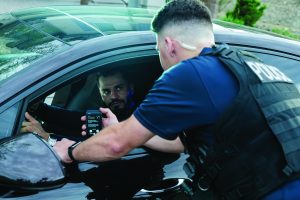
For police agencies, those numbers reflect a practical reality: Communication across languages has become a routine part of policing. Officers may encounter individuals with limited English proficiency during traffic stops, witness interviews, emergency responses, community meetings, and everyday interactions. In these situations, communication is more than a matter of convenience; it can influence officer safety, the accuracy of information gathered, and a community member’s ability to understand and comply with instructions.
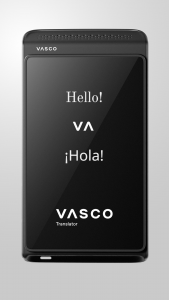
To help address those challenges, Vasco Electronics developed the Vasco Translator Q1, a handheld device designed for real-time multilingual communication. The device provides voice, text, and photo translation through a dedicated platform rather than a smartphone application, allowing officers to communicate across languages without relying on personal devices or local Wi-Fi connections. The Q1 includes a built-in SIM card with lifetime connectivity for translations and offers offline translation capabilities for situations in which internet access may be unavailable.
The device was designed to be deployed immediately in the field. Features such as automatic language detection, touchless translation, adjustable audio settings, and high-contrast visual displays are intended to support communication in a variety of environments, from roadside encounters and crowded public events to emergency scenes. The device also supports photo translation for documents, identification cards, forms, and signage, allowing officers to obtain information more quickly during interactions.
For larger public-facing events, Vasco Electronics also offers Vasco Audience, a platform that provides real-time translated audio and text for public meetings, safety briefings, and community engagement events. Participants can access translations through their own smartphones, tablets, or computers without downloading an application, helping agencies engage multilingual audiences more effectively and expanding access to public information.
By helping officers and community members communicate more effectively, tools such as the Vasco Translator Q1 and Vasco Audience seek to reduce language-related barriers and support more accessible interactions between law enforcement and the communities they serve.
Facilitating Communication
Communication barriers are not limited to spoken language differences. For individuals who are Deaf or hard of hearing, interactions with law enforcement may require accommodations that ensure information can be exchanged clearly and accurately.
One company focused on addressing those challenges is Sorenson Communications. The company is built around helping people overcome communication barriers and access the same services and opportunities available to everyone else.
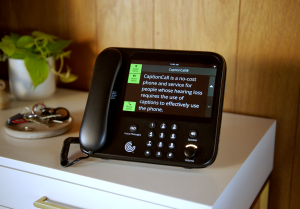
Among Sorenson’s offerings is the Sorenson Video Relay Service—a video-based communication platform that connects individuals with qualified American Sign Language interpreters. During an interaction between an officer and a person who is Deaf, the interpreter facilitates communication in real time, helping both parties exchange information clearly and accurately. For agencies, these services can be particularly valuable during interviews, investigations, court proceedings, and other situations in which effective communication is critical.
Sorenson also provides CaptionCall, a communication solution designed for individuals who are hard of hearing. The service delivers real-time captions during telephone conversations, allowing users to read what is being said while speaking normally. While CaptionCall is primarily used in everyday communications, it reflects the broader range of tools being developed to support accessibility across different communication needs.
For police agencies, the value of these services extends beyond compliance requirements. “A police officer wants accurate information so they can do their job well. The person who might be accused of something wants to make sure that the communication is accurate so it’s not getting misinterpreted,” said Kevin Kelleghan, CEO of Sorenson.2 Accessibility, in that sense, is not simply about accommodating differences; it is about ensuring that communication barriers do not prevent people from accessing police services or participating fully in the justice system.
Improving Access Through Better Usability
Accessibility challenges do not always stem from language or hearing differences. Sometimes, barriers arise simply because a process is difficult to navigate.
Many visitors enter a police facility unfamiliar with the agency’s procedures, terminology, or available services. Whether requesting records, submitting documents, paying citations, or seeking information, members of the public may arrive feeling stressed, confused, or uncertain about where to begin. For some, that experience can become an obstacle to accessing the services they need.
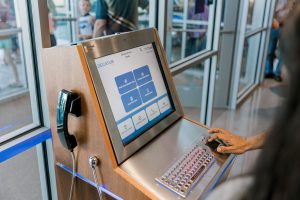
Advanced Kiosks has spent more than 25 years developing self-service technology for government agencies. One of the company’s newest offerings is the Zamok AI Assistant, a conversational artificial intelligence tool integrated into its kiosk platform. The assistant can communicate through voice or text, recognize different languages, answer common questions, provide guidance, and direct visitors to the appropriate resources. When additional support is needed, the system can also connect users with agency personnel.
The platform incorporates a variety of accessibility-focused features, including multilingual interfaces, spoken instructions, audio handsets, adjustable volume controls, contextual guidance tools, and privacy protections. One such feature, FaceLock, uses the kiosk’s camera to detect when a user has stepped away from a session and can automatically clear sensitive information if the individual does not return.
The technology is designed to address a common problem: The public often does not understand agency processes as well as agency personnel do. Visitors may not know which form they need, what a particular service is called, or which department handles their request. By guiding users through those processes, self-service tools can help reduce frustration and improve access to information and services.
Accessibility and usability are closely connected.3 A system may meet technical accessibility standards, but if a first-time visitor cannot successfully use it, barriers still exist. By focusing on the visitor experience, agencies can help ensure that public-facing technology expands access rather than creating more stress between community members and policing personnel.
Conclusion
Accessibility is often discussed in terms of compliance, but tools available to the policing profession illustrate a broader reality. As communities continue to evolve, police agencies are increasingly recognizing that accessible services benefit everyone involved. Clear communication can improve officer safety, support more accurate information gathering, increase participation in community engagement efforts, and help ensure residents can access the services they need. “Accessibility isn’t an optional feature to consider down the road,” said Aleksander Alski, head of region for the United States and Canada of Vasco Electronics. “It is a core operational requirement for modern, community-centered policing.”4
While no single technology can address every accessibility challenge, solutions such as translation tools, interpretation services, and user-friendly self-service platforms provide agencies with additional ways to connect with the public. By investing in tools that improve access, agencies can strengthen trust, enhance service delivery, and help ensure that every person who turns to the police for assistance has a meaningful opportunity to be heard, understood, and served.d
Notes:
1“How Many People Speak a Language Other Than English at Home?” USAFacts, August 13, 2026.
2Kevin Kelleghan (chief executive officer, Sorenson Communications), phone interview, September 3, 2026.
3Marketing Team, Advanced Kiosks, email interview, September 1, 2026.
4Aleksander Alski (head of region – United States and Canada, Vasco Electronics), email interview, September 8, 2026.
Source ListPlease click on the companies’ names to go to the companies’ websites. |
|