

Hours into a search warrant, investigators have opened drawers, moved furniture, and searched every corner of a residence. The suspect insists there’s nothing left to find. Then, a Labrador retriever enters the room, pauses near a wall, and alerts on a digital storage device hidden where no investigator thought to look.
Hundreds of miles away, a golden retriever quietly settles beside an anxious crime victim preparing to testify. The dog provides a steady presence during one of the most difficult moments of a case.
These aren’t traditional police dogs tracking fugitives or apprehending suspects. They represent a growing generation of specialized K9s whose value lies in skills that are often invisible but increasingly vital to modern policing. From helping investigators uncover hidden digital evidence to supporting victims and strengthening community relationships, today’s K9 teams are expanding what agencies can accomplish. Their success, however, begins long before they ever reach the field, with careful selection, intensive training, certification, and ongoing development.
Specialized K9s, Specialized Missions
For many people, the image of a police dog is still tied to patrol operations, tracking suspects, or narcotics detection. While those roles remain important, agencies are exploring other specialized programs designed to address investigative, community engagement, and victim support needs.
Choosing a K9 Program Partner |
These assignments often require a different combination of traits than traditional patrol work. Success depends on dogs that can remain calm in stressful environments, work comfortably around diverse populations, and perform specialized tasks with consistency and reliability. As a result, selection and training have become increasingly tailored to an agency’s specific mission.
One example can be found in facility dog programs. Canine Companions, a nonprofit organization that pioneered the modern service dog model in 1975, prepares dogs to work alongside professionals in health care, education, and criminal justice settings. After extensive socialization and professional training, the dogs learn more than 45 skills designed to help them work effectively in professional environments. Within police agencies, these dogs help build trust with community members, support victims of crime, and contribute to employee wellness efforts.
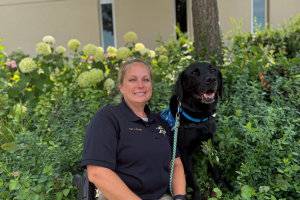
The impact of that training is evident in the work of Facility Dog Edison at the Appleton, Wisconsin, Police Department. Working alongside Sergeant Lori Duven, Edison helps build relationships with students in local schools, supports crime victims during court proceedings, and serves as a morale resource for department personnel. Sergeant Duvan noted that Edison has “changed the landscape” of the department, local schools, and courts through his daily interactions.
Other specialized K9 programs focus on investigative support. Our Rescue’s Electronic Storage Detection (ESD) K9 program partners with Jordan Detection K9 Training to train dogs to detect the scent of TPPO (triphenylphosphine oxide), a chemical compound associated with electronic storage devices. These dogs learn to locate concealed SD cards, USB drives, SIM cards, hard drives, and other electronic devices hidden in walls, vehicles, furniture, and other locations that are difficult to access. Since launching the program in 2017, Our Rescue has placed 162 ESD K9s with agencies combating internet crimes against children.
That training has produced measurable results. According to Our Rescue, ESD K9 Enzo and his handler, Detective Alexis Sciarrone, assisted in multiple child exploitation investigations within months of his deployment, helping investigators locate hidden devices and strengthen criminal prosecutions at the Lake County Sheriff’s Office in Illinois. In cases where digital evidence can be concealed almost anywhere, detection dogs provide officers an additional tool for uncovering information that might otherwise remain hidden.
Although their assignments differ dramatically, both programs reflect a broader trend: specialized police K9s are helping agencies address challenges that extend far beyond traditional enforcement roles. Police leaders are identifying new ways to use highly trained dogs to support modern policing objectives.
Building the Right Team
Before a dog ever enters a training program, organizations must determine whether it possesses the qualities necessary for its future role. Regardless of assignment, successful K9 programs begin with selecting dogs that possess the temperament, drive, trainability, and environmental stability needed for the mission.
For facility dogs, socialization and exposure to a wide variety of environments are particularly important. Canine Companions puppies spend approximately 18 months with volunteer “puppy raisers,” learning basic obedience and developing confidence in public settings before entering advanced training. Many come from the organization’s selective breeding program, which is informed by decades of research into canine genetics, cognition, and behavior.
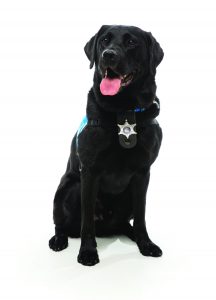 Detection dog programs place a similar emphasis on identifying dogs with the right characteristics before specialized instruction begins. Rather than breeding dogs specifically for detection work, Our Rescue partners with Jordan Detection K9 to identify dogs that have already undergone extensive therapy- or service dog–related training. These dogs have already demonstrated the calm temperament, focus, trainability, and comfort around people necessary to succeed in advanced scent-detection work.
For agency leaders considering a K9 program, the takeaway is clear: training is most effective when built upon a dog’s natural abilities and temperament. Matching the right dog to the right mission increases the likelihood of long-term success for both the animal and the handler.
Certification and Continued Development
A common misconception is that a K9 team becomes fully developed upon graduation from a training program. In reality, maintaining proficiency requires ongoing evaluation, support, and skill development throughout the team’s career. Just as officers participate in continuing education and professional development, specialized K9 teams benefit from regular training and assessment. Ongoing standards help ensure operational reliability, preserve courtroom credibility, and strengthen the partnership between handler and dog.
Both organizations emphasize long-term engagement after placement. Canine Companions provides lifetime support for its facility dog teams through phone consultations, email correspondence, workshops, and in-person assistance. Trainers remain involved after placement to help handlers address challenges and maintain the skills necessary for long-term success. Similarly, Our Rescue views placement as the beginning rather than the end of the process. Handlers initially train alongside their K9 partners before becoming certified as a team. They then return annually for recertification to ensure the dog’s skills remain sharp and that credentials remain current for courtroom testimony and investigative work. The organization covers recertification costs as part of its support program.
For agencies investing in specialized canine resources, these support systems can be just as important as the initial training itself.
Redefining K9 Service
As agencies face increasingly complex responsibilities, specialized K9 programs prove that a dog’s greatest contribution is not always measured by tracking a suspect or making an apprehension.
Instead, they are quietly helping investigators locate hidden evidence, giving victims confidence in stressful settings, and creating positive interactions between agencies and the communities they serve. Their contributions may be less visible than those of traditional police dogs, but they are no less significant.d
Source ListPlease click on the companies’ names to go to the companies’ websites. |
|
|
Canine Companions Cobra Canine Elite K-9 Jordan Detection K9 |
K9 Working Dogs International Our Rescue Sierra Peaks Animal Rehabilitation Vohne Liche Kennels |
Please cite as
“Redefining K9 Service,” Product Feature, Police Chief 93, no. 9 (September 2026): 78–79.