

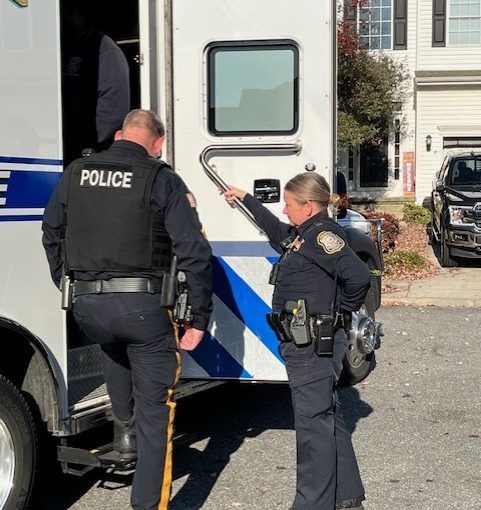
Positive community engagement reflects the broader concept of “safe streets” and wellness beyond physical tactics (Photo by Christopher Workman/Cheswold Police Department Archives)
Officer safety is most often discussed in terms of equipment, tactics, and training. Body armor, defensive tactics, pursuit policies, and use-of-force standards all play a critical role in protecting officers from harm. Yet one of the most significant determinants of officer safety receives far less attention: the mental and emotional condition of the officer making decisions under pressure.
Today’s officers operate under cumulative pressures that extend well beyond the physical risks of the job. Repeated exposure to trauma, heightened public scrutiny, chronic staffing shortages, and the expectation of flawless performance in emotionally charged environments have created conditions where stress is constant and recovery is often insufficient.
If officer safety is truly a priority, organizational wellness cannot remain secondary. The long-term safety and effectiveness of any police agency depend not only on tactics and policy, but on the cognitive readiness, emotional regulation, and psychological resilience of its officers. Wellness is not separate from safety; it is foundational to it.
Over the past decade, policing has made meaningful progress in acknowledging this reality. Wellness programs, peer support initiatives, and mental health training are increasingly common across agencies of all sizes. These efforts represent genuine advancement. However, many agencies continue to struggle with moving wellness beyond compliance and toward full integration into organizational culture and daily operations.
Too often, wellness is treated as a program rather than a leadership value. Policies are drafted, training sessions are scheduled, and requirements are met. Once those steps are completed, leadership may believe the obligation has been fulfilled. Officers quickly recognize when wellness exists only on paper. When initiatives are driven primarily by accreditation standards or external expectations, rather than authentic concern for officer well-being, trust erodes and participation declines. Programs fail to reach those who need them most.
Wellness cannot be delegated to a coordinator, unit, or annual training. It is a leadership responsibility that must be modeled, reinforced, and sustained. Organizational culture is shaped by what leaders prioritize, what they tolerate, and how they show up. If productivity is consistently rewarded while recovery is discouraged, officers internalize that message regardless of what is written in policy manuals.
This has required intentional changes in how police executives communicate and lead. At Cheswold, Delaware, Police Department, the agency leaders strive to speak openly about stress, fatigue, and the emotional realities of the job during roll calls, staff meetings, and one-on-one conversations. Those discussions are normalized rather than treating them as uncomfortable or inappropriate. The chief makes it a point to check in with officers after difficult calls, not to critique performance, but to ask how they are doing. That simple shift in communication reinforces that wellness is not an afterthought; it is part of how they operate.
Impact of Repeated Trauma
The nature of police work exposes officers to repeated traumatic experiences. Officers routinely respond to violent crime, fatal crashes, domestic violence, child abuse, and mental health crises. Even when officers are not physically injured, their nervous systems absorb the emotional impact of these encounters. Research demonstrates that chronic exposure to trauma and occupational stress increases the risk of anxiety, depression, post-traumatic stress symptoms, sleep disruption, cardiovascular disease, and emotional exhaustion.1 These outcomes are not failures of character or resilience; they are predictable responses to prolonged stress without adequate recovery.
Vicarious trauma is one of the most misunderstood contributors to officer wellness and safety. Officers do not need to be direct victims of violence to experience trauma-related symptoms. Repeated exposure to the suffering of others can gradually alter perception, emotional regulation, and threat sensitivity. Symptoms often develop slowly and may include irritability, emotional numbness, intrusive thoughts, and sleep disturbances.2 Left unaddressed, these changes increase the risk of errors in judgment, impaired decision-making, and unsafe responses under stress.
Recognizing this, the Cheswold Police Department has worked to create space for officers to talk about what they are carrying. That does not mean forcing conversations or turning supervisors into therapists. It means creating an environment where officers know they will be listened to without judgment and without fear of career impact. Active listening has become a leadership expectation, not an optional skill. Supervisors are encouraged to listen more than they speak and to resist the instinct to immediately “fix” problems rather than understand them.
Compassion fatigue presents a related and frequently overlooked challenge. Policing requires sustained emotional control while engaging with individuals in crisis. Over time, this emotional labor can result in profound exhaustion. Compassion fatigue is characterized by reduced empathy, cynicism, and emotional withdrawal. It does not mean an officer no longer cares; it reflects depleted emotional resources after prolonged exposure without restoration. Officers operating in this state are more vulnerable to mistakes that risk their own or others’ safety.
One of the most effective ways to counter this is through authenticity in leadership. Officers know when leaders are guarded or performative. They also know when leaders are genuine. Being honest about stress, mistakes, and limits builds trust. Authentic leadership creates permission for others to be honest as well, and trust is the foundation of any wellness culture.
Research on occupational burnout consistently links emotional exhaustion to impaired judgment, disengagement, and increased turnover.3 In a profession where split-second decisions can determine outcomes for officers and the public, these effects directly undermine officer safety. Wellness, therefore, is not merely a personal matter—it is an operational risk issue.
From Understanding to Action
Despite growing awareness, many agencies struggle to translate knowledge into sustained action. Wellness initiatives are often introduced following a crisis, such as a critical incident; after a line-of-duty death; or in the wake of troubling suicide statistics. Training is delivered and resources are shared, but without consistent leadership commitment, these efforts lose momentum. Officers notice when wellness messaging conflicts with daily realities such as chronic overtime, denied leave, or supervisory practices that discourage vulnerability.
In order to have a continued support system within the department, Cheswold police leaders have been deliberate about backing their words with action. If the leaders tell officers to use wellness resources, they are supported when they do. If an officer needs time, the agency works to provide it. If a supervisor needs flexibility to support a struggling team member, they are trusted to exercise that discretion. Allowing officers to actually use the resources provided—without subtle penalties or negative labeling—is one of the most important ways leaders demonstrate sincerity.
Organizational stressors frequently have a greater impact on officer wellness than critical incidents themselves. Research identifies workload, perceived lack of support, unfair treatment, and limited control over work conditions as strong predictors of stress and burnout.4 These are leadership-controlled variables. While no chief can eliminate all inherent risks of policing, leaders can shape organizational conditions that either amplify or mitigate stress-related safety risks.
Neuroscience further reinforces the connection between wellness and safety. Chronic stress heightens activity in the amygdala, increasing threat sensitivity, while impairing the prefrontal cortex, which governs judgment, impulse control, and emotional regulation.5 These physiological changes reduce an officer’s capacity to process information and make sound decisions under pressure. Expecting optimal performance without addressing these realities is unrealistic and unsustainable.
Leading Wellness
Leadership behavior remains the most powerful predictor of whether wellness initiatives succeed. Officers closely observe how leaders manage stress, respond to mistakes, and support those who seek help. When leaders model healthy coping behaviors, normalize recovery, and prioritize support after critical incidents, those values become embedded in the organization.
Leading by example is not symbolic—it is operational. Leaders can model taking time off and make it clear that stepping away to reset is a sign of professionalism, not weakness. When supervisors see executive leadership support these behaviors, they feel empowered to do the same.
Perceived organizational support plays a critical role in officer well-being and safety. Employees who believe their organization values their contributions and cares about their welfare experience lower burnout and higher job satisfaction.6 In policing, that perception is shaped by consistent leadership behavior, not isolated statements or one-time initiatives.
First-line supervisors are especially influential. Sergeants serve as the bridge between executive intent and daily operations, yet many receive limited training in recognizing stress-related injuries. Without proper preparation, behavioral changes may be misinterpreted as performance issues rather than indicators of overload. Investing in supervisor education and giving supervisors the authority and trust to support their people are among the most effective strategies agencies can implement to protect officer safety.
It is equally important to recognize that policing is not defined solely by trauma. Many officers experience meaning and purpose through service. The concept of vicarious resilience describes the growth and strengthened commitment that can occur when individuals witness others’ recovery and strength.7 Agencies that create opportunities for reflection, peer connection, and recognition help officers access this resilience rather than becoming overwhelmed by cumulative stress.
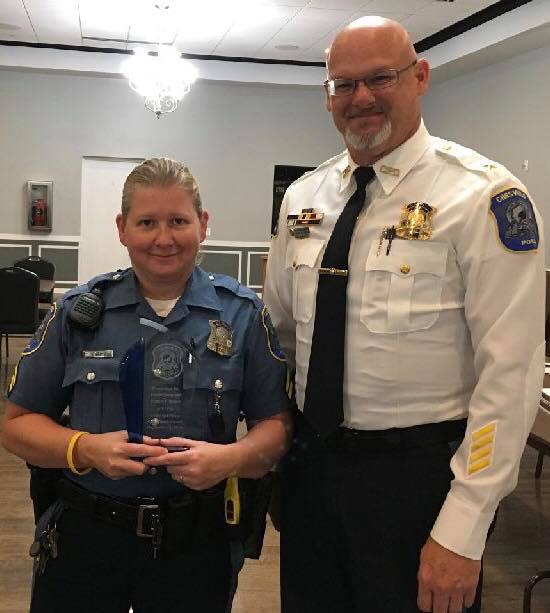
Cheswold Police Department intentionally recognizes positive actions, quiet professionalism, and moments of compassion. Not through grand gestures, but through sincere acknowledgment. Those moments matter. They remind officers that what they do has value and that their leaders sees it.
While individual self-care strategies are valuable, framing wellness as solely an officer responsibility is insufficient. Officers cannot self-care their way out of chronic understaffing, excessive overtime, or inconsistent supervision. Organizational factors remain among the strongest predictors of stress and burnout.8 Leadership must examine whether agency policies enhance or undermine officer readiness and safety.
Wellness initiatives that earn genuine buy-in share common traits: visible leadership participation, trained supervisors, well-supported peer programs, accessible mental health resources, and sustained commitment. When wellness is treated as a continuous safety strategy rather than a reaction to crisis, agencies benefit through improved performance, reduced errors, stronger morale, and safer outcomes.
Chiefs are stewards of both the agency mission and their people. Officer safety begins long before a call for service and extends far beyond equipment and tactics. It is shaped daily by organizational culture, leadership decisions, and the value placed on mental readiness.
To achieve safer streets the minds of those sworn to protect them must be supported, valued, and sustained. Organizational wellness is not ancillary to officer safety—it is essential to it. d
Notes:
1John M. Violanti et al., “Law Enforcement Suicide: A Review,” Policing: An International Journal 40, no. 2 (2018): 141–164.
2Charles R. Figley, Compassion Fatigue: Coping with Secondary Traumatic Stress Disorder in Those Who Treat the Traumatized (New York: Brunner-Routledge, 1995).
3Christina Maslach and Michael P. Leiter, “Understanding the Burnout Experience: Recent Research and Its Implications for Psychiatry,” World Psychiatry 15, no. 2 (2016): 103–111.
4Jon M. Shane, “Organizational Stressors and Police Performance,” Journal of Criminal Justice 38, no. 4 (2010): 807–818.
5Bruce S. McEwen and John H. Morrison, “The Brain on Stress: Vulnerability and Plasticity of the Prefrontal Cortex Over the Life Course,” Neuron 79, no. 1 (2013): 16–29.
6James N. Kurtessis et al., “Perceived Organizational Support: A Meta-Analytic Evaluation of Organizational Support Theory,” Journal of Management 43, no. 6 (2017): 1854–1884.
7Pilar Hernández, David Gangsei, and David Engstrom, “Vicarious Resilience: A New Concept in Work With Those Who Survive Trauma,” Family Process 46, no. 2 (2007): 229–241.
8Violanti et al., “Law Enforcement Suicide”; Shane, “Organizational Stressors and Police Performance.”
Please cite as
Christopher Workman, “Stronger Minds, Safer Streets: Why Officer Safety Begins with Organizational Wellness,” Police Chief Online, May 6, 2026.